Approximate
Condition Profile
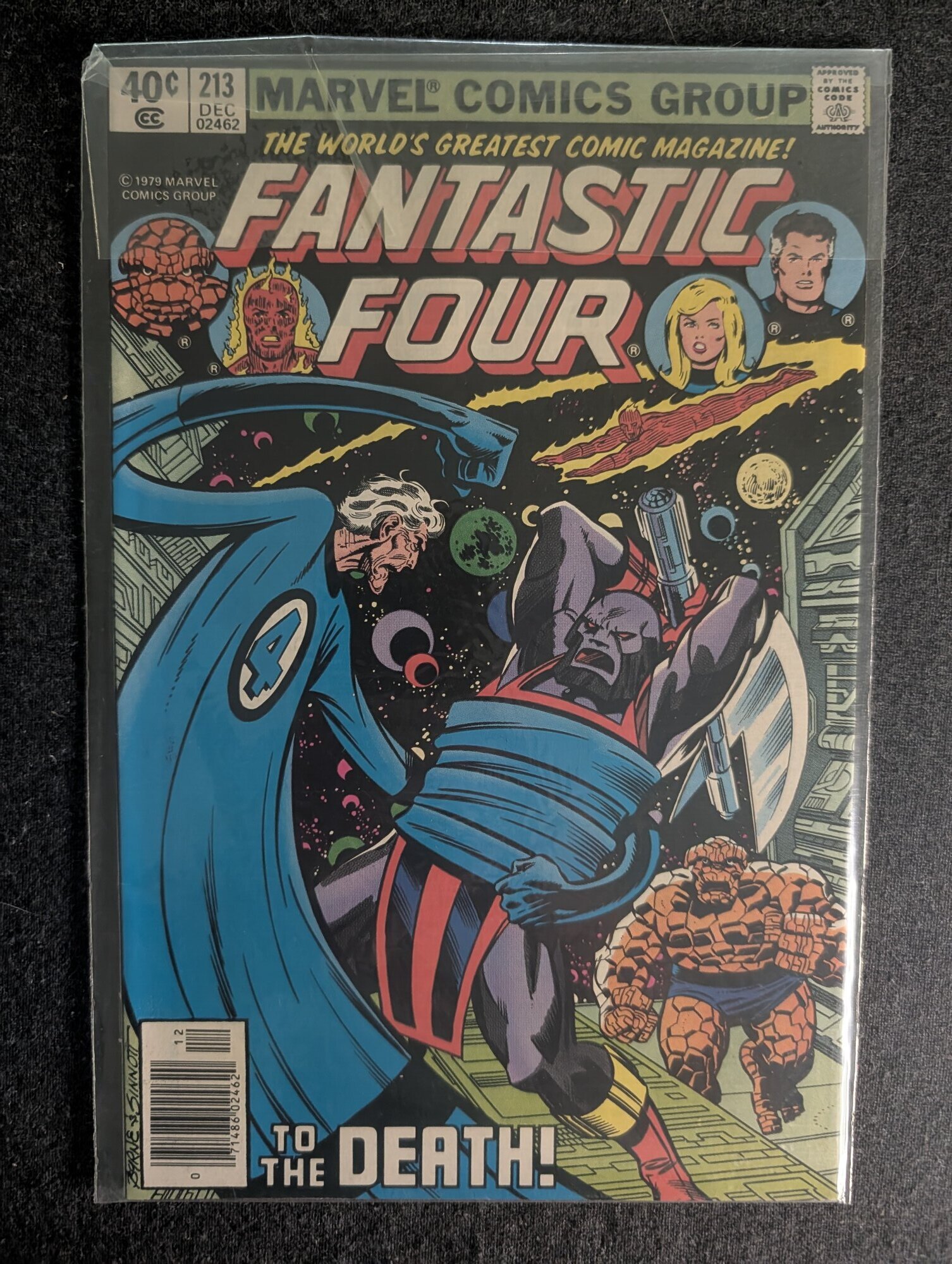
MARVEL COMICS · 12/79 · NEWSSTAND
UNIT ECA-039638
FANTASTIC FOUR #213
Bronze Age Fantastic Four adventure featuring Marv Wolfman scripting and John Byrne art
// Unit specification
| Publisher | Cover date | Era | Variant | Key attribute | Status |
|---|---|---|---|---|---|
| Marvel Comics | December 1979 | Bronze | Newsstand | — | AVAILABLE |
// Copies in archive
| Unit | Grade | Variant | Status |
|---|---|---|---|
| ECA-028022 | ~9.2 | Newsstand | AVAILABLE |
| ECA-039329 | ~8.5 | Newsstand | AVAILABLE |
| ECA-039662 | ~8.5 | Newsstand | AVAILABLE |
| ECA-039638 | ~8.0 | Newsstand | AVAILABLE |
// Run position
// Condition analysis
Cover shows strong gloss with vibrant color; a light diagonal crease/scuff is visible across the upper left corner area and a small stress mark near the top edge above the price box. Corners appear sharp with only minor blunting, and edges show negligible wear. UPC barcode box present confirming newsstand edition. The book is in a protective sleeve which limits full assessment of spine and edges; back cover and interior pages were not examined.
// Valuation — market reference
| Bracket | Grade | Est. market value | Marker |
|---|---|---|---|
| LOW_RAW | 0.5 – 1.5 | $3 | |
| MID_RAW | 4.0 – 6.0 | $10 | |
| HIGH_CERT | 9.8 SLAB | $100 |
// Archive commentary
Fantastic Four #213 arrived in late 1979 during a transitional period for Marvel's first family, with Marv Wolfman handling the writing chores and John Byrne on pencils, a few years before Byrne would take over the title as full writer-artist and reshape it for the 1980s. The issue is a standard entry in the long-running series, continuing the team's ongoing adventures without introducing a major new character or plot element that has since become a widely cited touchstone in the character's history.
Market activity for this issue is sparse, reflecting its status as a mid-run Bronze Age comic rather than a recognized key. Certified sales cluster at the low end, with mid-grade copies trading in the single digits and higher-grade copies commanding modest premiums; the lone CGC 9.8 sale demonstrates that top-condition census copies can achieve a meaningful jump in value, but the overall pool of graded sales remains thin. Demand is driven primarily by Fantastic Four completists and Byrne-era collectors rather than broad speculative interest.
This issue suits collectors building a complete run of the series or focusing on early Byrne artwork, rather than investors seeking blue-chip key issues. Raw copies in low and mid grades trade cheaply and are readily available, while a true CGC 9.8 represents a scarcity play given the near-total absence of higher-grade census population; buyers pursuing the top slab should expect limited comparables and rely on the rarity of surviving high-grade examples rather than an established sales history.
INQUIRE_ABOUT_THIS_UNIT
Institutional buyers, auction houses, and private collectors — direct line to the archive.