Approximate
Condition Profile
DC COMICS · 7/64
UNIT ECA-013192
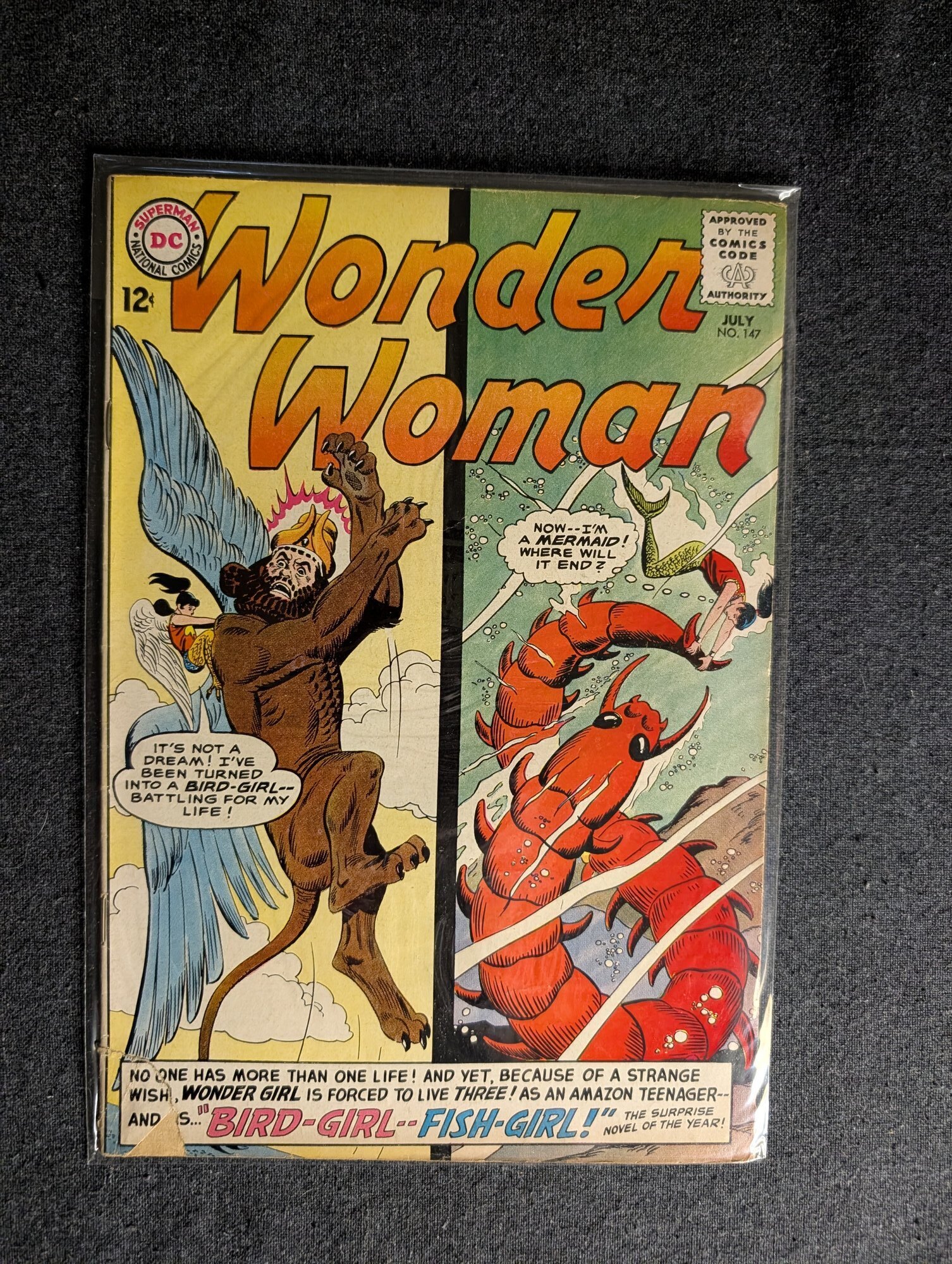
WONDER WOMAN #147
Silver Age Wonder Woman from the Kanigher/Andru era, July 1964
// Unit specification
// Copies in archive
| Unit | Grade | Variant | Status |
|---|---|---|---|
| ECA-013192 | ~4.5 | — | AVAILABLE |
// Run position
// Condition analysis
Cover shows notable corner wear with a small chip/tear at the lower-left corner of the bottom text box, a crease running vertically through the lower portion of the cover, and general softness at the corners. Slight color rub along the spine and edges is visible, with mild surface wear across the image. Interior and back cover were not assessed, so overall grade may be adjusted once those are examined.
// Valuation — market reference
| Bracket | Grade | Est. market value | Marker |
|---|---|---|---|
| LOW_RAW | 0.5 – 1.5 | $15 | |
| MID_RAW | 4.0 – 6.0 | $44 | |
| HIGH_CERT | 9.8 SLAB | $700 |
// Archive commentary
Wonder Woman #147 (DC Comics, July 1964) arrived during the long Robert Kanigher writing tenure that defined the character's Silver Age direction, with art by the regular team of Ross Andru and Mike Esposito. The issue falls within the run's recurring "Impossible Tales" conceit, in which Wonder Woman appeared alongside younger incarnations of herself, Wonder Girl and Wonder Tot, teaming with Queen Hippolyta in fantastical Amazon adventures. The book is representative of the era's whimsical, high-concept plotting rather than a landmark issue, and it carries no first appearance, origin, or death of lasting significance to the character's history.
Market activity reflects a modest-demand mid-run Silver Age book: certified sales cluster in the $40-$80 range through the low-to-mid grades, with a pronounced step up to roughly $200 at CGC 9.0, consistent with typical Silver Age price curves where high-grade survivors become disproportionately scarce. Demand is driven primarily by Wonder Woman keyed-run collectors and Silver Age DC completists filling out the Kanigher/Andru era rather than by any speculative first-appearance interest, keeping the book's ceiling comparatively restrained relative to genuine key issues from the same period.
This is a book that trades steadily but unspectacularly: low and mid-grade raw copies move in the collector marketplace as affordable run-fillers, while high-grade CGC-slabbed copies command a real premium due to census scarcity at the top end rather than character significance. It suits collectors building a complete Wonder Woman Silver Age run or dealers stocking accessible period material, with the top-grade examples appealing to condition-census chasers more than to mainstream key-issue investors.
INQUIRE_ABOUT_THIS_UNIT
Institutional buyers, auction houses, and private collectors — direct line to the archive.