Approximate
Condition Profile
DC COMICS · 8/87
UNIT ECA-001776
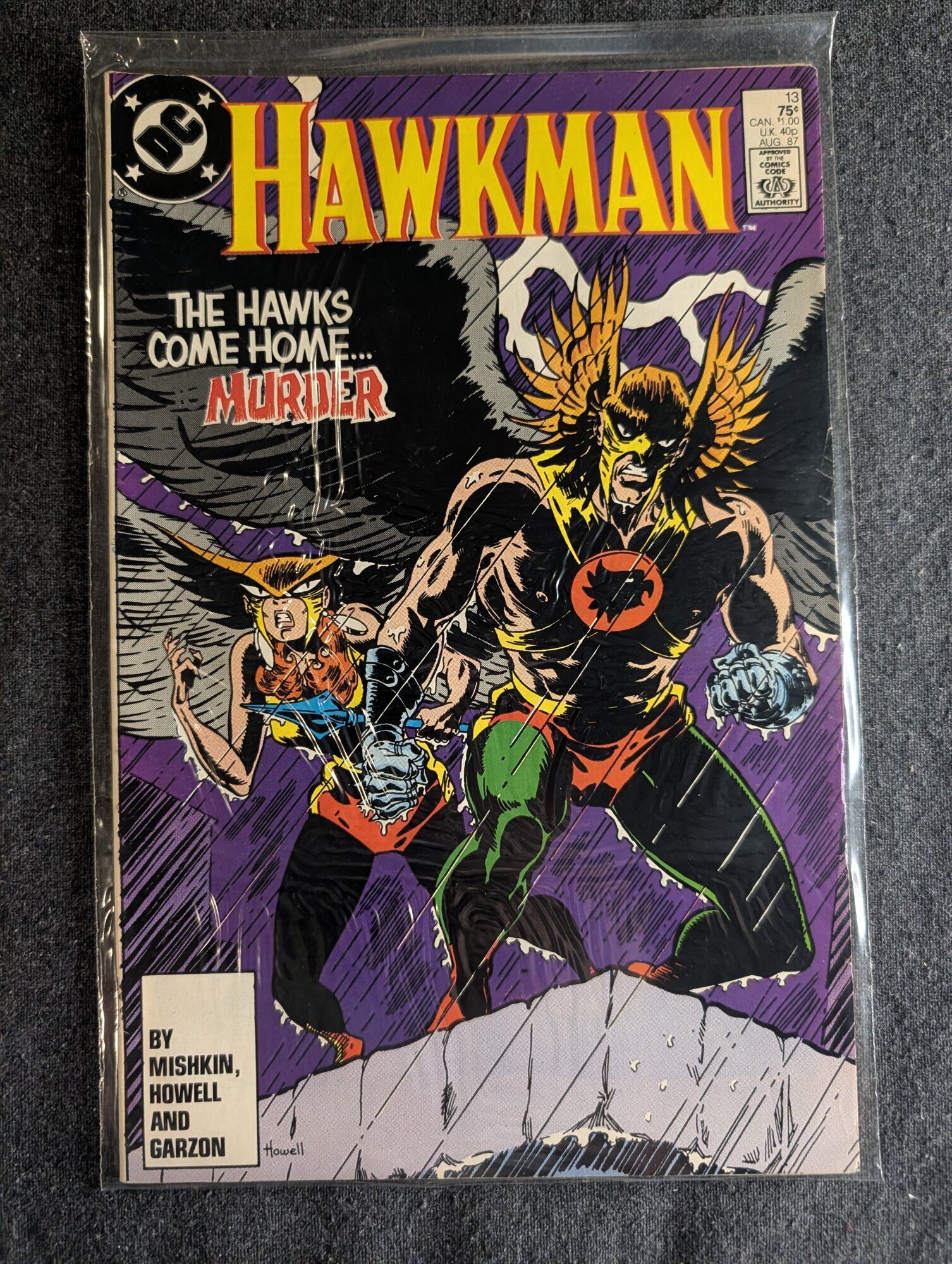
HAWKMAN #13
Mid-run issue of DC's 1986 Hawkman series, "Crosswinds" by Dan Mishkin and Richard Howell
// Unit specification
// Run position
// Condition analysis
The cover shows strong gloss and vibrant color with sharp corners and no visible creases or spine stress. There are a few faint diagonal lines across the image that appear to be printing/inking artifacts rather than actual surface scratches, though this should be verified in hand. The book is protected in a plastic sleeve, and no chipping, tears, or discoloration are visible on the front. Interior pages and back cover were not assessed.
// Valuation — market reference
| Bracket | Grade | Est. market value | Marker |
|---|---|---|---|
| LOW_RAW | 0.5 – 1.5 | $1 | |
| MID_RAW | 4.0 – 6.0 | $3 | |
| HIGH_CERT | 9.8 SLAB | $60 |
// Archive commentary
Hawkman #13 belongs to the second volume of the character's solo title, the 17-issue run that grew out of The Shadow War of Hawkman and carried Katar Hol and Shayera Hol through their final pre-Hawkworld continuity. This installment, "Crosswinds," is scripted by Dan Mishkin with pencils by Richard Howell and inks by Carlos Garzon, under a Howell cover; the story moves the Hawks away from Thanagarian intrigue toward a Gulf Coast murder investigation tied to their supporting cast. Howell's tenure as the visual architect of the era is the run's chief creative claim, and Mishkin's scripting in the later issues marks the transition after Tony Isabella's departure from the writing chair. No first appearance, origin, or death of consequence occurs here.
Market profile is that of a common Copper Age DC back-issue from a title that was cancelled for soft sales rather than one that was speculated on. Print runs were adequate to supply demand many times over, and surviving copies skew high grade because the book arrived late enough that direct-market handling and bagging were the norm. Consequently the raw market is essentially flat across the useful grade span: low-grade copies function as reading material and are typically absorbed in bulk lots, while mid-grade examples trade for little more, since a buyer can usually find a near-mint copy at the same dealer for a comparable figure. Certified copies are scarce not because the book is rare but because certification costs more than the comic supports, which is what creates the entire spread between the raw and slabbed brackets.
Buyers here are run collectors assembling the complete 1986-1987 volume, Hawkman completists working backward from Hawkworld and later relaunches, and Richard Howell followers. A slabbed high-grade copy appeals almost exclusively to registry-style set builders, and its value is a function of grading economics rather than scarcity of the book itself; sellers should not expect the certified figure to be reproducible on demand, since a second copy hitting the market at the same time will depress it. Across the raw grades this is a fill-the-hole purchase best moved as part of a run or a Hawkman lot, where the aggregate commands more attention than any single issue.
// Copies in archive
| Unit | Grade | Variant | Status |
|---|---|---|---|
| ECA-001776 | ~9.0 | — | AVAILABLE |
INQUIRE_ABOUT_THIS_UNIT
Institutional buyers, auction houses, and private collectors — direct line to the archive.