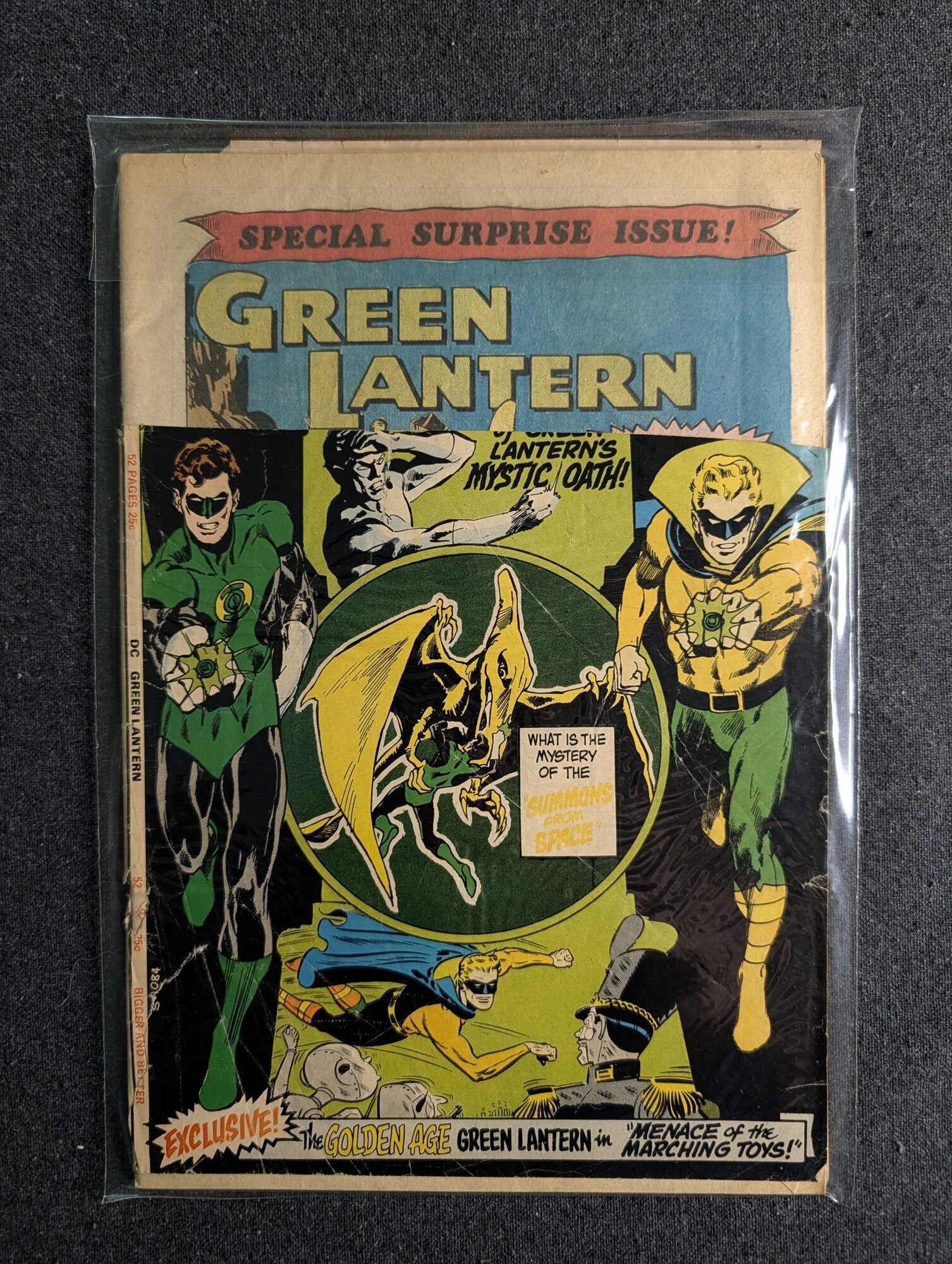
Approximate
Condition Profile
DC COMICS · 6/72
UNIT ECA-007692
GREEN LANTERN #90
Bronze Age Green Lantern from the tail end of the celebrated O'Neil era
// Unit specification
// Copies in archive
| Unit | Grade | Variant | Status |
|---|---|---|---|
| ECA-007692 | ~3.5 | — | AVAILABLE |
// Run position
// Condition analysis
Cover shows multiple visible creases running diagonally across the central artwork and near the spine, along with noticeable spine stress lines and a spine roll. There is wear and slight fraying at the corners, with the top edge showing browning/tanning typical of the era. A vertical crease intersects the Golden Age Green Lantern figure on the right side of the cover. The book is currently housed in a protective sleeve; interior pages and back cover were not assessed for this grade.
// Valuation — market reference
| Bracket | Grade | Est. market value | Marker |
|---|---|---|---|
| LOW_RAW | 0.5 – 1.5 | $8 | |
| MID_RAW | 4.0 – 6.0 | $18 | |
| HIGH_CERT | 9.8 SLAB | $400 |
// Archive commentary
Green Lantern #90 arrived in June 1972 as the series wound down its landmark run under writer Denny O'Neil, the creative team that had spent the previous several years pairing Hal Jordan with Green Arrow to confront social issues rarely touched by mainstream superhero comics. While this particular issue is not the storied "Snowbirds Don't Fly" drug-addiction arc that made the title famous, it belongs to the same stretch of the series and carries the same visual and thematic DNA established by that run, arriving just as the original Green Lantern volume approached cancellation later that year.
The market data reflects a book with plentiful supply and no major first-appearance or origin hook to drive scarcity-based demand. A CGC census of 221 Universal copies out of 258 total graded shows the book was well preserved across the grading spectrum, and fair market values stay compressed through the mid grades before rising more steeply near the top of the census. The 9.8 tier commands the clearest premium, consistent with the rarity of true gem-mint survivors from a title printed on standard early-1970s stock, while raw copies in lower and middle grades trade closer to bulk-book pricing.
This issue suits collectors building a run of the O'Neil/Adams-era Green Lantern rather than key-issue speculators. Demand is steady but unspectacular in circulated grades, where the book functions largely as affordable run-filler; the real action is concentrated at the high end, where 9.6 and 9.8 copies see disproportionate interest from Bronze Age superhero specialists completing high-grade sets. Buyers should expect low- and mid-grade copies to move slowly and cheaply, while pristine slabs will draw competitive bidding relative to the rest of the curve.
INQUIRE_ABOUT_THIS_UNIT
Institutional buyers, auction houses, and private collectors — direct line to the archive.