Approximate
Condition Profile
MARVEL COMICS · 4/91
UNIT ECA-002651
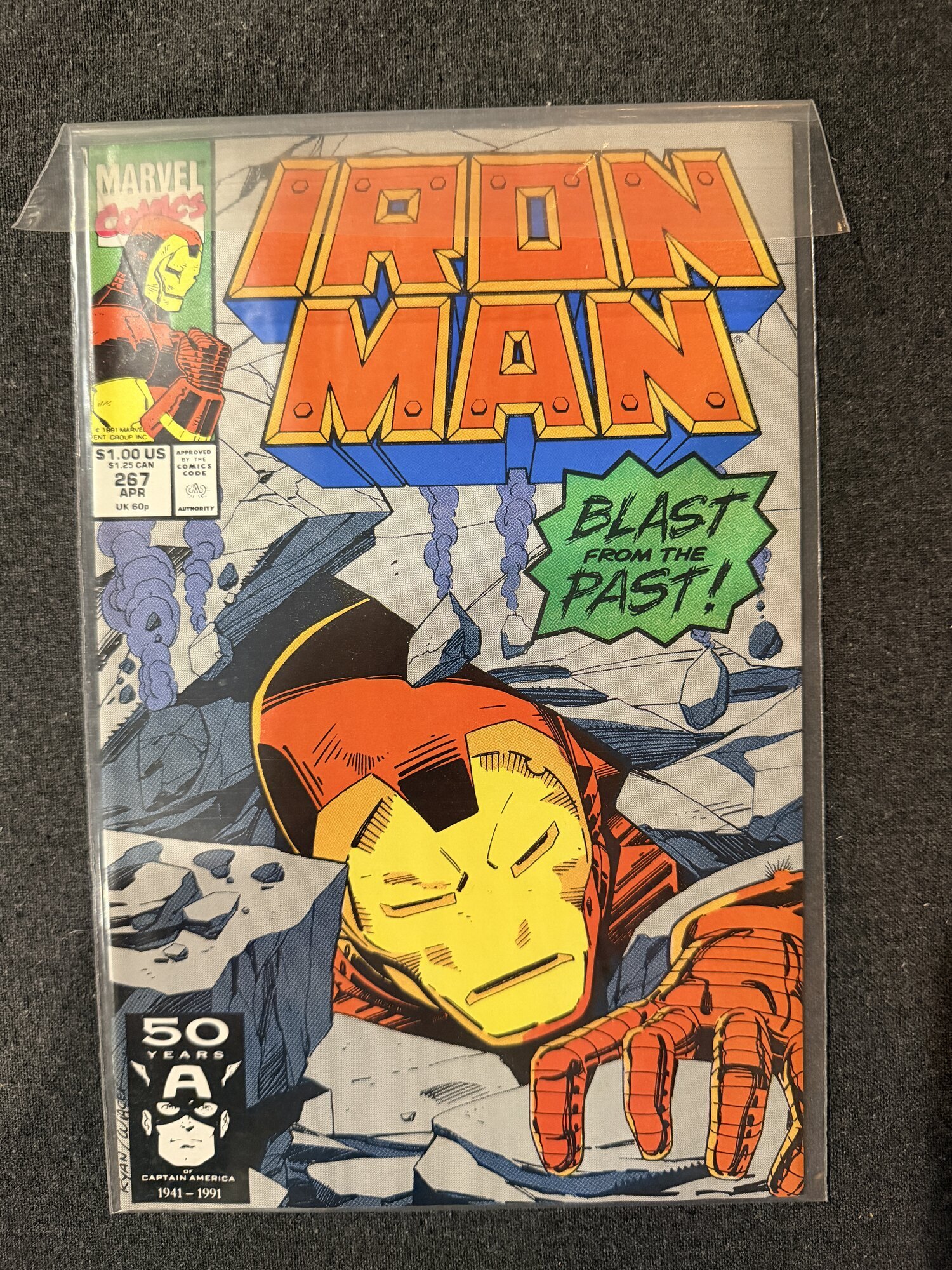
IRON MAN #267
John Byrne-scripted Copper Age Iron Man with Vibro, the Mandarin, and the return of Fin Fang Foom
// Unit specification
| Publisher | Cover date | Era | Variant | Key attribute | Status |
|---|---|---|---|---|---|
| Marvel Comics | April 1991 | Copper | — | — | AVAILABLE |
// Run position
// Condition analysis
Cover shows sharp corners, strong glossy surface, and vivid unfaded colors with no visible spine stress or ticks in this photo. There is a faint diagonal crease/mark near the top of the logo area that should be checked in hand. The book is protected in a plastic sleeve, and interior pages and back cover were not assessed, so grading is based solely on the visible front cover.
// Valuation — market reference
| Bracket | Grade | Est. market value | Marker |
|---|---|---|---|
| LOW_RAW | 0.5 – 1.5 | $1 | |
| MID_RAW | 4.0 – 6.0 | $3 | |
| HIGH_CERT | 9.8 SLAB | $60 |
// Archive commentary
Iron Man #267, cover dated April 1991, comes from the John Byrne run that followed Armor Wars II, with pencils by Paul Ryan and inks by Bob Wiacek under editor Howard Mackie. The issue splits its attention between a street-level bout in which Iron Man dispatches Vibro at Monarch Studios and a quieter sequence in the Mandarin's palace, where Chen Hsu interprets the villain's dream of mortality and the sleeping Fin Fang Foom is revealed. That subplot matters for context: it seeds the Mandarin's resurgence and the revival of the Kirby-era monster Fin Fang Foom as a recurring figure in the title, a thread Byrne had been building since the mid-260s.
Market-wise this is a standard direct-edition Copper Age Marvel issue from a period of high print runs and heavy speculation-era hoarding, which means supply in high grade is deep and raw copies circulate constantly. There is no first appearance, origin, or death here, so demand is driven by run collectors filling the Byrne stretch of volume one and by the modest crossover interest from Fin Fang Foom and Mandarin followers, the latter given occasional lift by screen appearances of those characters. Certified copies are scarce on the census only because almost no one bothers to submit the book; the certified premium reflects grading economics rather than genuine rarity.
Buyers are overwhelmingly completists working through the 1968 series and readers assembling Byrne's Iron Man tenure, with a thin secondary audience of monster-character collectors. Across grades the book trades flat: there is effectively no spread between a heavily read copy and a solid mid-grade one, and value only separates at the very top of the scale where a certified high-grade example carries a multiple driven by encapsulation cost. Anyone buying should expect the raw brackets to behave as bulk inventory and treat a top-census slab as a long-hold rather than a liquid position.
// Copies in archive
| Unit | Grade | Variant | Status |
|---|---|---|---|
| ECA-002651 | ~9.2 | — | AVAILABLE |
INQUIRE_ABOUT_THIS_UNIT
Institutional buyers, auction houses, and private collectors — direct line to the archive.