Approximate
Condition Profile
MARVEL COMICS · 5/91
UNIT ECA-002657
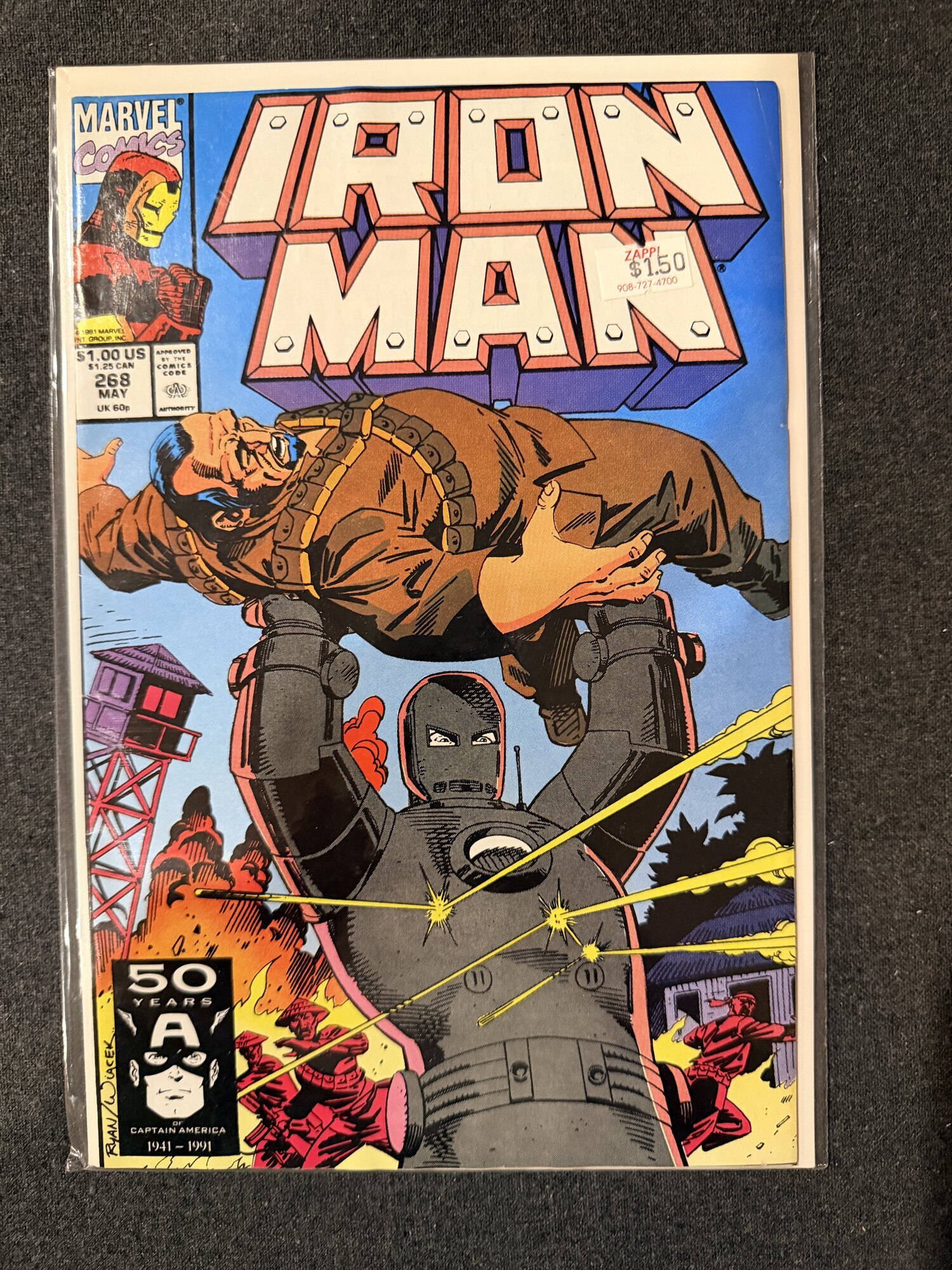
IRON MAN #268
John Byrne and Paul Ryan retell the origin of Iron Man and tie the Mandarin to Tony Stark's captivity in "First Blood" Part 2
// Unit specification
| Publisher | Cover date | Era | Variant | Key attribute | Status |
|---|---|---|---|---|---|
| Marvel Comics | May 1991 | Copper | — | — | AVAILABLE |
// Run position
// Condition analysis
Cover shows sharp corners and a glossy, unfaded surface with no visible creases, spine stress, or color breaks. A price sticker ('Zappi $1.50') is affixed directly to the cover art in the upper right, which is a permanent alteration/defect that caps the grade despite otherwise clean appearance. No tears, stains, or writing are visible. The barcode/UPC box is not visible in this crop, so newsstand/direct status could not be confirmed; interior pages and back cover were not assessed.
// Valuation — market reference
| Bracket | Grade | Est. market value | Marker |
|---|---|---|---|
| LOW_RAW | 0.5 – 1.5 | $2 | |
| MID_RAW | 4.0 – 6.0 | $4 | |
| HIGH_CERT | 9.8 SLAB | $65 |
// Archive commentary
Iron Man #268 closes the two-part "First Blood" story from the John Byrne run, with pencils by Paul Ryan, inks by Bob Wiacek, and a Ryan/Wiacek cover. The issue revisits Tony Stark's origin — the wound, the cave, Ho Yinsen, and Wong-Chu — and reframes it by placing the Mandarin's agent Chen Hsu at the edge of those events, drawing a line between Stark's captivity and the villain who would become his defining antagonist. It also feeds directly into the Dragon Seed material that follows, with Fin Fang Foom and the Valley of the Sleeping Dragon looming over the Byrne-era arc. As a retcon of one of Marvel's most retold origins it holds genuine narrative interest, but it is neither a first appearance nor a debut issue.
Market behavior matches that of an ordinary late Copper Age Marvel monthly with a strong print run. Raw copies circulate constantly in dealer boxes and online lots, and they move at bargain-bin levels regardless of whether the grade is Good or Very Fine, because supply in nice shape is effectively unlimited. Certification is the only real value lever: the census population is small simply because almost no one pays to slab the issue, so the occasional 9.8 sale reflects slabbing cost and scarcity of submissions more than collector demand. Interest ticks up modestly whenever the Mandarin returns to screen-adjacent attention, but that effect has been short-lived and has not established a durable premium.
The buyers here are Iron Man run collectors filling the 250-300 stretch, Byrne completists, and readers assembling the Mandarin and Fin Fang Foom storylines. In low and mid grades the book is best treated as inventory rather than investment, sold most efficiently in runs or bundles. At the top of the scale it functions as a registry-style purchase for set builders who want the whole Byrne stretch in high certified grade, and those sales are infrequent enough that a patient seller matters more than a sharp price. Origin-retelling status gives it a small edge over a random neighboring issue, but not enough to reclassify it as a key.
// Copies in archive
| Unit | Grade | Variant | Status |
|---|---|---|---|
| ECA-002657 | ~8.5 | — | AVAILABLE |
INQUIRE_ABOUT_THIS_UNIT
Institutional buyers, auction houses, and private collectors — direct line to the archive.