Approximate
Condition Profile
MARVEL COMICS · 3/70
UNIT ECA-006494
TOWER OF SHADOWS #4
Bronze Age Marvel horror anthology from the Tower of Shadows line
// Unit specification
| Publisher | Cover date | Era | Variant | Key attribute | Status |
|---|---|---|---|---|---|
| Marvel Comics | March 1970 | Bronze | — | — | AVAILABLE |
// Run position
// Condition analysis
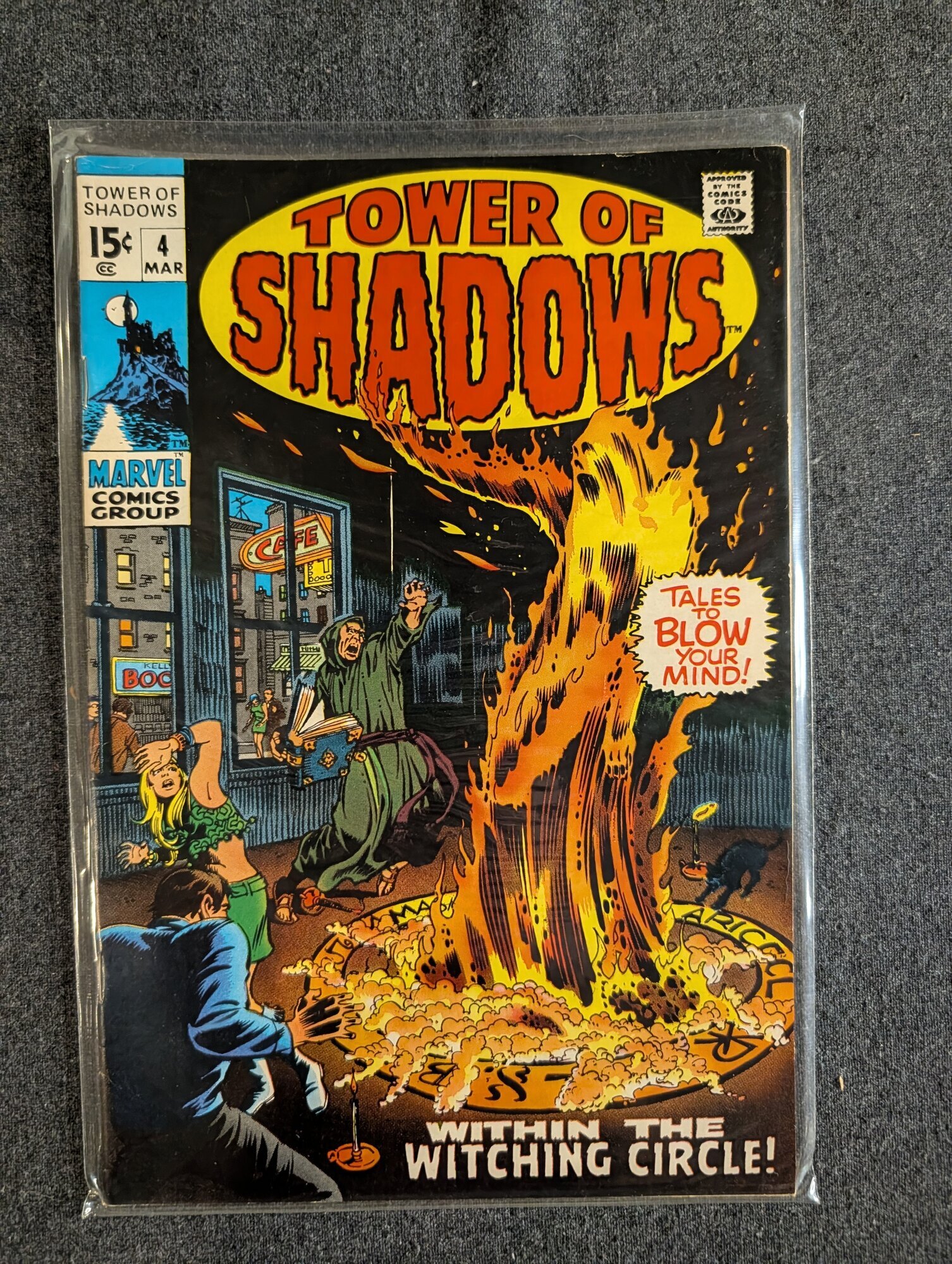
Cover shows moderate wear consistent with a mid-grade Bronze Age book: light surface scuffing and minor color rub along the edges, a few small spine ticks visible along the spine line, and slight corner softening at top right and bottom left. There is minor waviness/curl at the top edge and no major tears, creases, or color breaks visible. The book is in a protective sleeve which limits full assessment of gloss; back cover and interior pages were not visible and were not assessed.
// Valuation — market reference
| Bracket | Grade | Est. market value | Marker |
|---|---|---|---|
| LOW_RAW | 0.5 – 1.5 | $10 | |
| MID_RAW | 4.0 – 6.0 | $30 | |
| HIGH_CERT | 9.8 SLAB | $475 |
// Archive commentary
Tower of Shadows #4 belongs to Marvel's short-lived horror-anthology experiment of the late 1960s and early 1970s, a line that gave the company's artists room to work outside the superhero format during a period when the Comics Code still restricted traditional horror content. Like its sister titles, the series presented self-contained suspense and shock stories rather than continuing characters, with a recurring host figure bridging the tales. The book sits within a run frequently cited by collectors for its production values and for the caliber of artists Marvel rotated through the anthology format during this stretch, though issue #4 itself is not associated with any first appearance, origin story, or landmark creative milestone that would elevate it to key status.
Market activity for the issue is thin across the board. Certified sales cluster almost entirely in the 9.2 to 9.6 range, with only a handful of transactions recorded at each grade and essentially no trading below 7.0 or at the top of the census despite two copies graded 9.8. This pattern is typical of a lower-demand anthology title from the period: enough copies survive in high grade to satisfy modest collector interest, but the low volume of sales at nearly every point on the curve makes pricing more a matter of extrapolation than dense comp data. Demand appears driven mainly by Bronze Age horror-anthology completists and readers assembling full runs of Marvel's early-1970s suspense line rather than by any single marquee element of this issue.
At the low and mid grades, the book trades as an inexpensive run-filler, priced for readers rather than investors, and raw copies in that range should be expected to move slowly and cheaply. Mid-grade material occupies a similar niche, attracting anthology-run collectors without commanding a premium. The top of the market—high-grade certified copies—draws a narrower pool of Bronze Age horror specialists and census-chasers, where scarcity of true Gem Mint examples (and the total lack of recorded 9.8 sales) suggests any transaction at that grade would likely be an outlier event rather than part of an established trading pattern.
// Copies in archive
| Unit | Grade | Variant | Status |
|---|---|---|---|
| ECA-009318 | ~6.5 | — | AVAILABLE |
| ECA-006494 | ~6.0 | — | AVAILABLE |
INQUIRE_ABOUT_THIS_UNIT
Institutional buyers, auction houses, and private collectors — direct line to the archive.