Approximate
Condition Profile
DC COMICS · 12/69
UNIT ECA-007514
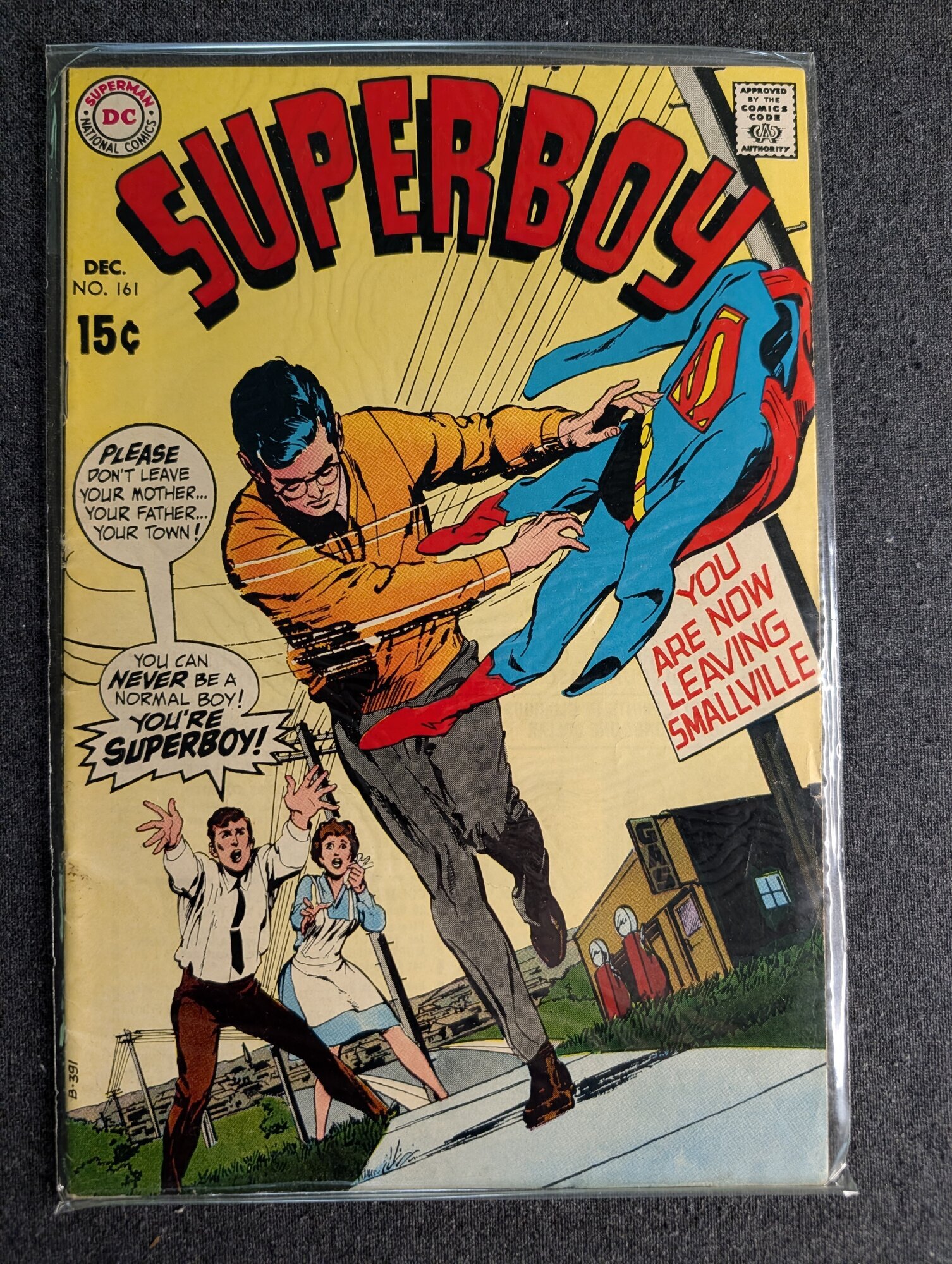
SUPERBOY #161
Late Silver Age Superboy issue with a thin CGC 9.8 population and no recorded 9.8 sale
// Unit specification
// Run position
// Condition analysis
Cover shows moderate wear typical of a Silver Age book: mild corner softening at the top corners, a couple of small spine ticks along the spine edge, and slight surface wear/rubbing visible in the yellow background. There is light waviness/handling to the cover but no major creases, tears, or color breaks visible. The book is in a protective sleeve which limits full assessment of edges; interior pages and back cover were not visible and were not assessed.
// Valuation — market reference
| Bracket | Grade | Est. market value | Marker |
|---|---|---|---|
| LOW_RAW | 0.5 – 1.5 | $4 | |
| MID_RAW | 4.0 – 6.0 | $12 | |
| HIGH_CERT | 9.8 SLAB | $225 |
// Archive commentary
Superboy #161, cover-dated December 1969, arrived near the close of DC's Silver Age run on the character, a title that had by then settled into a formula of Smallville melodrama, Kryptonite-driven plots, and occasional guest appearances from the broader Superman family. The issue carries no first appearance, origin story, or landmark creative milestone that collectors point to as a turning point for the character or the line; it is a representative example of the era's output rather than a pivotal chapter in Superboy's publishing history.
Market data on the title reflects that status: certified sales cluster in the 9.4-9.6 range, with FMVs of roughly $90 and $160 respectively, and a steep drop-off in both census population and sales activity below 8.0. The near-total absence of recorded sales at 9.8, despite a small number of census copies, points to a book that is scarce in top grade but not actively chased at a premium the way a recognized key would be; scarcity here is a function of low survival in high grade for a common late-1960s newsstand comic rather than collector-driven demand pressure.
This is a book suited to Superman-family completists and Silver Age DC run-builders rather than speculative buyers. Lower and mid-grade raw copies move as inexpensive fillers for long-box collections, while the CGC 9.8 tier will draw interest primarily from registry competitors chasing population-report rarity, since the certified pool at the top of the grade curve is thin enough that a fresh 9.8 could command a real premium over the last solid 9.6 sale.
// Copies in archive
| Unit | Grade | Variant | Status |
|---|---|---|---|
| ECA-007514 | ~6.0 | — | AVAILABLE |
INQUIRE_ABOUT_THIS_UNIT
Institutional buyers, auction houses, and private collectors — direct line to the archive.