Approximate
Condition Profile
DC COMICS · 10/70
UNIT ECA-007804
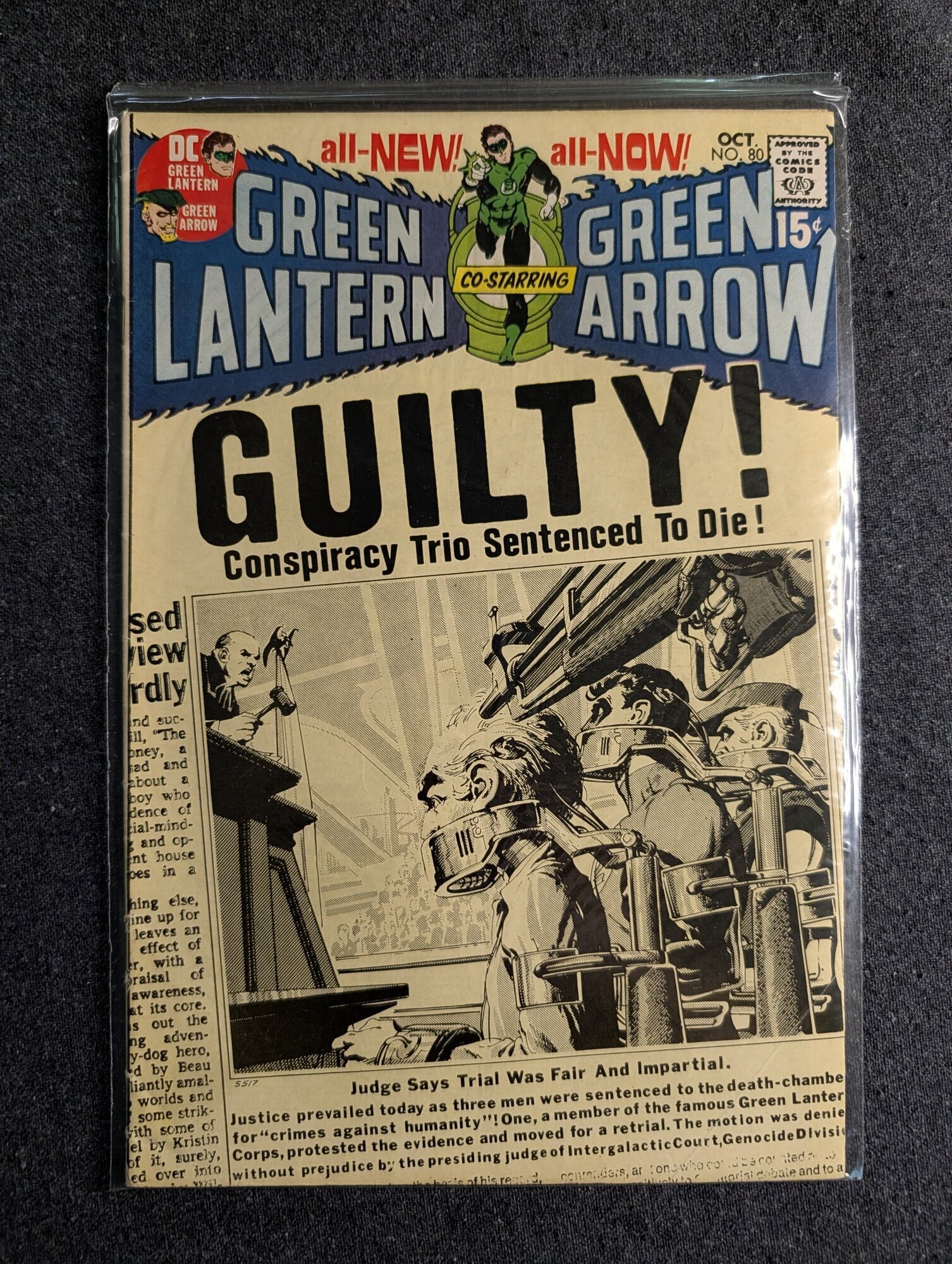
GREEN LANTERN #80
The famous Green Arrow drug issue with the Neal Adams cover
// Unit specification
| Publisher | Cover date | Era | Variant | Key attribute | Status |
|---|---|---|---|---|---|
| DC Comics | October 1970 | Bronze | — | First reveal that Speedy (Green Arrow's ward) is a heroin addict; second issue of the O'Neil/Adams "hard-traveling heroes" social-relevance run; Neal Adams cover and art; historically cited as prompting Comics Code Authority revisions on drug depiction | AVAILABLE |
// Run position
// Condition analysis
Book is in a protective sleeve; overall cover gloss is diminished with notable yellowing/tanning of the white background paper, consistent with age. There is visible wear at the top left corner and slight fraying along the top edge, plus faint vertical spine stress lines. No major tears, creases, or color breaks are evident in this photo, but interior and back cover were not assessed.
// Valuation — market reference
| Bracket | Grade | Est. market value | Marker |
|---|---|---|---|
| LOW_RAW | 0.5 – 1.5 | $10 | |
| MID_RAW | 4.0 – 6.0 | $23 | |
| HIGH_CERT | 9.8 SLAB | $1,600 |
// Archive commentary
Green Lantern #80 (October 1970) is the second chapter of Denny O'Neil and Neal Adams's socially conscious run on the title, and the issue most identified with it: it reveals that Speedy, Green Arrow's teenage ward, has become a heroin addict. Coming a year before the Comics Code Authority revised its stance on drug depictions in response to this very storyline, the issue is widely cited in comics history as a turning point in what mainstream superhero comics were permitted to address. Adams supplies both the interior art and one of his more restrained, subject-driven covers, reinforcing the book's reputation as message-driven rather than spectacle-driven Bronze Age superhero work.
The FMV curve shows a book that is common through the mid grades and only becomes scarce at the very top of the census: prices sit in the low double digits through 6.0-8.0, climb gradually into the $150-$210 range across 9.0-9.4, and then jump sharply to $1,600 at 9.8, where only 14 of 348 census copies currently reside. That kind of late curve steepening is typical of a widely-printed, widely-handled Bronze Age issue whose surviving high-grade population is thin relative to demand from Green Arrow and social-relevance-run collectors, rather than from any scarcity in the raw market. Sales volume across grades (over 150 recorded sales) indicates a well-tracked, liquid book at nearly every condition tier.
This is a book bought on story significance more than art-star premium, though the Adams cover adds a secondary layer of demand from cover collectors. Lower and mid-grade raw copies move steadily as reading and reference copies for O'Neil/Adams run collectors and general Bronze Age accumulators, trading in the tens of dollars. The real value concentration is at the CGC 9.8 tier, where a comparatively small certified population meets sustained interest from key-issue and Green Arrow specialists, producing outsized prices relative to the modest cost of admission in lower grades.
// Copies in archive
| Unit | Grade | Variant | Status |
|---|---|---|---|
| ECA-007804 | ~6.0 | — | AVAILABLE |
INQUIRE_ABOUT_THIS_UNIT
Institutional buyers, auction houses, and private collectors — direct line to the archive.