Approximate
Condition Profile
DC COMICS · 7/87
UNIT ECA-012676
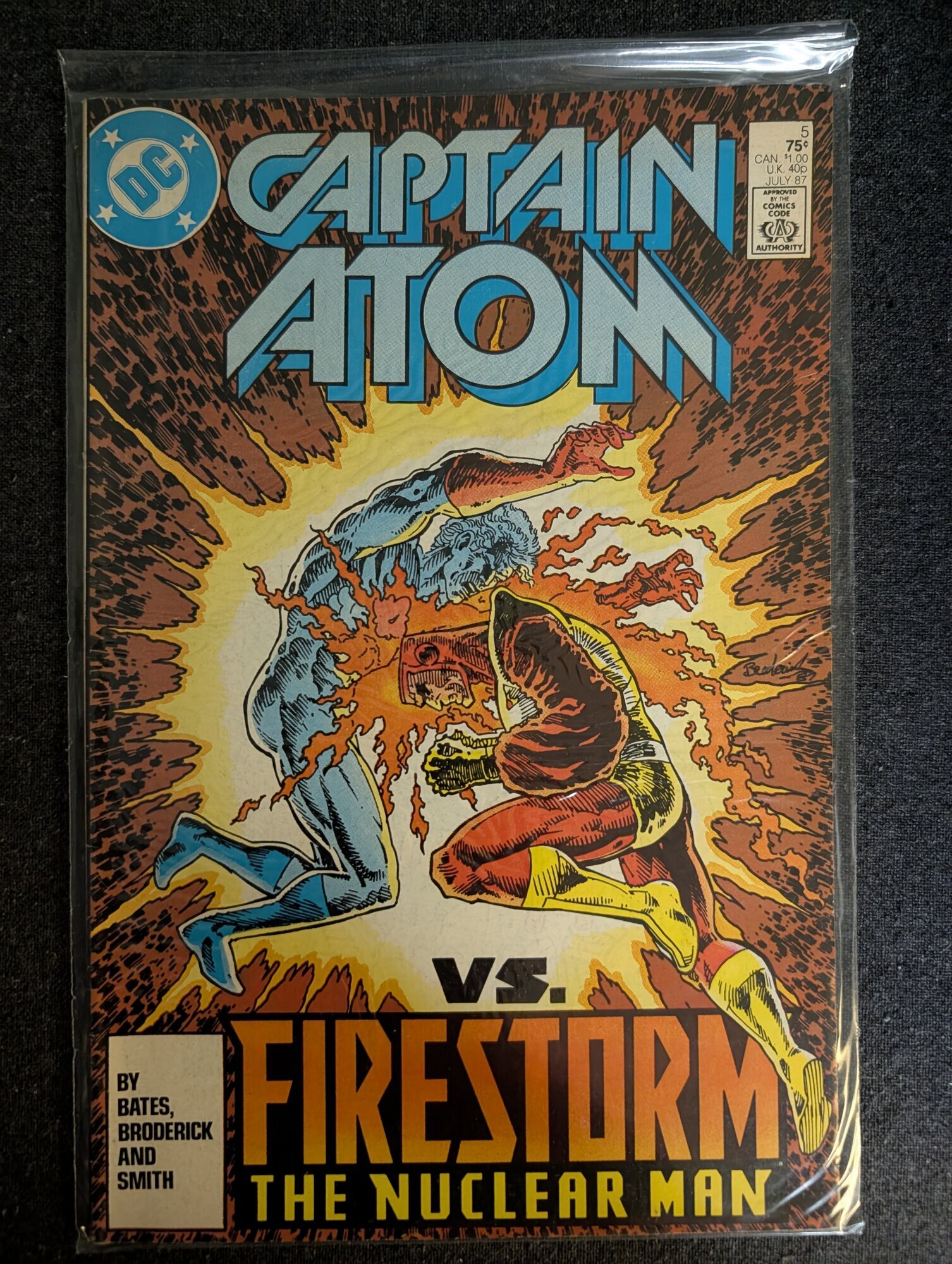
CAPTAIN ATOM #5
Cary Bates and Pat Broderick continue DC's post-Crisis Captain Atom relaunch
// Unit specification
// Copies in archive
| Unit | Grade | Variant | Status |
|---|---|---|---|
| ECA-012676 | ~9.0 | — | AVAILABLE |
// Run position
// Condition analysis
Cover shows strong gloss and sharp corners with no visible creases or spine stress lines. Image is slightly obscured by a plastic sleeve causing minor glare and slight surface waviness/reflection across the cover, making fine assessment difficult. No visible chipping, tears, or discoloration; edges appear clean. Interior and back cover were not assessed, so grade is capped conservatively.
// Valuation — market reference
| Bracket | Grade | Est. market value | Marker |
|---|---|---|---|
| LOW_RAW | 0.5 – 1.5 | $2 | |
| MID_RAW | 4.0 – 6.0 | $4 | |
| HIGH_CERT | 9.8 SLAB | $60 |
// Archive commentary
Captain Atom #5 is an early issue of DC's 1987 ongoing series that reintroduced Steve Ditko's Silver Age creation as a government-controlled superhero grappling with Cold War politics and his own manufactured origin. Writers Cary Bates and Greg Weisman, working with penciler Pat Broderick, built the series around Captain Atom's uneasy relationship with the military establishment (embodied by General Wade Eiling) and his evolving code of ethics, themes that would later feed into his use as a model for Watchmen's Doctor Manhattan in broader fan discussion. This issue falls within the title's early arc, developing supporting cast and continuing plot threads rather than introducing new characters or concepts.
The book carries no first appearance, no notable death, and no standout cover moment that has entered price-guide key lists; it is a mid-run chapter in a series most collectors pursue as a complete run rather than for a single issue. Demand is driven almost entirely by Captain Atom completists and Copper Age DC readers rebuilding the 1987-1991 series, with little crossover interest from outside that niche. As is typical for non-key issues of this era, raw copies circulate cheaply and graded slabs are uncommon simply because few copies were ever submitted, not because of scarcity in absolute terms.
Collectors of this issue are principally series completists and Captain Atom fans rather than speculators, and the book trades accordingly: inexpensive in any raw grade, with graded examples commanding a premium mostly tied to slab scarcity and presentation rather than any recognized significance. It suits a long-box or run-building purchase rather than a standalone investment piece, and buyers should expect it to move slowly and modestly regardless of grade.
INQUIRE_ABOUT_THIS_UNIT
Institutional buyers, auction houses, and private collectors — direct line to the archive.