Approximate
Condition Profile
MARVEL COMICS · 1/89 · DIRECT EDITION
UNIT ECA-003691
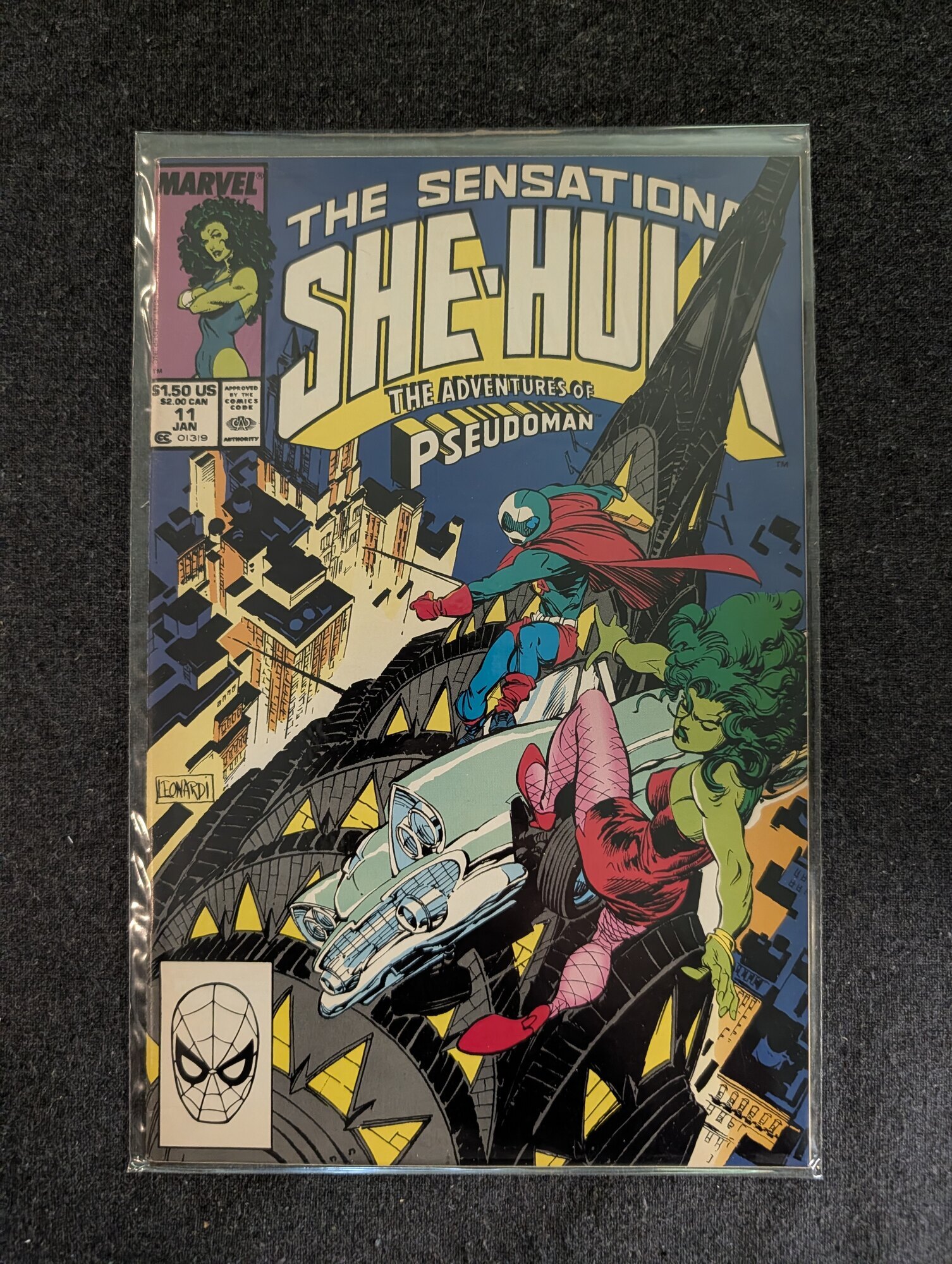
THE SENSATIONAL SHE-HULK #11
Steve Gerber and Bryan Hitch mid-run issue introducing Pseudo-Man, under a Rick Leonardi cover
// Unit specification
| Publisher | Cover date | Era | Variant | Key attribute | Status |
|---|---|---|---|---|---|
| Marvel Comics | January 1989 | Copper | Direct Edition | — | AVAILABLE |
// Copies in archive
| Unit | Grade | Variant | Status |
|---|---|---|---|
| ECA-003691 | ~9.0 | Direct Edition | AVAILABLE |
// Run position
// Condition analysis
Cover shows sharp corners and clean, glossy surfaces with strong color saturation and no visible spine stress or ticks. No creases, tears, or stains are apparent, and the Spider-Man head direct-edition box is crisp and undamaged. The book is in a protective sleeve, which limits full assessment of edge wear and gloss under different lighting; interior and back cover were not assessed.
// Valuation — market reference
| Bracket | Grade | Est. market value | Marker |
|---|---|---|---|
| LOW_RAW | 0.5 – 1.5 | $3 | |
| MID_RAW | 4.0 – 6.0 | $6 | |
| HIGH_CERT | 9.8 SLAB | $110 |
// Archive commentary
The Sensational She-Hulk #11 arrives during Steve Gerber's stint on the series, with interior art by a young Bryan Hitch inked by a rotating team including Al Gordon, Bob Wiacek, and Randy Emberlin. The issue is best remembered for introducing the minor villain Pseudo-Man and for its irreverent, fourth-wall-aware humor typical of the Gerber run, which leaned into meta-commentary and satire more than traditional superhero plotting. Guest appearances by Golden Age holdovers Blonde Phantom and Uncle Sam, alongside an incongruous cameo from fast-food mascot Ronald McDonald, underscore the title's comedic, genre-bending tone during this period.
Market data shows a shallow but present collector base: a 9.8 census of 21 copies against 17 recorded sales suggests steady if modest turnover at the top grade, while sales activity drops off sharply below 9.6, with only a single sale recorded at 9.4 and none below that. This pattern is typical of a late-1980s direct-market title that was never scarce in circulation and has not developed a significant secondary demand curve outside of high-grade completists. Pseudo-Man has not become a sought-after first appearance, so the book's value is driven almost entirely by condition census chasing rather than character-based demand.
This issue functions as a bulk-bin to mid-tier registry book: raw copies in low and mid grade hold nominal value and are typically acquired as part of run sets or Gerber/Hitch collections rather than individually sought out, while CGC 9.8 examples command a real but modest premium tied to the tight top-grade population. Buyers are largely series completists, Bryan Hitch early-work collectors, and registry participants chasing the highest census slots rather than speculators on character significance.
INQUIRE_ABOUT_THIS_UNIT
Institutional buyers, auction houses, and private collectors — direct line to the archive.