Approximate
Condition Profile
DC COMICS · 2/63
UNIT ECA-007980
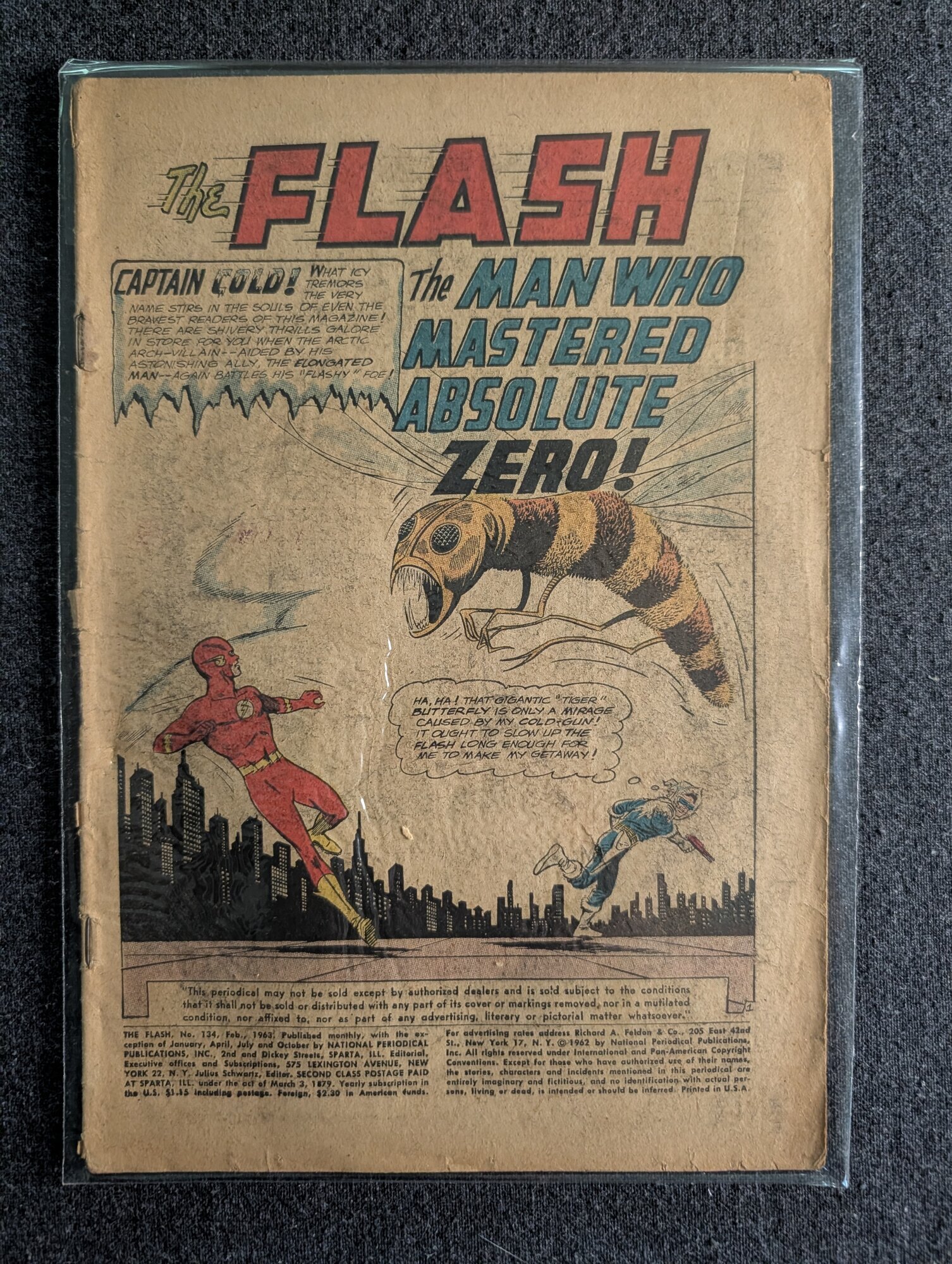
THE FLASH #134
Silver Age Flash adventure featuring Carmine Infantino art from the height of Barry Allen's run
// Unit specification
// Run position
// Condition analysis
This Silver Age cover shows heavy overall tanning/browning typical of the era's newsprint stock, with noticeable foxing spots scattered across the cover. There is visible spine wear with stress lines and slight roll, a small closed tear along the left edge near the staple, and rounded/worn corners, particularly at the top right. The staple area shows some rust migration and minor paper loss at the edges; interior and back cover were not assessed in this photo.
// Valuation — market reference
| Bracket | Grade | Est. market value | Marker |
|---|---|---|---|
| LOW_RAW | 0.5 – 1.5 | $10 | |
| MID_RAW | 4.0 – 6.0 | $26 | |
| HIGH_CERT | 9.8 SLAB | $1,400 |
// Archive commentary
The Flash #134 (February 1963) arrived during the high point of DC's Silver Age revival of the character, with John Broome scripting and Carmine Infantino providing his signature clean-line, kinetic artwork that defined the era's visual language for the Scarlet Speedster. The issue sits within a run that includes landmark stories surrounding Barry Allen's adventures and the character's ongoing science-fiction-inflected plotting, hallmarks of Broome and Infantino's collaborative influence on the superhero genre during this period. While the issue itself is not tied to a recognized first appearance, origin, or major creative milestone, it remains representative of the title's strongest creative stretch and is often sought by completists building a run of early-1960s Flash issues.
Market data shows a typical Silver Age demand curve: modest and largely flat pricing through the low-to-mid grades, a meaningful jump beginning around VF (8.0) and above, and increasing scarcity at the top of the census, where only a handful of copies exist in the 9.4-9.6 range and none have yet been certified at 9.8. Sales volume is healthy across most grade tiers, indicating a book that circulates steadily among Silver Age collectors and dealers rather than one driven by speculative spikes. The absence of a 9.8 on the census is notable for a book of this vintage and print run size, suggesting that a pristine copy, when it eventually surfaces, would draw outsized attention relative to the issue's non-key status.
This is a book for Silver Age Flash run-builders and Infantino/Broome-era completists rather than key-issue speculators. Lower and mid-grade raw copies trade as affordable, accessible pieces of a broader collection, priced modestly and consistently across dealer inventories and online marketplaces. High-grade certified copies, by contrast, are scarce enough that pricing becomes far less predictable, and a true 9.8 would likely command a premium disproportionate to the issue's modest historical significance, driven purely by condition rarity rather than content.
// Copies in archive
| Unit | Grade | Variant | Status |
|---|---|---|---|
| ECA-007980 | ~2.5 | — | AVAILABLE |
INQUIRE_ABOUT_THIS_UNIT
Institutional buyers, auction houses, and private collectors — direct line to the archive.