Approximate
Condition Profile
DC COMICS · 6/70
UNIT ECA-007523
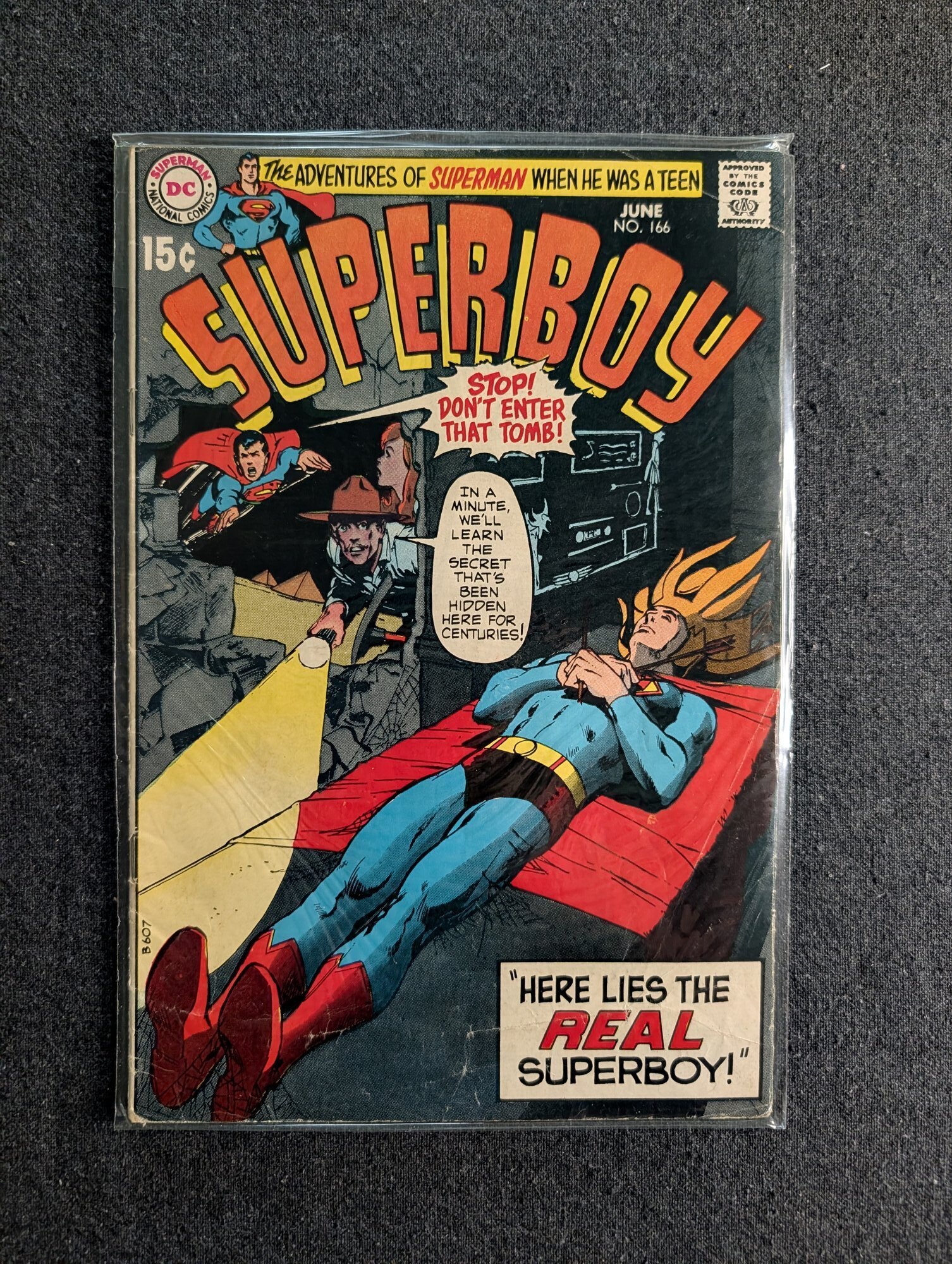
SUPERBOY #166
Superboy and the Legion of Super-Heroes share the spotlight in a Bronze Age issue
// Unit specification
// Run position
// Condition analysis
Cover shows moderate wear consistent with a mid-grade Silver Age book: a noticeable crease and small tear/stress point along the bottom right corner near the caption box, a vertical crease running through the lower portion of the cover, and general softness at the corners. Spine shows some stress but no major color break visible; slight discoloration/staining is visible along the lower left edge. Book is in a protective sleeve, and only the front cover was assessed – interior and back cover condition are unknown.
// Valuation — market reference
| Bracket | Grade | Est. market value | Marker |
|---|---|---|---|
| LOW_RAW | 0.5 – 1.5 | $10 | |
| MID_RAW | 4.0 – 6.0 | $22 | |
| HIGH_CERT | 9.8 SLAB | $160 |
// Archive commentary
Superboy #166 arrived in mid-1970 during the period when the Superboy title regularly co-starred the Legion of Super-Heroes, reflecting DC's broader push to expand the Legion's fanbase before it earned its own ongoing series later in the decade. The issue is a standard entry in a long-running Bronze Age superhero book, produced by DC's regular Superboy creative rotation of the era, without a first appearance, death, or other landmark event attached to its story.
Market activity for the issue is thin and consistent with a mid-pack Bronze Age back-issue: certified sales cluster in the $38 to $100 range across mid-to-high grades, with a modest but steady step-up in value as grade climbs from very fine to near mint. There is no meaningful gap in demand at any grade tier, suggesting collectors treat this as a run-completion book for Superboy or Legion of Super-Heroes collections rather than a standalone target, and pricing moves incrementally with condition rather than showing a sharp key-issue premium.
This is a book bought primarily by Superboy and Legion of Super-Heroes completists and Bronze Age DC runs collectors rather than speculative investors. Lower grades trade cheaply and are readily available given the healthy census size, while high-grade and unslabbed near-mint copies see a proportionally larger price jump reflecting their relative scarcity at the top of the pop report; a 9.8 example, though absent from current certified population, would be expected to command a clear premium over the best-known 9.6 copies.
// Copies in archive
| Unit | Grade | Variant | Status |
|---|---|---|---|
| ECA-007523 | ~4.0 | — | AVAILABLE |
INQUIRE_ABOUT_THIS_UNIT
Institutional buyers, auction houses, and private collectors — direct line to the archive.