Approximate
Condition Profile
MARVEL COMICS · 4/76
UNIT ECA-006218
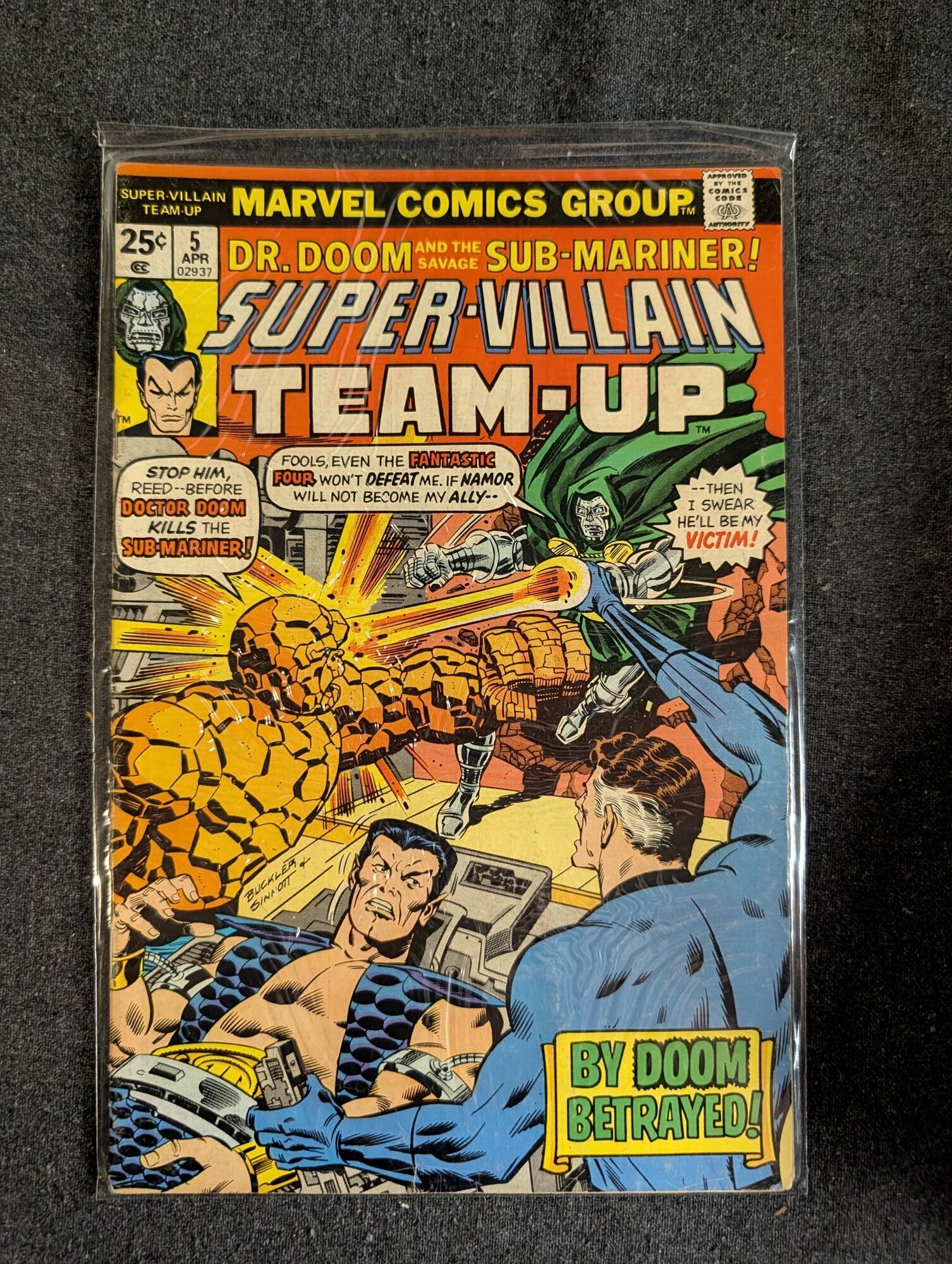
SUPER-VILLAIN TEAM-UP #5
Doctor Doom and the Sub-Mariner clash in a mid-1970s Marvel villain team-up
// Unit specification
| Publisher | Cover date | Era | Variant | Key attribute | Status |
|---|---|---|---|---|---|
| Marvel Comics | April 1976 | Bronze | — | — | AVAILABLE |
// Copies in archive
| Unit | Grade | Variant | Status |
|---|---|---|---|
| ECA-006218 | ~7.0 | — | AVAILABLE |
// Run position
// Condition analysis
Cover housed in a plastic sleeve which obscures fine detail assessment; visible diagonal light crease/stress line running through the upper right portion of the cover art, and a few small surface scuffs/scratches near the top edge and spine area. Corners appear reasonably sharp with minor blunting, and the spine shows slight wear but no major color break visible. Cover gloss looks moderate with some flattening from age. Interior and back cover were not assessed, and the protective sleeve may be hiding additional minor defects.
// Valuation — market reference
| Bracket | Grade | Est. market value | Marker |
|---|---|---|---|
| LOW_RAW | 0.5 – 1.5 | $4 | |
| MID_RAW | 4.0 – 6.0 | $16 | |
| HIGH_CERT | 9.8 SLAB | $450 |
// Archive commentary
Super-Villain Team-Up #5 arrived during Marvel's mid-1970s push to pair its most formidable antagonists in ongoing series, continuing the uneasy alliance between Doctor Doom and Prince Namor, the Sub-Mariner, that anchored the title's early run. The book reflects a period when Marvel experimented with villain-centric ongoing series as a counterpoint to its hero-driven line, and it captures Doom in one of his rare extended co-starring roles outside Fantastic Four continuity. While the issue introduces no new characters and carries no origin or death significant to either character's history, it remains a representative chapter in a series prized by Doctor Doom completists and Sub-Mariner collectors alike.
The certified population is substantial for a niche Bronze Age title, with over 150 universal copies graded and sales activity spread fairly evenly across the grade spectrum. Pricing follows a familiar Bronze Age pattern: raw and lower-grade copies trade for modest sums reflecting ready availability, while a pronounced premium emerges at the top of the census, where 9.8 copies command several multiples of the 9.6 price point despite a reasonably deep sales history at that grade. Demand appears steady rather than speculative, driven by ongoing collector interest in Doctor Doom appearances rather than by any landmark first-appearance status.
This is a book most likely to move through general Bronze Age want lists and villain-character subsets rather than headline auctions. Lower and mid-grade copies serve run-builders and value-conscious collectors assembling the Super-Villain Team-Up series, while pristine 9.8 slabs draw registry-focused buyers competing for top-census position in a title where high grade is scarce relative to overall population. Across the grade curve, the book behaves as steady, unspectacular Bronze Age material with a well-defined ceiling at the top grade rather than open-ended growth potential.
INQUIRE_ABOUT_THIS_UNIT
Institutional buyers, auction houses, and private collectors — direct line to the archive.