Approximate
Condition Profile
MARVEL COMICS · 3/76
UNIT ECA-012238
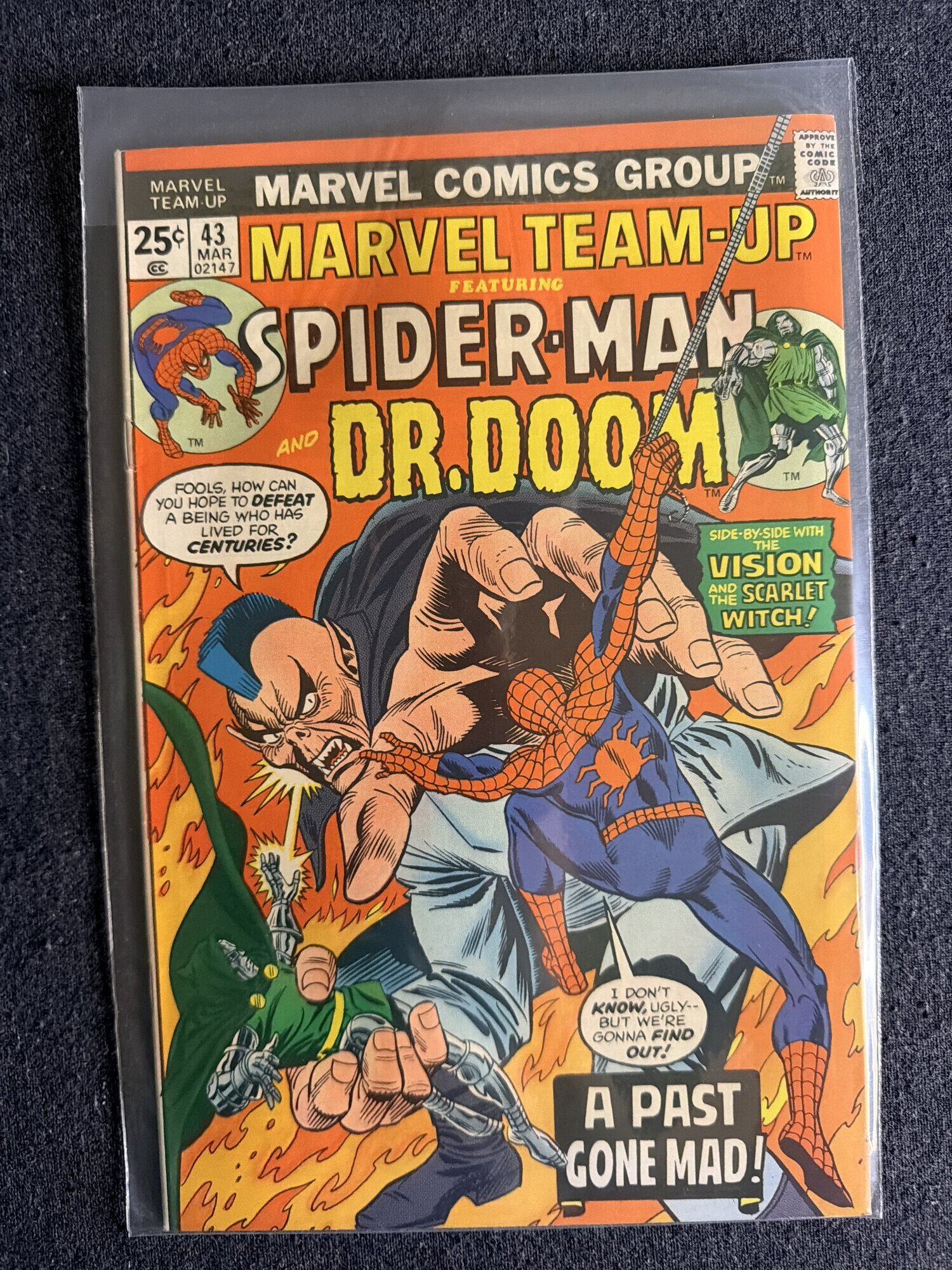
MARVEL TEAM-UP #43
Bronze Age Spider-Man team-up issue from the mid-1970s run of Marvel Team-Up
// Unit specification
| Publisher | Cover date | Era | Variant | Key attribute | Status |
|---|---|---|---|---|---|
| Marvel Comics | March 1976 | Bronze | — | — | AVAILABLE |
// Run position
// Condition analysis
Cover shows strong gloss and vibrant orange coloring with no visible fading. Corners appear sharp with only minor blunting at the top right, and the spine shows no obvious stress lines or color breaks in this view. No creases, tears, or stains are visible on the front cover, though the book is in a protective sleeve which may obscure minor surface wear. Interior pages and back cover were not assessed, so the grade reflects front-cover evidence only.
// Valuation — market reference
| Bracket | Grade | Est. market value | Marker |
|---|---|---|---|
| LOW_RAW | 0.5 – 1.5 | $5 | |
| MID_RAW | 4.0 – 6.0 | $10 | |
| HIGH_CERT | 9.8 SLAB | $425 |
// Archive commentary
Marvel Team-Up #43 (March 1976) is part of the long-running Bronze Age anthology series pairing Spider-Man with a rotating cast of Marvel heroes and villains each issue, a format that let Marvel test creative pairings outside the wall-crawler's core titles. The book reflects the mid-1970s Marvel house style, with interior work typical of the era's rotating writer-artist teams on the title, and it sits within a run collectors pursue more for completeness of the series than for any single landmark event in this specific issue.
Market data shows a typical long-tail Bronze Age curve: certified copies at the top of the grading scale command a real premium, with 9.8s trading in the low hundreds against a thin census of high-grade survivors, while mid- and low-grade raw copies settle into bargain-bin territory. Demand is driven primarily by Spider-Man completists and Marvel Team-Up run collectors rather than by any first-appearance or origin significance, which keeps the ceiling well below true key issues of the period even as pristine copies see steady bidding activity.
This issue trades as a filler book in most conditions, moving cheaply in raw low and mid grades where buyers are typically assembling full runs rather than chasing a specific highlight. The real value concentration is at the CGC 9.8 tier, where scarcity of pristine surviving copies against a 100-copy total census supports meaningfully higher prices; collectors seeking this title in top holder grade should expect competition for the small pool of Universal 9.8s, while raw copies remain an accessible, low-cost entry point into the series.
// Copies in archive
| Unit | Grade | Variant | Status |
|---|---|---|---|
| ECA-012238 | ~9.0 | — | AVAILABLE |
INQUIRE_ABOUT_THIS_UNIT
Institutional buyers, auction houses, and private collectors — direct line to the archive.