Approximate
Condition Profile
DC COMICS · 8/89
UNIT ECA-001679
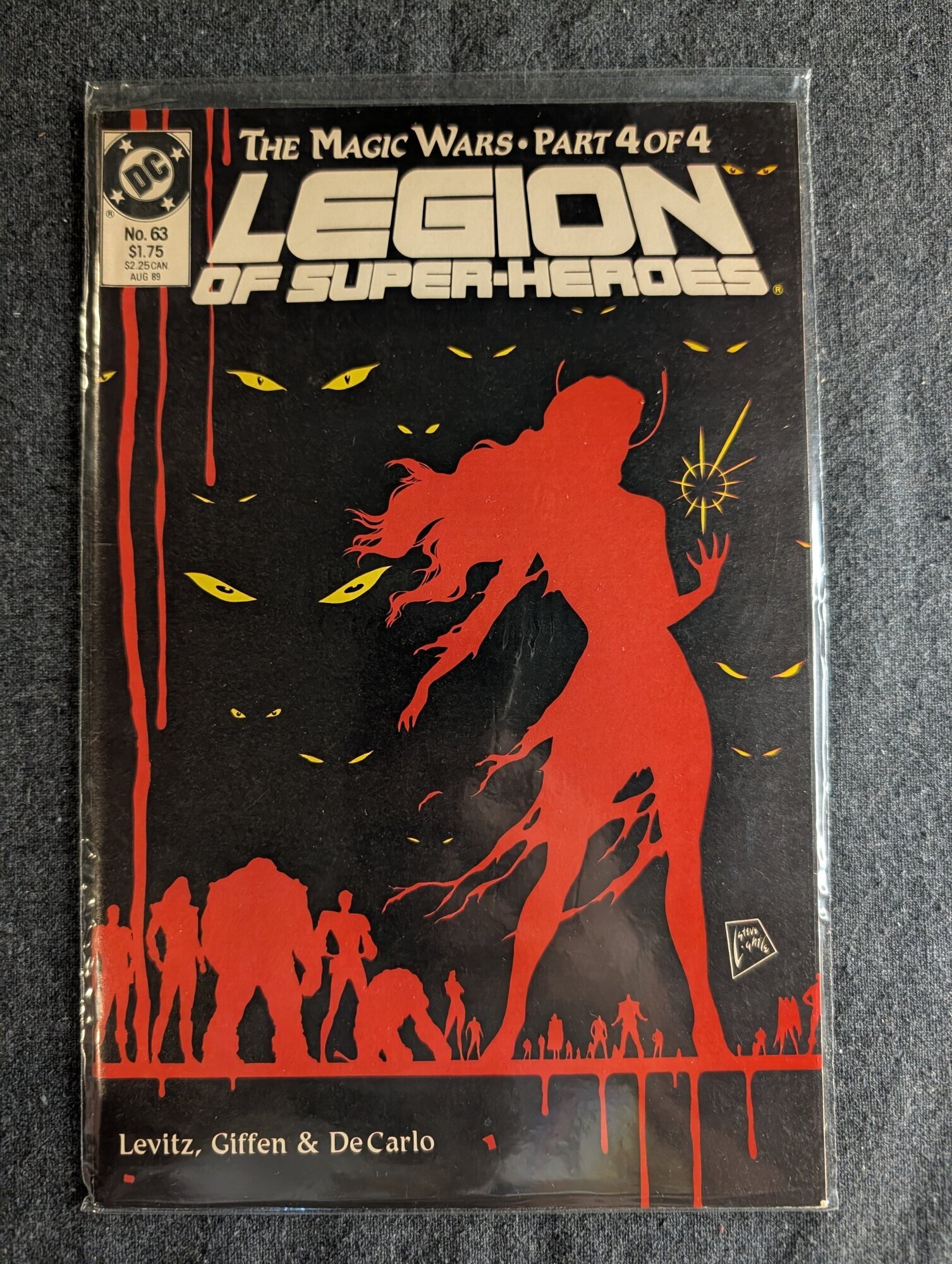
LEGION OF SUPER-HEROES #63
Final issue of Legion of Super-Heroes vol. 3, concluding "The Magic Wars" — death of Magnetic Kid, Steve Lightle cover
// Unit specification
| Publisher | Cover date | Era | Variant | Key attribute | Status |
|---|---|---|---|---|---|
| DC Comics | August 1989 | Copper | — | Final issue of Legion of Super-Heroes vol. 3; conclusion of "The Magic Wars"; death of Magnetic Kid (Pol Krinn); last issue of the Paul Levitz/Keith Giffen Baxter run before the Five Years Later relaunch | AVAILABLE |
// Run position
// Condition analysis
Cover shows sharp corners, strong glossy surface, and no visible creases or spine stress lines in this photo; the book is protected in a plastic sleeve which limits full assessment. No color breaks, tears, or stains are visible on the front cover. Grade is capped conservatively since only the front cover is shown and interior/back cover were not assessed.
// Valuation — market reference
| Bracket | Grade | Est. market value | Marker |
|---|---|---|---|
| LOW_RAW | 0.5 – 1.5 | $2 | |
| MID_RAW | 4.0 – 6.0 | $3 | |
| HIGH_CERT | 9.8 SLAB | $70 |
// Archive commentary
Cover-dated August 1989, this is the closing chapter of the Baxter-format Legion of Super-Heroes launched in 1984, and the fourth and final part of "The Magic Wars." Paul Levitz scripts over Keith Giffen layouts with finished art by Mike DeCarlo, under a Steve Lightle cover. The story resolves the collapse of technology across the United Planets and ends with Magnetic Kid, Pol Krinn, sacrificing himself to stop the sorcerous cataclysm — the last of the many roster casualties that defined Levitz's run. Its structural importance is that it closes the Levitz-Giffen era outright: the series relaunched months later as volume four, jumping the setting forward in the "Five Years Later" continuity that reshaped Legion publishing for the next half-decade.
Market behavior follows the pattern of late-1980s direct-sale DC titles. The Baxter series was sold through comic shops rather than newsstands, so surviving copies skew high grade and supply in Very Fine and better remains ample, which caps raw pricing regardless of the storyline's narrative weight. Certification is uncommon; Legion volume three is collected as a run rather than as individual slabs, and the census population for late issues is thin because submission economics rarely justify grading a book of this price level. Demand is concentrated among readers completing the 1984-1989 run and among collectors tracking Legionnaire deaths, neither of which generates the auction record that drives visible price movement.
Buyers here are run collectors, Levitz-era Legion specialists, and dealers assembling complete sets — a constituency that pays modest premiums for the final issue over generic mid-run numbers. Across grades the spread is compressed: low-grade copies function as reading material, mid-grade copies trade at little more than bulk, and value only meaningfully separates at the top of the grade scale, where a certified high-grade example is priced largely by scarcity of submissions rather than by underlying collector heat. A rise in Legion interest tied to media adaptations has historically lifted this run briefly, so the sensible approach is patience on high-grade certified copies and volume handling of everything below.
// Copies in archive
| Unit | Grade | Variant | Status |
|---|---|---|---|
| ECA-001679 | ~9.2 | — | AVAILABLE |
INQUIRE_ABOUT_THIS_UNIT
Institutional buyers, auction houses, and private collectors — direct line to the archive.