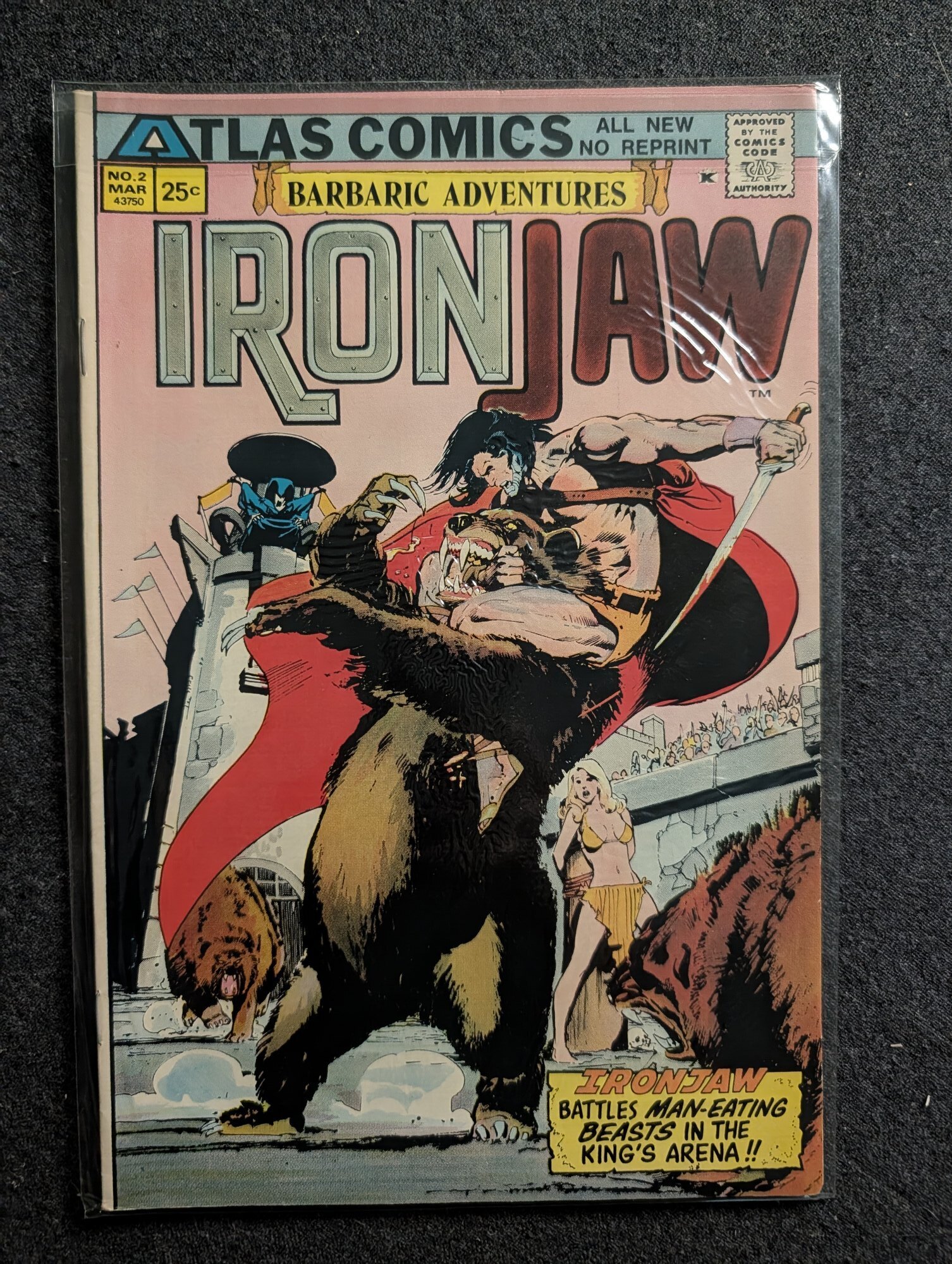
Approximate
Condition Profile
ATLAS COMICS · 3/75
UNIT ECA-033200
IRONJAW #2
Sword-and-sorcery adventure from Atlas Comics' short-lived 1975 line
// Unit specification
| Publisher | Cover date | Era | Variant | Key attribute | Status |
|---|---|---|---|---|---|
| Atlas Comics | March 1975 | Bronze | — | — | AVAILABLE |
// Copies in archive
| Unit | Grade | Variant | Status |
|---|---|---|---|
| ECA-033200 | ~6.5 | — | AVAILABLE |
// Run position
// Condition analysis
Cover shows moderate wear consistent with a mid-grade copy: a noticeable diagonal crease/scuff running through the logo area, mild edge wear along the spine, and slight corner softness at top right. Colors remain bright with no visible fading or staining, and the book is in a protective sleeve which shows some surface scratches unrelated to the comic itself. Interior and back cover were not assessed.
// Valuation — market reference
| Bracket | Grade | Est. market value | Marker |
|---|---|---|---|
| LOW_RAW | 0.5 – 1.5 | $2 | |
| MID_RAW | 4.0 – 6.0 | $6 | |
| HIGH_CERT | 9.8 SLAB | $85 |
// Archive commentary
Ironjaw #2 continues the brief run of Atlas Comics' brutal sword-and-sorcery antihero, created by writer Michael Fleisher for the company's 1975 publishing push. Atlas Comics (often called Atlas/Seaboard by collectors, to distinguish it from the earlier 1950s Atlas and from Marvel) was a short-lived venture assembled by Martin Goodman after he left Marvel, and it recruited a notable roster of writers and artists before folding within about a year. Ironjaw, a one-eyed, iron-jawed warrior modeled loosely on the barbarian archetype popularized by Conan, was one of several genre titles the company launched in an attempt to compete in the fantasy-adventure space; the series lasted only a handful of issues before Atlas shut down.
As an issue with no published fair-market value on record, this book trades as a common reader copy rather than a book with active bidding demand. Atlas/Seaboard's overall output carries a modest curiosity premium among collectors interested in 1970s publishing history and short-run imprints, since low print numbers and the company's quick collapse mean surviving copies are not heavily traded, but that scarcity has not translated into meaningful price-guide recognition for individual issues like this one. Demand is driven mainly by genre completists building out sword-and-sorcery runs and by collectors specifically chasing the Atlas/Seaboard line as a discrete historical footnote rather than by any character or creator milestone tied to issue #2 itself.
This is a book for company-specific and genre collectors rather than mainstream key-issue buyers. Raw copies move cheaply and infrequently, largely through back-issue bins and specialty Bronze Age dealers, while certified high-grade copies are rare enough on the market that any 9.8 sale would likely be an outlier event rather than part of an established trend. Collectors assembling a complete Atlas/Seaboard run, or fans of Michael Fleisher's genre work outside his better-known mainstream credits, represent the most likely audience.
INQUIRE_ABOUT_THIS_UNIT
Institutional buyers, auction houses, and private collectors — direct line to the archive.