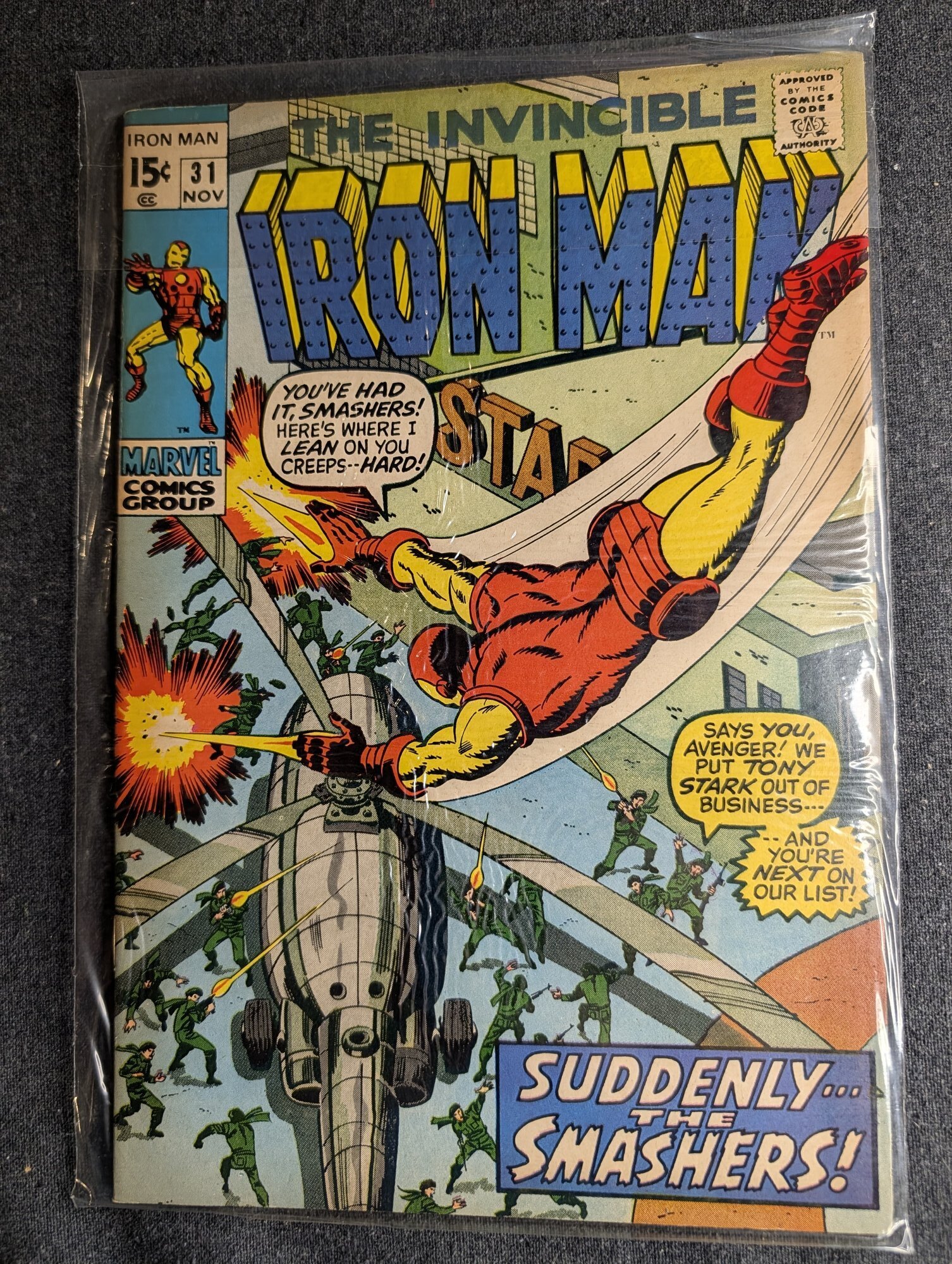
Approximate
Condition Profile
MARVEL COMICS · 11/70
UNIT ECA-003007
IRON MAN #31
Bronze Age Iron Man adventure with Archie Goodwin script and George Tuska art
// Unit specification
| Publisher | Cover date | Era | Variant | Key attribute | Status |
|---|---|---|---|---|---|
| Marvel Comics | November 1970 | Bronze | — | — | AVAILABLE |
// Copies in archive
| Unit | Grade | Variant | Status |
|---|---|---|---|
| ECA-003007 | ~6.5 | — | AVAILABLE |
// Run position
// Condition analysis
Cover shows moderate wear consistent with a mid-grade Bronze Age book: light rubbing and minor color loss along the spine, a few small spine stress marks, and slight fraying/wear at the top and bottom corners. There is a light crease/scuff visible near the upper right of the cover art and general surface sheen loss suggesting handling over time. The book is in a protective sleeve which creates some glare; interior pages and back cover were not visible for assessment.
// Valuation — market reference
| Bracket | Grade | Est. market value | Marker |
|---|---|---|---|
| LOW_RAW | 0.5 – 1.5 | $8 | |
| MID_RAW | 4.0 – 6.0 | $18 | |
| HIGH_CERT | 9.8 SLAB | $550 |
// Archive commentary
Iron Man #31 (November 1970) arrived during Marvel's early Bronze Age expansion of the character, scripted by Archie Goodwin with pencils by George Tuska, the primary art team steering the title through this period. The issue continues the standard superhero storyline template of the run without introducing a new villain, supporting cast member, or plot element that has since become a recognized first appearance, and it carries no notable death or landmark creative milestone. Its interest lies chiefly in being a representative example of the Goodwin/Tuska Iron Man collaboration rather than any single event within its pages.
Market data shows a typical mid-run Bronze Age curve: raw and low-grade copies trade for modest sums reflecting high surviving population (193 census copies against 199 total graded), while values climb meaningfully only in the near-mint tiers, with a pronounced jump between 9.4 and 9.6. The absence of any 9.8 on the census after nearly two hundred submissions indicates the book is difficult to find in true gem condition, likely due to page or centering issues common to the era's printing rather than scarcity of surviving copies overall. Demand is driven primarily by Iron Man completists and Bronze Age run-builders rather than speculative or crossover interest.
This issue suits collectors assembling a complete Iron Man Bronze Age run more than investors chasing key-issue appreciation. Lower and mid-grade raw copies remain inexpensive and plentiful, making the book an easy, low-cost run-filler; the real value differentiation only appears at the top of the grading scale, where the lack of any certified 9.8 creates a meaningful premium for the finest surviving examples. Absent a rediscovered high-grade census population, top-tier copies should continue to command a disproportionate share of the book's total value relative to its mid-grade counterparts.
INQUIRE_ABOUT_THIS_UNIT
Institutional buyers, auction houses, and private collectors — direct line to the archive.