Approximate
Condition Profile
MARVEL COMICS · 4/93
UNIT ECA-002859
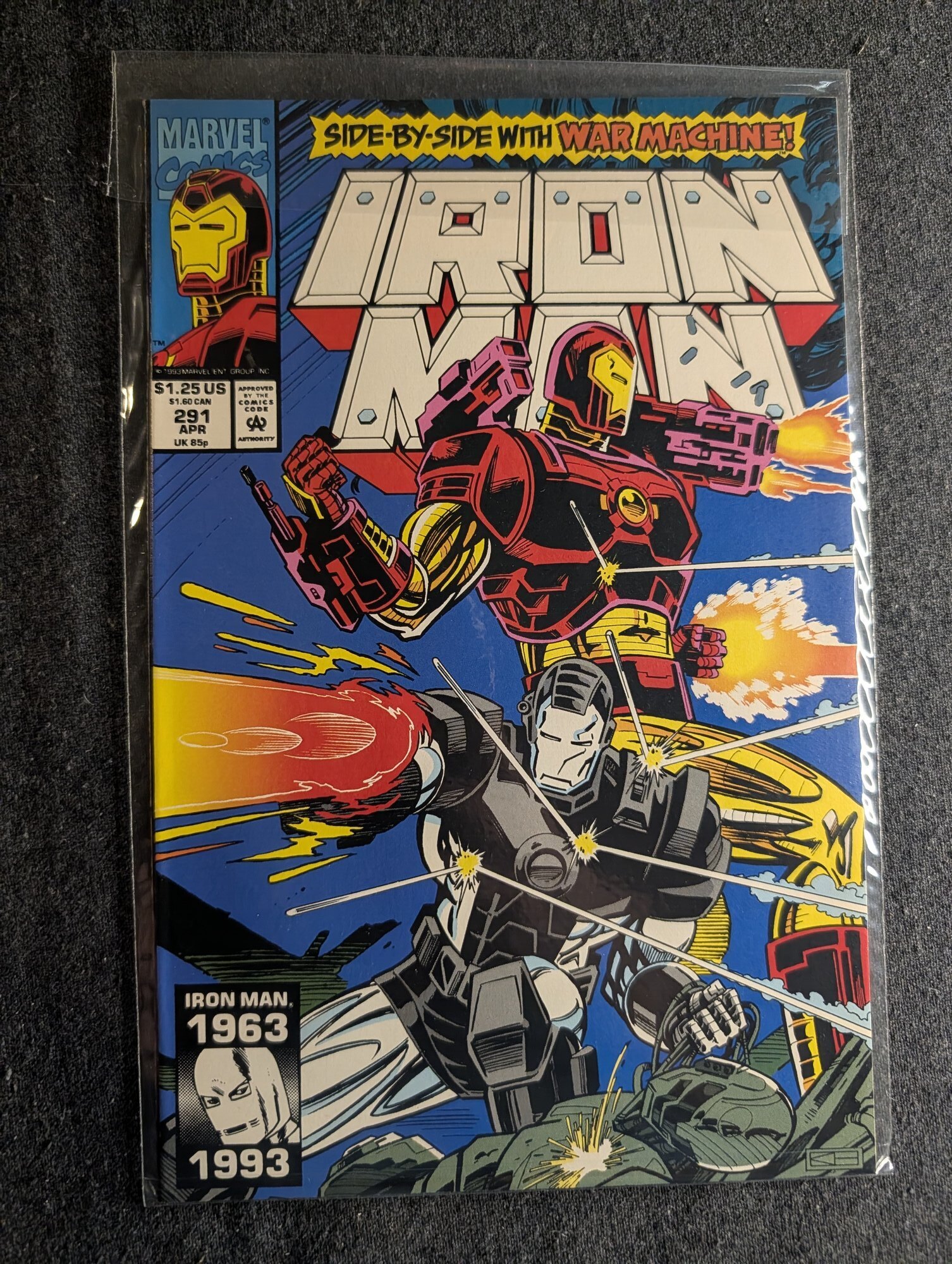
IRON MAN #291
Standard 1993 Iron Man issue from the Len Kaminski/Kevin Hopgood run
// Unit specification
| Publisher | Cover date | Era | Variant | Key attribute | Status |
|---|---|---|---|---|---|
| Marvel Comics | April 1993 | Modern | — | — | AVAILABLE |
// Copies in archive
| Unit | Grade | Variant | Status |
|---|---|---|---|
| ECA-002859 | ~9.0 | — | AVAILABLE |
// Run position
// Condition analysis
Cover shows sharp corners and strong color/gloss with no visible creasing or spine stress in this photo; the book is protected in a plastic sleeve which limits full assessment of edges. No tears, stains, or writing are visible on the front cover. Interior and back cover were not assessed, so grade is capped conservatively despite the clean appearance.
// Valuation — market reference
| Bracket | Grade | Est. market value | Marker |
|---|---|---|---|
| LOW_RAW | 0.5 – 1.5 | $1 | |
| MID_RAW | 4.0 – 6.0 | $4 | |
| HIGH_CERT | 9.8 SLAB | $55 |
// Archive commentary
Iron Man #291 arrived in April 1993 during Marvel's early-1990s stewardship of the character by writer Len Kaminski and penciler Kevin Hopgood, a period defined by incremental armor upgrades and espionage-tinged storylines rather than landmark firsts. The issue is a mid-run chapter in that creative team's tenure, produced during a commercially competitive era for the Iron Man title as it navigated the broader industry's speculator boom.
Market data shows a book with modest but persistent collector activity: a small certified population (55 graded copies, the bulk in the 9.6-9.8 range) and thin sales records at every tier below near-mint-mint. The steep value gap between a 9.8 slab and a 9.6 indicates that demand concentrates almost entirely at the top of the grading scale, typical of a modern-era title without a first appearance, death, or other headline event to anchor broader-based collecting.
This is a book bought primarily by Iron Man run-completists and CGC 9.8 registry builders rather than general market speculators. Raw copies in low and mid grade trade as inexpensive bulk-bin material with negligible premium, while pristine slabbed copies see disproportionate value driven by census scarcity at the top grade rather than narrative importance. Expect flat to slow appreciation absent any retroactive significance attached to the storyline or creative team.
INQUIRE_ABOUT_THIS_UNIT
Institutional buyers, auction houses, and private collectors — direct line to the archive.