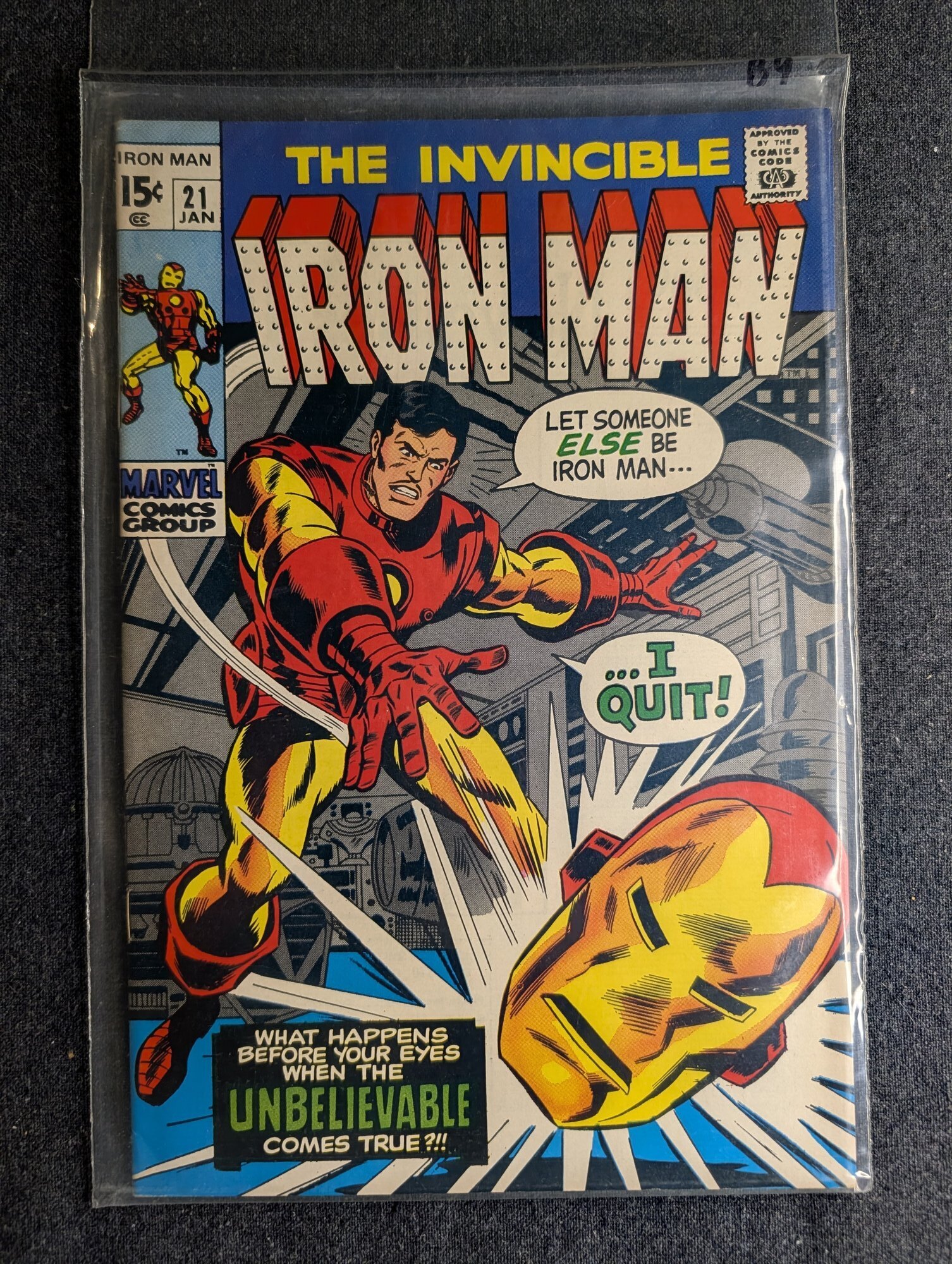
Approximate
Condition Profile
MARVEL COMICS · 1/70
UNIT ECA-002983
IRON MAN #21
Bronze Age Iron Man mid-run issue, standard cover date January 1970
// Unit specification
| Publisher | Cover date | Era | Variant | Key attribute | Status |
|---|---|---|---|---|---|
| Marvel Comics | January 1970 | Bronze | — | — | AVAILABLE |
// Run position
// Condition analysis
Cover shows strong gloss and vivid color with sharp corners and no visible creases or tears. There is minor edge wear along the top and right edge, and slight handling wear visible near the spine, though it remains tight without major stress lines. The book is preserved in a protective sleeve which limits full assessment of surface texture; interior pages and back cover were not visible for review. Overall this presents as a high-grade example with only minor circulation wear.
// Valuation — market reference
| Bracket | Grade | Est. market value | Marker |
|---|---|---|---|
| LOW_RAW | 0.5 – 1.5 | $8 | |
| MID_RAW | 4.0 – 6.0 | $20 | |
| HIGH_CERT | 9.8 SLAB | $850 |
// Archive commentary
Iron Man #21 arrived in January 1970 during a transitional stretch of the character's early Bronze Age run, written by Archie Goodwin with pencils by George Tuska, a creative team that handled the title through much of this period. The issue continues the ongoing Tony Stark/Iron Man adventures of the era but does not introduce any character, costume change, or plot element that has become a recognized first appearance or landmark moment in the character's history. It is a representative example of the workmanlike, well-drafted superhero storytelling that characterized Marvel's output in this period rather than a book singled out in price guides for historical importance.
Market data shows a typical long-tail Bronze Age curve: values stay compressed and modest through the mid and high-mid grades (roughly $38 to $44 from 6.5 through 9.2), then rise sharply at 9.4 and above as census population thins and gem-quality survivors become scarce. The 9.8 population is limited to single digits with only a handful of recorded sales, and the most recent trading suggests some pullback from an earlier price peak, consistent with a niche, grade-sensitive demand pool rather than broad collector competition. Lower and mid raw grades trade as inexpensive, easily sourced back issues, reflecting the absence of any key-issue premium.
This book suits collectors assembling a complete run of early Iron Man rather than key-issue investors or character-first buyers. Raw copies in low and mid grade are readily available and inexpensive, appealing mainly to readers and run-builders; the real market action is concentrated at the top end, where CGC 9.8 examples command a substantial premium purely on condition scarcity. Across grades, expect steady but unspectacular movement, with value appreciation driven far more by census rarity at the top than by any narrative or character significance.
// Copies in archive
| Unit | Grade | Variant | Status |
|---|---|---|---|
| ECA-002983 | ~8.0 | — | AVAILABLE |
INQUIRE_ABOUT_THIS_UNIT
Institutional buyers, auction houses, and private collectors — direct line to the archive.