Approximate
Condition Profile
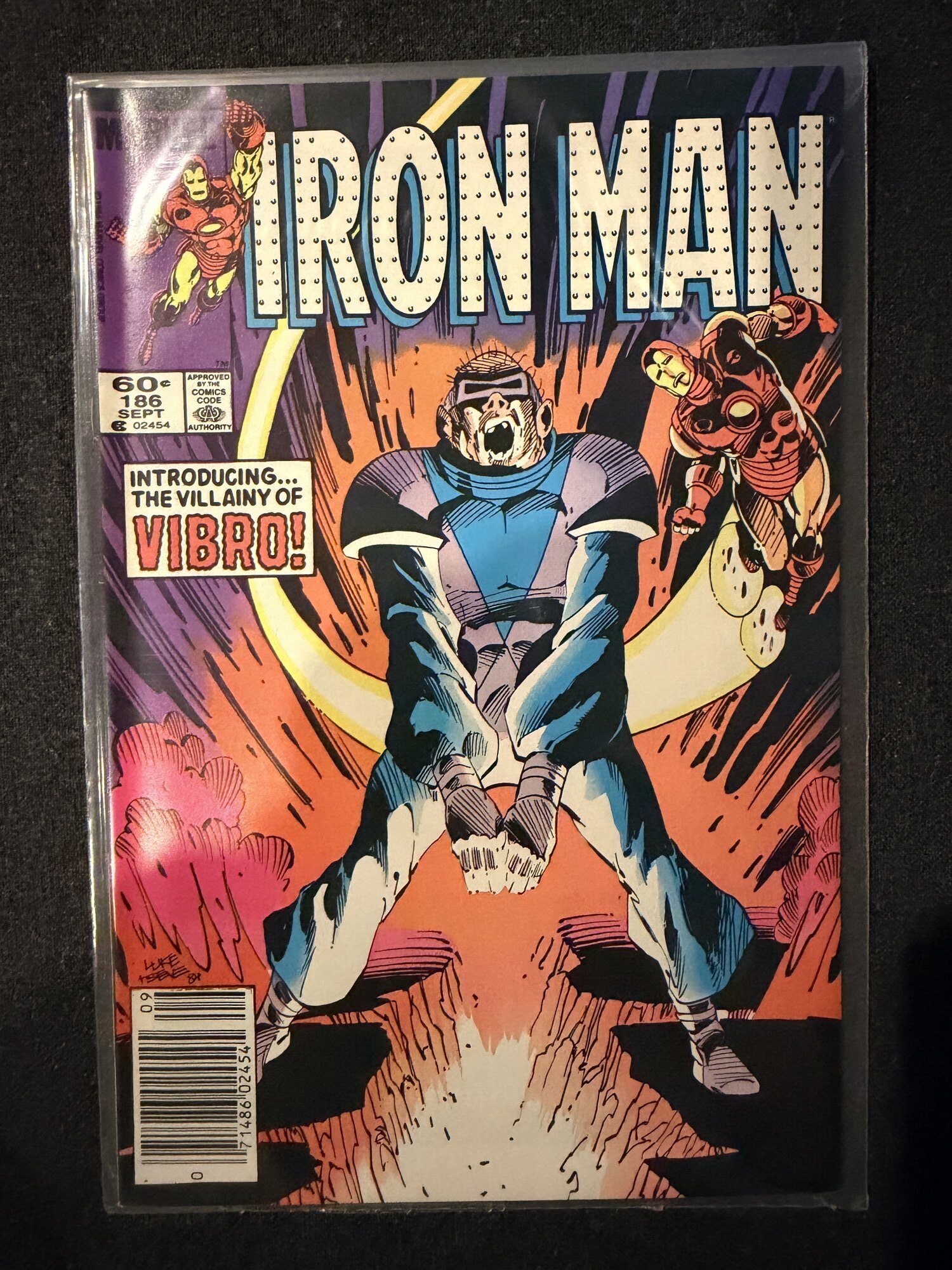
MARVEL COMICS · 9/84 · NEWSSTAND
UNIT ECA-002388
IRON MAN #186
First appearance of Vibro in the Rhodey-as-Iron-Man era, newsstand edition
// Unit specification
| Publisher | Cover date | Era | Variant | Key attribute | Status |
|---|---|---|---|---|---|
| Marvel Comics | September 1984 | Copper | Newsstand | 1st appearance of Vibro; James Rhodes as Iron Man era | AVAILABLE |
// Copies in archive
| Unit | Grade | Variant | Status |
|---|---|---|---|
| ECA-002388 | ~8.5 | Newsstand | AVAILABLE |
// Run position
// Condition analysis
Cover shows strong gloss and vibrant colors with sharp corners and no visible creases or color breaks. There is minor edge wear at the bottom right corner and slight surface glare from the protective sleeve that may obscure fine defects. Spine appears tight with no visible stress lines. Interior and back cover were not assessed, and the book is housed in a plastic sleeve which limits full surface inspection.
// Valuation — market reference
| Bracket | Grade | Est. market value | Marker |
|---|---|---|---|
| LOW_RAW | 0.5 – 1.5 | $2 | |
| MID_RAW | 4.0 – 6.0 | $5 | |
| HIGH_CERT | 9.8 SLAB | $110 |
// Archive commentary
Iron Man #186, cover-dated September 1984, comes from the stretch of Denny O'Neil's run in which James Rhodes wears the armor while Tony Stark is at the bottom of his alcoholism arc. Luke McDonnell handles the art with Steve Mitchell on inks, a pairing that defined the visual character of the title through the mid-1980s. The issue introduces Vibro, a scientist transformed by an experimental accident into a seismic-powered antagonist, and he functions here as a test of Rhodey's still-unsteady command of the armor rather than as a franchise-level threat. The story matters less for the villain than for what it shows about the Rhodes period: a working-class replacement hero learning the suit under real pressure, a subplot Marvel would keep paying off through the War Machine years.
Market-wise this is a first appearance with limited pull. Vibro has never carried a solo feature, has no screen presence, and appears only sporadically in later continuity, so the issue behaves in the market like a run book with a footnote rather than like a true key. Raw copies circulate freely on eBay and through dealer back-issue stock at prices close to common Copper Age levels, and mid-grade examples move slowly enough that sellers routinely accept offers below list. Certified copies are the exception: the census for this issue is shallow because almost nobody submitted it during the grading boom, so top-grade slabs surface infrequently and clear at a meaningful multiple of raw money when they do.
Buyers divide into two groups. Run collectors assembling the O'Neil-McDonnell stretch or the complete Rhodey-as-Iron-Man sequence take whatever grade is available and treat condition as secondary, which keeps a floor under even heavily read copies. Registry and first-appearance completists chase the small pool of high-grade slabs, and that thin supply is the only real source of price volatility here. The newsstand designation carries little premium for a 1984 Marvel, since newsstand distribution was still the dominant channel that year; the direct-market copy and the newsstand copy trade at effectively the same level, with any spread appearing only at the very top of the grade scale.
INQUIRE_ABOUT_THIS_UNIT
Institutional buyers, auction houses, and private collectors — direct line to the archive.