Approximate
Condition Profile
DC COMICS · 11/86
UNIT ECA-001770
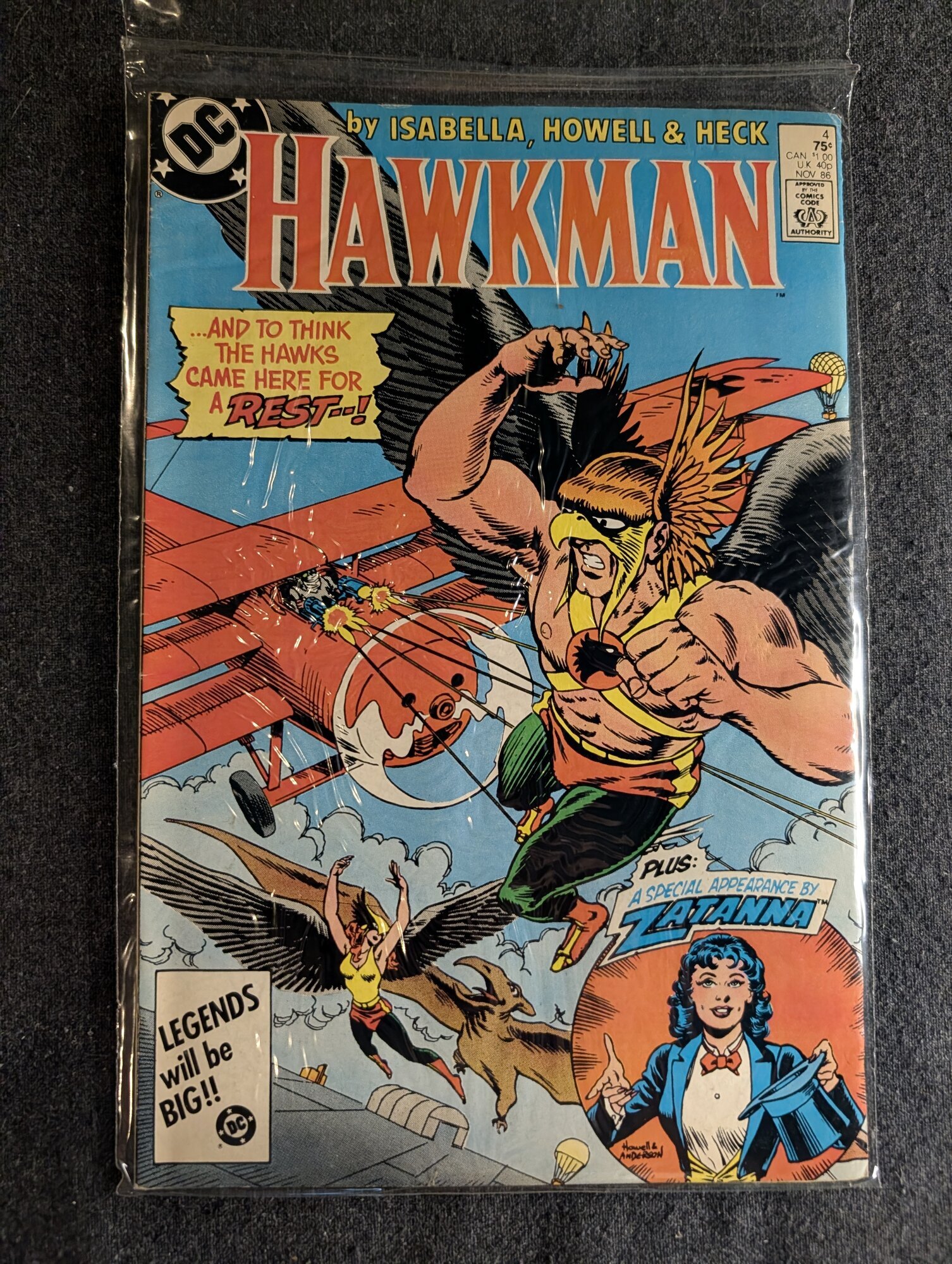
HAWKMAN #4
Mid-run issue of DC's 1986 Hawkman revival, written by Tony Isabella with art by Richard Howell
// Unit specification
// Run position
// Condition analysis
Cover shows sharp corners and clean, glossy surface with strong color throughout; no visible creases, tears, or spine stress from this angle. The book is in a protective sleeve, which may create minor glare obscuring fine detail. No signs of foxing or discoloration are apparent, but interior pages and back cover were not assessed, and slight edge wear may be hidden by the sleeve.
// Valuation — market reference
| Bracket | Grade | Est. market value | Marker |
|---|---|---|---|
| LOW_RAW | 0.5 – 1.5 | $1 | |
| MID_RAW | 4.0 – 6.0 | $2 | |
| HIGH_CERT | 9.8 SLAB | $50 |
// Archive commentary
Hawkman vol. 2 launched in 1986 as DC's first ongoing solo title for the character, arriving in the wake of Crisis on Infinite Earths as the publisher reworked its Silver Age properties for a new decade. Tony Isabella scripted with pencils by Richard Howell and inks by Don Heck, and the run leaned on the Thanagarian side of the mythology, pairing Katar Hol and Shayera Hol against holdover Silver Age antagonists while attempting to modernize the winged policemen for a market then shifting toward darker, more continuity-driven superhero storytelling. Issue four sits early in that seventeen-issue run, before the title was overtaken by Timothy Truman's Hawkworld and the continuity tangle that followed. It carries no first appearance, origin, or death, and is valued as run material rather than as a key.
The market profile is straightforward. The series was printed in mid-1980s quantities at a time when direct-market speculation kept high-grade copies plentiful, and surviving inventory remains deep at dealer level. Retail and marketplace data show the issue trading in the dollar-bin tier regardless of grade, with even sharp, well-centered copies sitting near the same figure as a well-read one; there is no meaningful grade premium below the very top of the scale. Certification activity is effectively nonexistent, so the high-grade bracket reflects the cost of the plastic more than collector demand for the content, and any slab that changes hands is usually part of a set-building or registry curiosity rather than a valuation event.
Buyers for this book are run collectors completing the 1986 series, Hawkman completists working across volumes, and readers pursuing Isabella's DC work or Richard Howell's mid-career art. It moves most efficiently in bulk, as part of a full or near-full run, where the set commands more attention than any single number; individually it trades as inexpensive filler and should be priced accordingly. Upside is limited and would most likely come from renewed screen or publishing attention to Hawkman, which historically lifts the character's Silver Age keys far more than the Copper Age run issues.
// Copies in archive
| Unit | Grade | Variant | Status |
|---|---|---|---|
| ECA-001770 | ~9.2 | — | AVAILABLE |
INQUIRE_ABOUT_THIS_UNIT
Institutional buyers, auction houses, and private collectors — direct line to the archive.