Approximate
Condition Profile
MARVEL COMICS · 7/80 · NEWSSTAND
UNIT ECA-000993
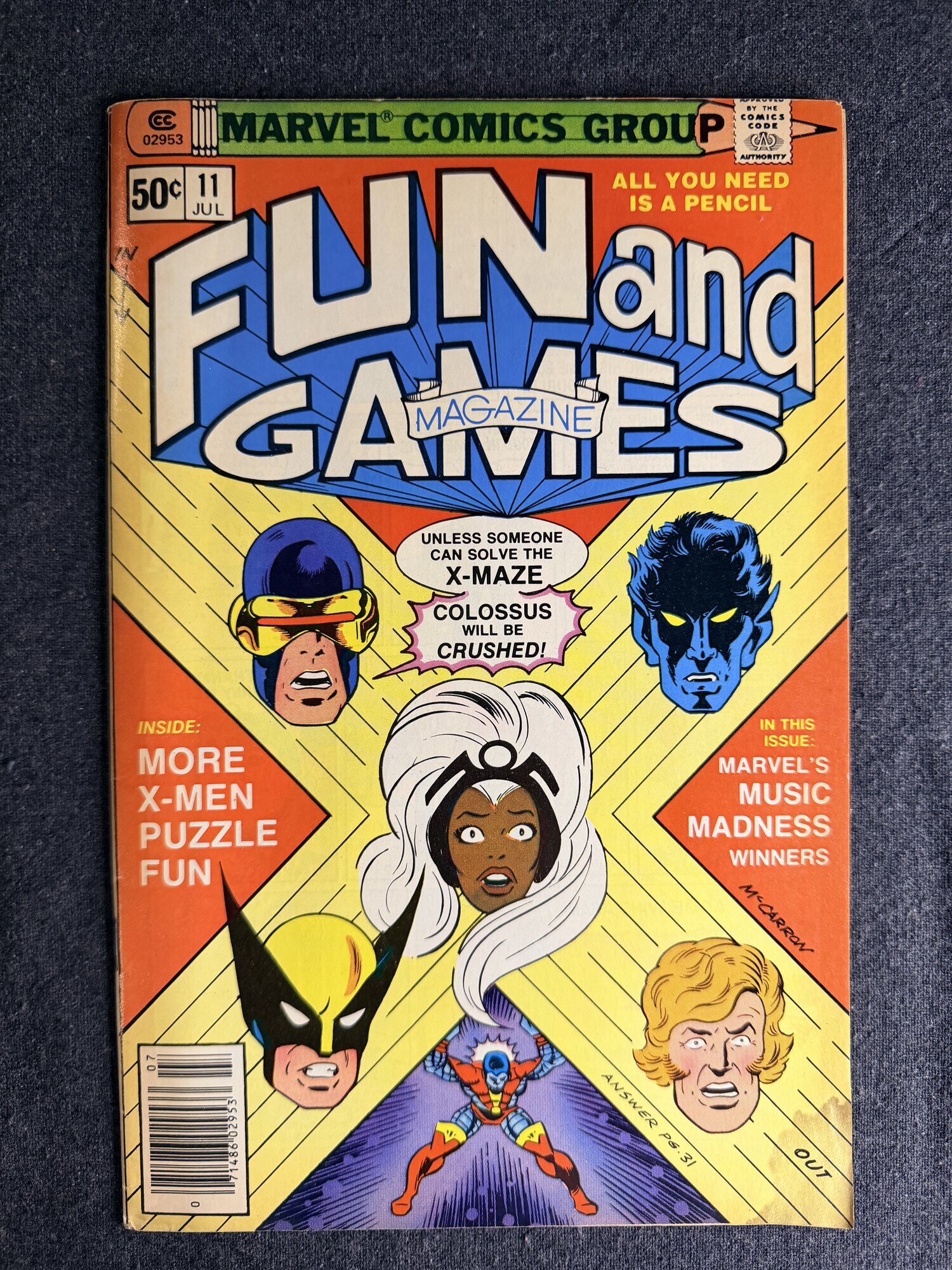
FUN AND GAMES MAGAZINE #11
Marvel's puzzle-book series, X-Men 'X-Maze' issue, Owen McCarron cover, 1980 newsstand.
// Unit specification
| Publisher | Cover date | Era | Variant | Key attribute | Status |
|---|---|---|---|---|---|
| Marvel Comics | July 1980 | Bronze | Newsstand | — | AVAILABLE |
// Run position
// Condition analysis
Cover shows moderate handling wear including a diagonal crease/scuff running through the upper left corner area, some surface soiling and staining near the lower right corner, and general softness to the corners. There is a small stain/discoloration near the bottom right edge and slight edge wear along the spine. No major tears or missing pieces are visible, and colors remain bright, but the combination of creasing and soiling keeps this out of higher grade ranges. Interior and back cover were not assessed.
// Valuation — market reference
| Bracket | Grade | Est. market value | Marker |
|---|---|---|---|
| LOW_RAW | 0.5 – 1.5 | $5 | |
| MID_RAW | 4.0 – 6.0 | $12 | |
| HIGH_CERT | 9.8 SLAB | $85 |
// Archive commentary
Fun and Games Magazine was Marvel's one-year experiment in interactive activity publishing, running thirteen issues from mid-1979 to mid-1980. Issue #11 (July 1980 cover date) was produced under editor-in-chief Jim Shooter with cover and interior work by Owen McCarron, the artist most associated with the title's mazes, word puzzles and hidden-picture features. This issue leans on the X-Men, headlined by its 'X-Maze' puzzle, tying it to the franchise that was ascending rapidly in exactly this period. The only original creation across the series was the mascot Cross Wordo; the appeal here rests on Marvel's marquee characters recast as puzzle content rather than on any first appearance or story continuity.
As a market object the book is defined by attrition: these were made to be written in, folded and discarded, so completed or damaged copies dominate the surviving population while clean, unmarked examples are genuinely scarce. That scarcity does not translate into strong dollars because collector demand for the format is niche and shallow, with only intermittent listings across eBay and price-guide venues. The X-Men association gives #11 marginally more pull than the generic issues in the run, but it remains a low-velocity item that trades opportunistically rather than on any established price curve.
Buyers are primarily Marvel completists, X-Men thematic collectors, and enthusiasts of Bronze Age oddities and ephemera; there is little crossover speculative interest. Low-grade and average raw copies move for pocket change and are valued as curiosities, while the real premium sits at the top of the condition ladder, where an unused, uncreased, and especially a certified high-grade copy can command a multiple of raw prices simply because so few exist. Given the absence of a deep graded market, spreads are wide and any high-end sale should be viewed as condition-rarity driven rather than reflecting broad demand.
// Copies in archive
| Unit | Grade | Variant | Status |
|---|---|---|---|
| ECA-000993 | ~6.0 | Newsstand | AVAILABLE |
INQUIRE_ABOUT_THIS_UNIT
Institutional buyers, auction houses, and private collectors — direct line to the archive.