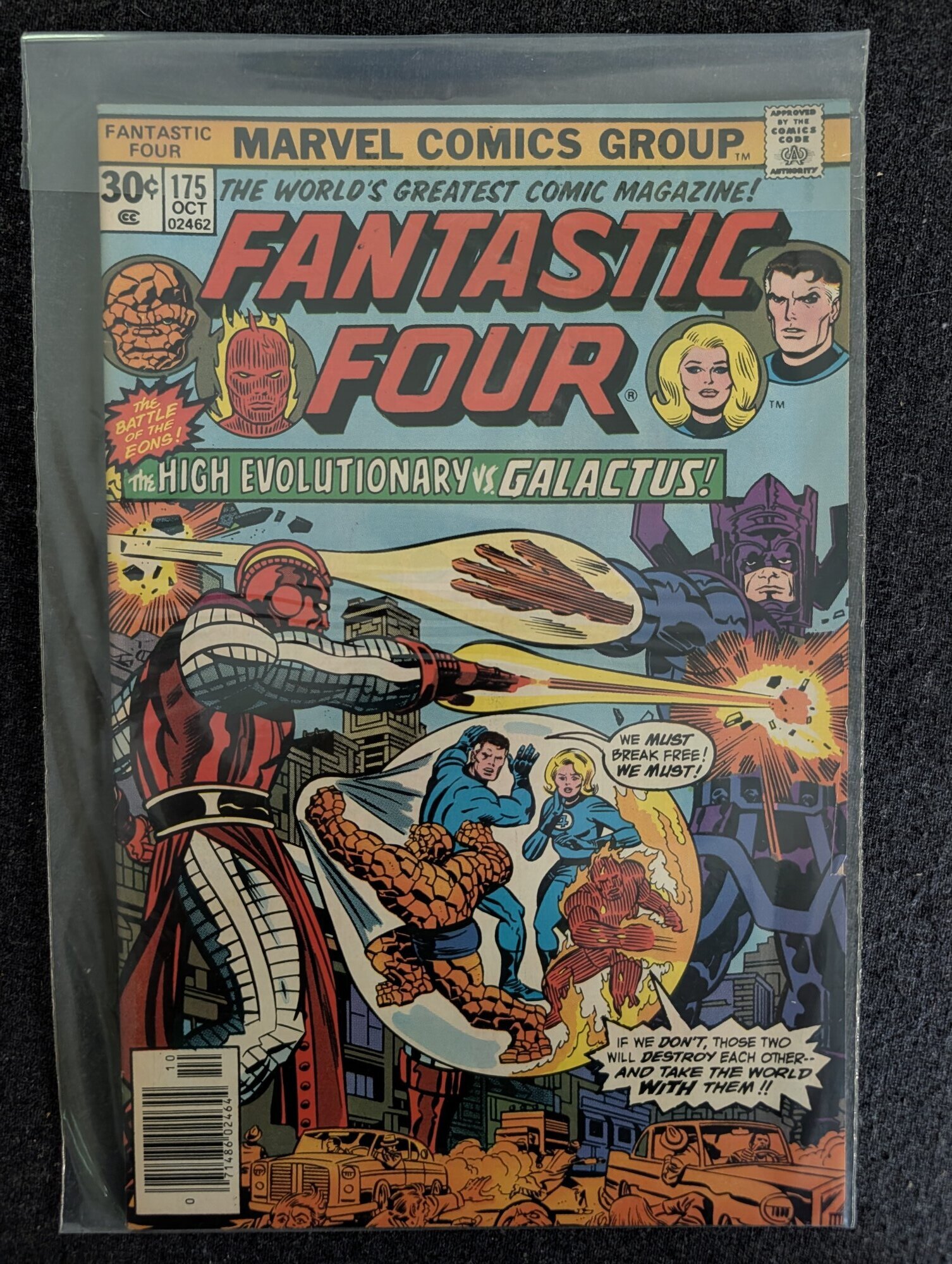
Approximate
Condition Profile
MARVEL COMICS · 10/76
UNIT ECA-028136
FANTASTIC FOUR #175
Bronze Age Fantastic Four bridging into the Impossible Man/Skrull cameo storyline
// Unit specification
| Publisher | Cover date | Era | Variant | Key attribute | Status |
|---|---|---|---|---|---|
| Marvel Comics | October 1976 | Bronze | — | — | AVAILABLE |
// Copies in archive
| Unit | Grade | Variant | Status |
|---|---|---|---|
| ECA-028136 | ~8.5 | — | AVAILABLE |
| ECA-039498 | ~7.5 | — | AVAILABLE |
// Run position
// Condition analysis
Cover shows strong gloss and bright color with sharp corners and no visible creases or color breaks. There is minor edge wear at the top left corner and slight waviness near the spine, with the spine appearing tight with no major stress lines. The book is in a protective sleeve, and interior/back cover were not assessed.
// Valuation — market reference
| Bracket | Grade | Est. market value | Marker |
|---|---|---|---|
| LOW_RAW | 0.5 – 1.5 | $8 | |
| MID_RAW | 4.0 – 6.0 | $16 | |
| HIGH_CERT | 9.8 SLAB | $240 |
// Archive commentary
Fantastic Four #175 arrived in October 1976 as part of the extended Roy Thomas run that steered the team through a lighter, more comedic storyline involving the shape-shifting Impossible Man, with George Pérez handling pencils and Joe Sinnott inking in his customary polished style. The issue sits in the run immediately preceding the well-remembered FF #176, in which the Impossible Man's offspring impersonate real-world Marvel staff, and it functions as connective narrative tissue rather than a standalone landmark. There is no first appearance, death, or origin story attached to this issue, and it is not cited in price guides as a key entry in the Fantastic Four's history.
Market data shows a book that behaves like a typical mid-run Bronze Age Marvel title: values are flat and modest across low through mid grades, with only a handful of certified sales below CGC 8.0 and consistent pricing in the mid-teens for those copies. Demand strengthens meaningfully at the top of the census, where 9.6 and 9.4 copies command roughly six times the mid-grade price, and 9.8 copies pull a further substantial premium, driven by the relatively high population of graded copies competing for a thin top tier. This pattern indicates collector interest concentrated on condition rarity and Pérez's developing art rather than on any narrative significance of the issue itself.
The book suits completist Fantastic Four collectors building a run through the Thomas/Pérez era and buyers assembling early George Pérez art regardless of story content, rather than key-issue investors. Raw copies in low and mid grades trade cheaply and are readily available given the large graded population, making them easy entry points, while CGC 9.8 examples are the primary object of active bidding and command the bulk of the book's total value. Expect steady, unspectacular appreciation tied to Pérez's growing reputation rather than any spikes associated with character milestones.
INQUIRE_ABOUT_THIS_UNIT
Institutional buyers, auction houses, and private collectors — direct line to the archive.