Approximate
Condition Profile
DC COMICS · 11/87 · NEWSSTAND
UNIT ECA-001956
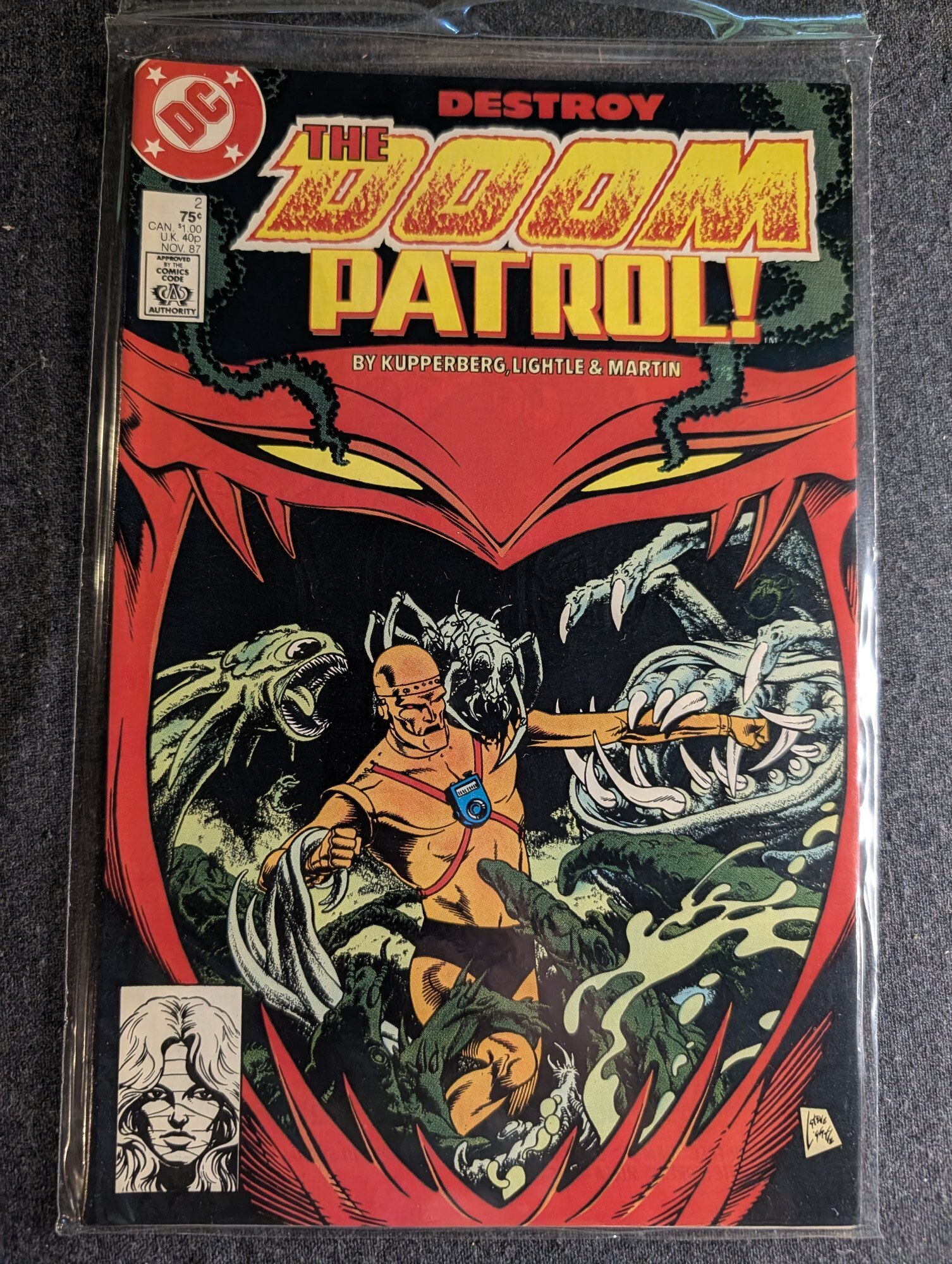
DOOM PATROL #2
Second issue of DC's 1987 Doom Patrol revival, Kupperberg and Lightle, newsstand edition
// Unit specification
| Publisher | Cover date | Era | Variant | Key attribute | Status |
|---|---|---|---|---|---|
| DC Comics | November 1987 | Copper | Newsstand | — | AVAILABLE |
// Run position
// Condition analysis
Cover shows sharp corners, strong color and gloss with no visible spine ticks or stress lines in this photo. No creases, tears, or fading are apparent, though the book is in a protective sleeve which introduces some glare that could mask minor defects. Interior pages and back cover were not assessed, so grade is based solely on the visible front cover surface.
// Valuation — market reference
| Bracket | Grade | Est. market value | Marker |
|---|---|---|---|
| LOW_RAW | 0.5 – 1.5 | $1 | |
| MID_RAW | 4.0 – 6.0 | $2 | |
| HIGH_CERT | 9.8 SLAB | $60 |
// Archive commentary
Doom Patrol #2 continues the 1987 relaunch that returned DC's "world's strangest heroes" to a monthly title after two decades of guest spots and mini-series. Paul Kupperberg scripts, with Steve Lightle providing pencils, inks, and cover, colors by Carl Gafford and lettering by John Workman; Gary Martin assists on inks. The issue keeps the reconstituted lineup of Robotman, Negative Man, Celsius, and the Chief in play alongside Joshua Clay and Valentina Vostok, and carries forward the confrontation with Kalki introduced in the debut issue. Historically the run matters less for these early Kupperberg chapters than for what followed: Grant Morrison took over with issue #19 and turned the same title into one of the defining superhero-adjacent experiments of the late 1980s, which is the context in which the earlier issues are usually collected.
// Copies in archive
| Unit | Grade | Variant | Status |
|---|---|---|---|
| ECA-001956 | ~9.2 | Newsstand | AVAILABLE |
| ECA-001959 | ~8.5 | Newsstand | AVAILABLE |
INQUIRE_ABOUT_THIS_UNIT
Institutional buyers, auction houses, and private collectors — direct line to the archive.