Approximate
Condition Profile
MARVEL COMICS · 2/95 · DIRECT EDITION
UNIT ECA-008944
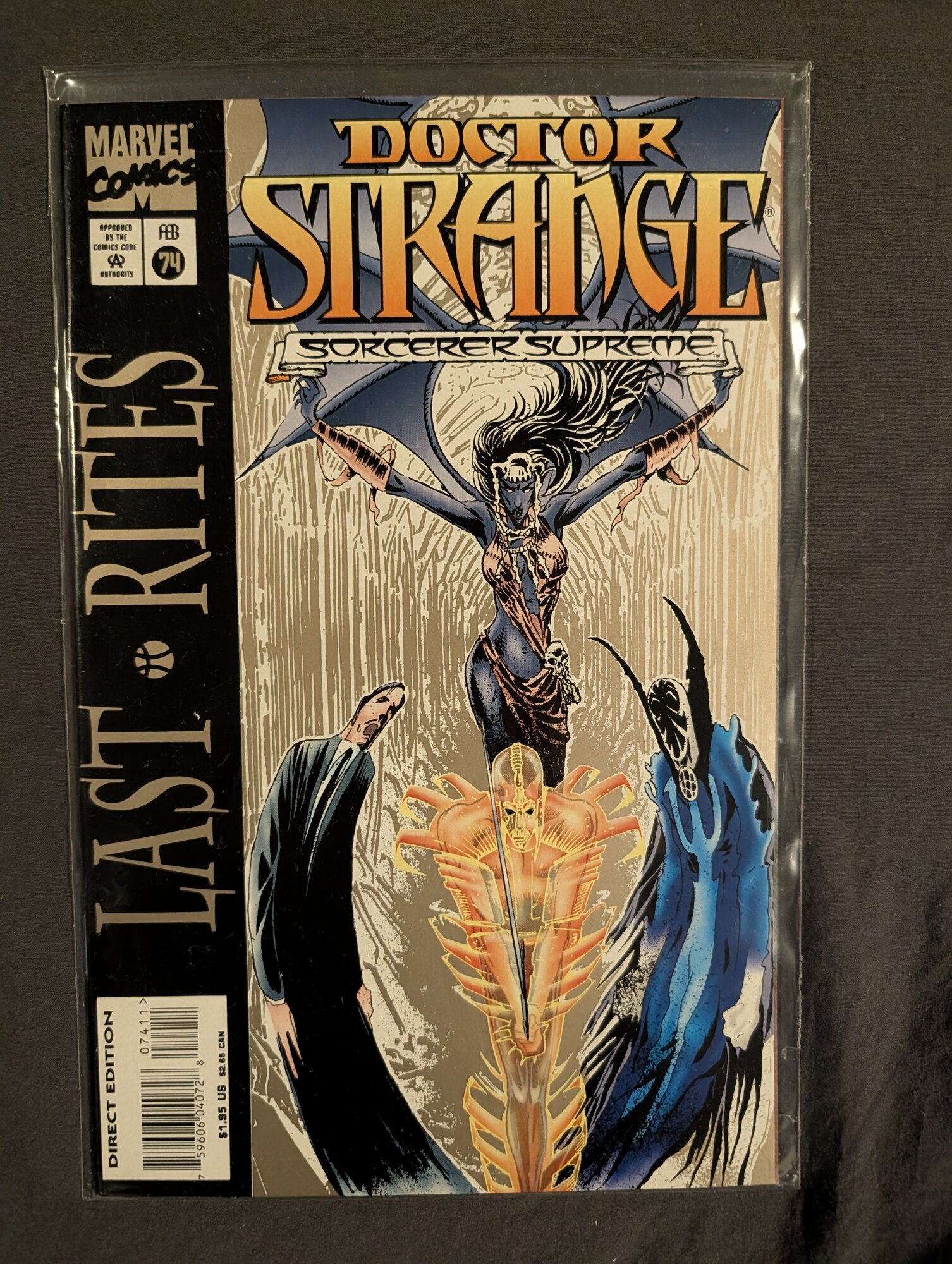
DOCTOR STRANGE, SORCERER SUPREME #74
Late David Quinn/Peter Gross-era Doctor Strange, with the Strangers storyline running toward its resolution
// Unit specification
| Publisher | Cover date | Era | Variant | Key attribute | Status |
|---|---|---|---|---|---|
| Marvel Comics | February 1995 | Modern | Direct Edition | — | AVAILABLE |
// Run position
// Condition analysis
Cover displays strong gloss and sharp corners with no visible creases or spine stress lines. Slight edge wear is faintly visible at the top right corner tip, and the book is protected in a plastic sleeve which slightly obscures fine surface detail under glare. No stains, tears, or color breaks are apparent on the front cover. Interior and back cover were not assessed, limiting grade certainty to a mid-to-high range.
// Valuation — market reference
| Bracket | Grade | Est. market value | Marker |
|---|---|---|---|
| LOW_RAW | 0.5 – 1.5 | $2 | |
| MID_RAW | 4.0 – 6.0 | $3 | |
| HIGH_CERT | 9.8 SLAB | $70 |
// Archive commentary
Doctor Strange, Sorcerer Supreme #74 falls in the closing stretch of David Quinn's extended run on the title, the arc in which Stephen Strange, stripped of his usual sources of power by the sorceress Salome, has spun off the aetheric constructs Strange and Vincent Stevens and gradually lost control of them. Peter Gross supplies the cover and Steve Yeowell handles interior art on this chapter, which advances the Forge Canal thread and tightens the Strangers' grip on the Doctor ahead of the double-sized anniversary issue that follows. It is a substantive piece of continuity for readers tracking the post-Midnight Sons reconstruction of the character, but it introduces no first appearance or origin of consequence.
Market behavior matches that profile. The book was produced during the mid-1990s overprint period, so surviving high-grade direct-market copies are plentiful relative to demand, and the issue circulates mainly through dealer back-issue boxes, online marketplace lots, and want-list fills rather than dedicated single-issue buying. Certification is effectively absent: nobody has found a reason to submit the issue, which means the top of the market is theoretical and driven by the cost of grading rather than scarcity. Interest in the series as a whole ticks upward when Doctor Strange appears in film and television, but that effect concentrates on the run's recognized keys and on Ditko-era material, not on issues in the seventies.
Buyers are run collectors completing the 1988-1996 series, Quinn-era readers assembling the Salome and Strangers storyline, and Doctor Strange completists who want the whole shelf. Across grades the spread is narrow, because low-grade and mid-grade copies compete with abundant near-mint stock at nearly the same money; the practical advice is to buy the best available copy, since the upgrade cost is negligible. Certified examples should be treated as a novelty purchase rather than an investment, and the sensible acquisition channel for this book remains bulk lots and dealer inventory rather than auction.
// Copies in archive
| Unit | Grade | Variant | Status |
|---|---|---|---|
| ECA-008944 | ~9.0 | Direct Edition | AVAILABLE |
INQUIRE_ABOUT_THIS_UNIT
Institutional buyers, auction houses, and private collectors — direct line to the archive.