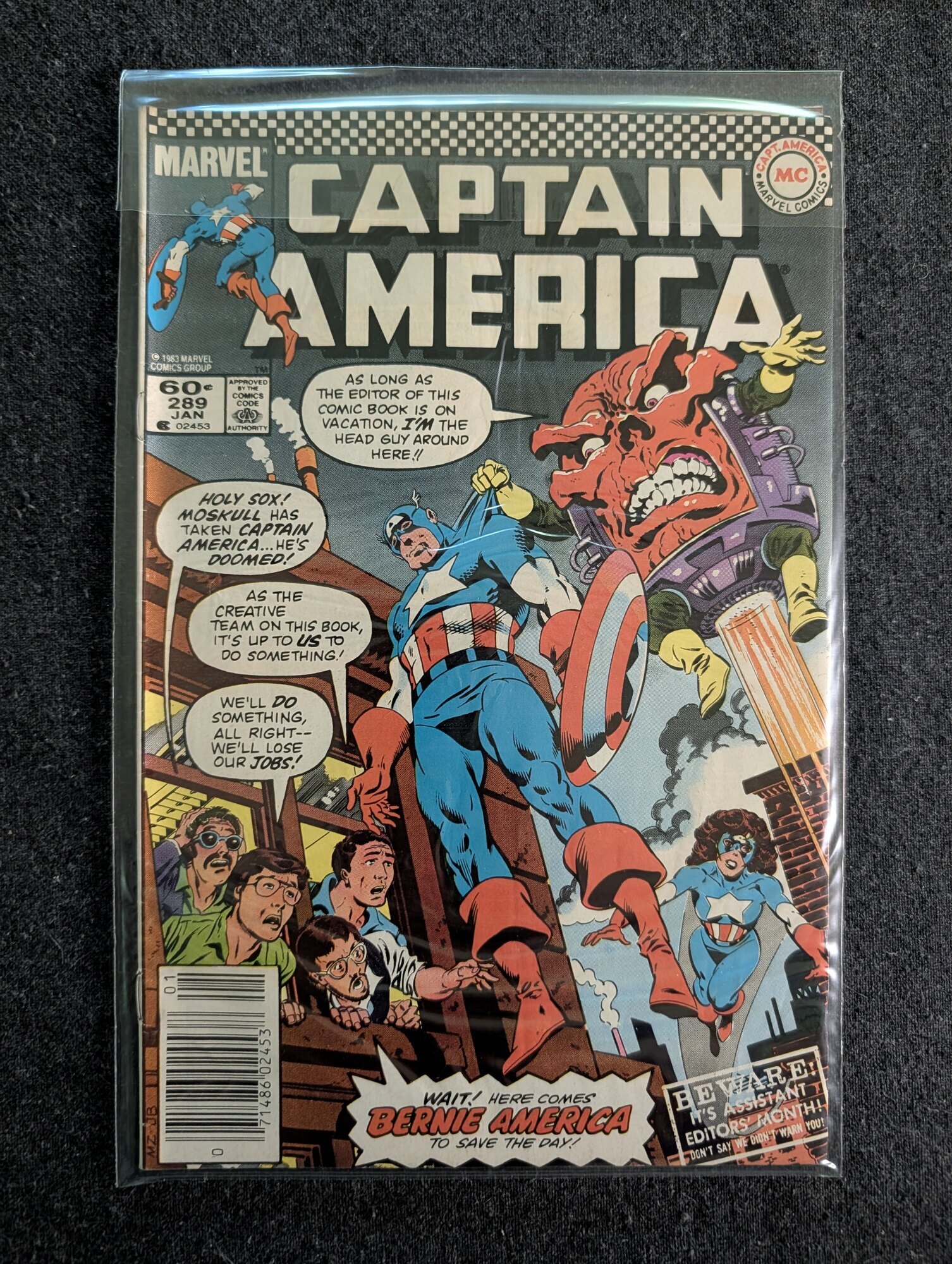
Approximate
Condition Profile
MARVEL COMICS · 12/83 · NEWSSTAND
UNIT ECA-013523
CAPTAIN AMERICA #289
Bronze Age Captain America from the DeMatteis-scripted mid-1980s run
// Unit specification
| Publisher | Cover date | Era | Variant | Key attribute | Status |
|---|---|---|---|---|---|
| Marvel Comics | December 1983 | Bronze | Newsstand | — | AVAILABLE |
// Copies in archive
| Unit | Grade | Variant | Status |
|---|---|---|---|
| ECA-026596 | ~9.0 | Newsstand | AVAILABLE |
| ECA-013523 | ~8.5 | Newsstand | AVAILABLE |
// Run position
// Condition analysis
Cover shows strong gloss and bright color retention with sharp corners; a couple of faint vertical stress lines/creases are visible in the mid-section near the figures, and slight surface handling wear is visible along the spine edge. No major creases, tears, or color breaks are apparent, though the book is in a protective sleeve which limits close inspection of spine ticks. Interior pages and back cover were not assessed.
// Valuation — market reference
| Bracket | Grade | Est. market value | Marker |
|---|---|---|---|
| LOW_RAW | 0.5 – 1.5 | $2 | |
| MID_RAW | 4.0 – 6.0 | $6 | |
| HIGH_CERT | 9.8 SLAB | $85 |
// Archive commentary
Captain America #289 (December 1983) falls within J.M. DeMatteis's tenure as writer on the title, a period that followed Mike Zeck's celebrated pencils on the book and saw the art chores handled by Paul Neary. The issue continues the ongoing serialized storylines of the era, including Cap's evolving supporting cast and villain rotations typical of the early-1980s Marvel Universe, without introducing any new characters or plot elements that later became touchstones for the character's history.
As a mid-run Bronze Age issue with no first appearance, no death, and no landmark creative milestone, the book occupies the large tier of Captain America back issues that trade primarily on completist demand rather than speculative interest. Collectors assembling a run of the DeMatteis/Zeck-adjacent era, or general Captain America collectors filling gaps, represent the primary buying audience, and the newsstand edition adds no scarcity premium given the general availability of newsstand copies from this period.
In the current market this issue functions as a reader-grade or run-filler book: raw copies move steadily but modestly regardless of grade improvements below near-mint, while a graded 9.8 example would appeal narrowly to registry-focused collectors chasing top-census copies of an otherwise unremarkable issue. It is not a book pursued for investment purposes, but it remains a reliable, inexpensive entry point for those building out a complete run of the title through its 1980s chapters.
INQUIRE_ABOUT_THIS_UNIT
Institutional buyers, auction houses, and private collectors — direct line to the archive.