Approximate
Condition Profile
MARVEL COMICS · 7/72
UNIT ECA-000688
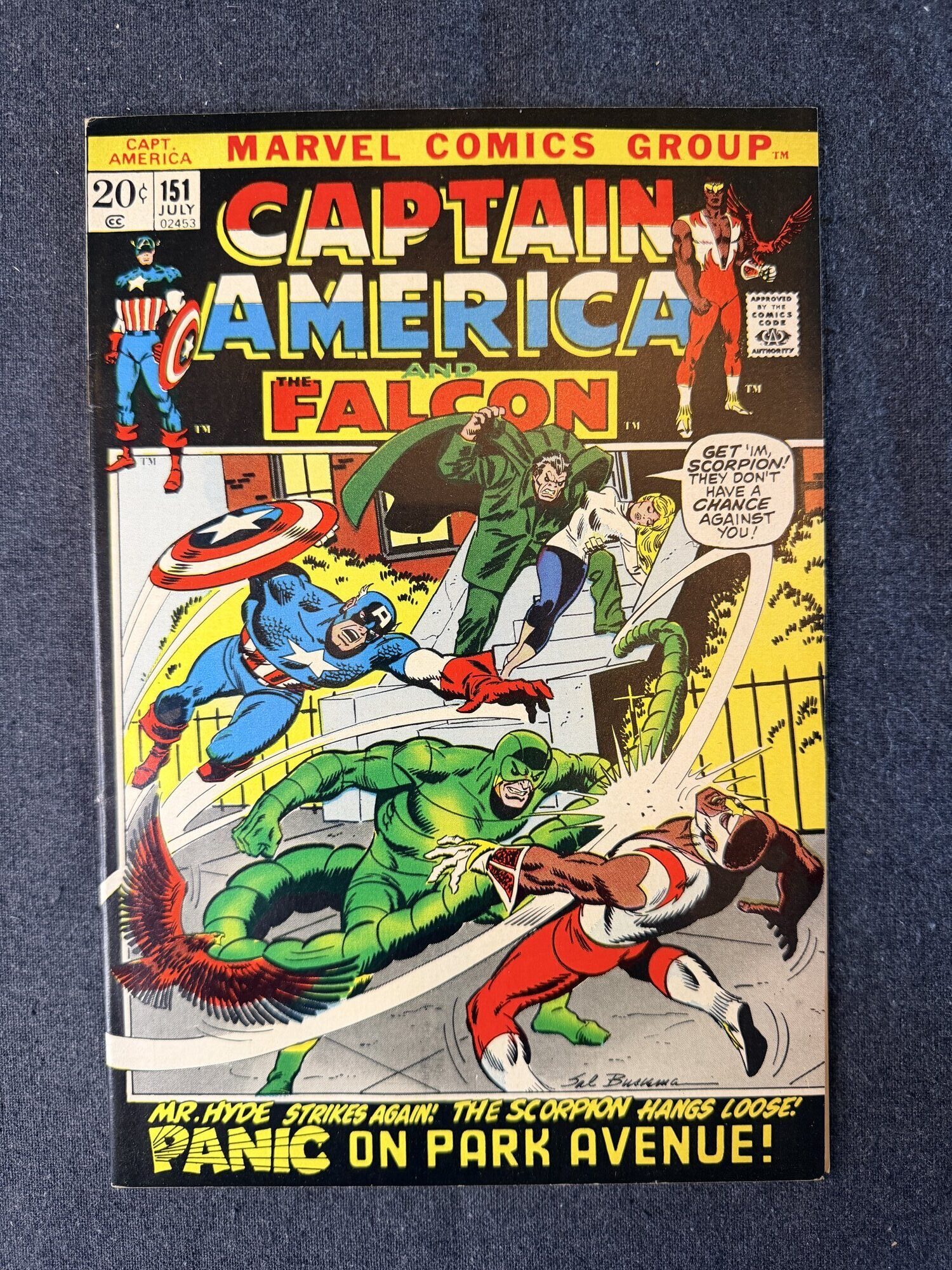
CAPTAIN AMERICA #151
Bronze Age Captain America and the Falcon #151 — standard 1972 issue from the Cap-and-Falcon partnership era.
// Unit specification
| Publisher | Cover date | Era | Variant | Key attribute | Status |
|---|---|---|---|---|---|
| Marvel Comics | July 1972 | Bronze | — | — | AVAILABLE |
// Copies in archive
| Unit | Grade | Variant | Status |
|---|---|---|---|
| ECA-000688 | ~6.0 | — | AVAILABLE |
// Run position
// Condition analysis
Image is rotated 90 degrees; cover shows moderate wear consistent with a mid-grade Bronze Age book: rounded and slightly worn corners (notably lower left), a small edge tear/chip at the bottom left border, and light surface wear along the spine area though no major color break is clearly visible at this resolution. There's some general handling wear and softness to the edges. Interior pages and back cover were not assessed, so grade is based solely on this cover photo.
// Valuation — market reference
| Bracket | Grade | Est. market value | Marker |
|---|---|---|---|
| LOW_RAW | 0.5 – 1.5 | $12 | |
| MID_RAW | 4.0 – 6.0 | $22 | |
| HIGH_CERT | 9.8 SLAB | $425 |
// Archive commentary
Captain America and the Falcon #151 lands in the productive early-1970s stretch when Steve Rogers shared the title billing with Sam Wilson, a partnership that gave the book its distinctive social-conscience edge for the era. This standard issue was scripted by Gary Friedrich with interior pencils by Sal Buscema, the artist most associated with Cap's Bronze Age look, and a cover in the house style of the period. It is a mid-run story rather than a milestone, arriving shortly before the celebrated "Captain America of the 1950s" arc that would dominate the following issues, and it pits the heroes against recurring Marvel villainy of the day.
The market profile here is that of a plentiful, collected Bronze Age Marvel: graded copies cluster heavily in high grade, with the census weighted toward 9.4 and above, while mid-grade certified sales are comparatively scarce because most owners of well-worn copies never bother to slab them. Value is essentially flat across the middle of the scale, then climbs sharply at the top as registry and condition buyers compete for the small number of 9.6 and 9.8 examples. Demand is driven by run collectors completing the shared-title era rather than by any first-appearance or origin content.
Collecting outlook favors patient assembly: raw and mid-grade copies remain inexpensive and easy to source, making this an accessible slot for anyone building the Cap-and-Falcon numbering. The action lives almost entirely at the top of the grade ladder, where thin supply of high-grade certified copies supports a meaningful premium; buyers chasing 9.6/9.8 should expect to pay up and wait for the right example. For most collectors, a clean raw or lightly circulated copy delivers the story and the era at minimal cost.
INQUIRE_ABOUT_THIS_UNIT
Institutional buyers, auction houses, and private collectors — direct line to the archive.