Approximate
Condition Profile
DC COMICS · 5/66
UNIT ECA-008346
BATMAN #180
Silver Age Batman from the height of the 1966 TV-show boom
// Unit specification
// Run position
// Condition analysis
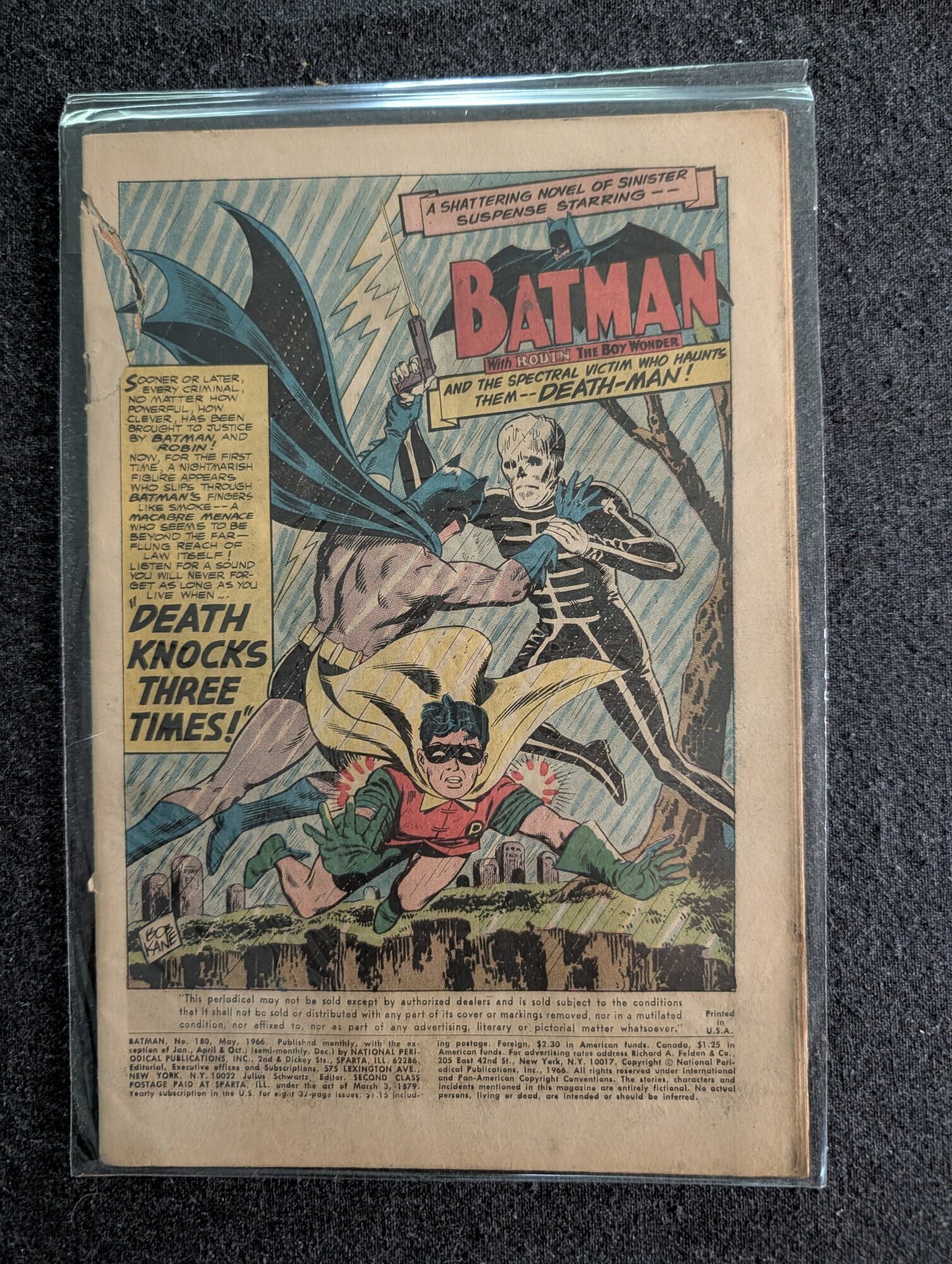
This is the first interior page/indicia rather than the front cover, confirming Batman #180 (May 1966, National Periodical Publications), first appearance of Death-Man. A prominent tear runs several inches down from the top edge near the spine, compromising structural integrity in that area. The paper shows heavy overall tanning/browning consistent with age and possibly sun exposure, with soft, rounded corners and general handling wear along the edges. Because this photo shows the interior first page rather than the actual front cover, front cover-specific defects (spine stress lines, cover creases, color breaks) could not be directly assessed; grade is estimated conservatively based on the visible paper condition and tear, and the back cover/interior pages were not evaluated.
// Valuation — market reference
| Bracket | Grade | Est. market value | Marker |
|---|---|---|---|
| LOW_RAW | 0.5 – 1.5 | $20 | |
| MID_RAW | 4.0 – 6.0 | $52 | |
| HIGH_CERT | 9.8 SLAB | $5,000 |
// Archive commentary
Batman #180 arrived on newsstands in May 1966, squarely in the run of issues published as the Adam West television series was driving unprecedented mainstream attention to the character. The period's covers and interiors, largely overseen by Carmine Infantino as DC worked to modernize the Batman line after years under Bob Kane's shop, reflect the brighter, more pop-inflected visual style that accompanied the show's success. The issue is a representative example of the era's output rather than a designation-carrying key, with no first appearance, death, or landmark creative milestone attached to it.
The GoCollect census shows a typically broad Silver Age distribution, with the bulk of the 309 certified Universal copies clustered in the 6.0 to 9.4 range and a sharp falloff at the top: only six copies have reached 9.8, backed by just four recorded sales, yet those sales support a $5,000 FMV. That gap between the plentiful mid-grade population and the scarce top of the census is the primary driver of value here—demand for TV-era Batman remains steady, but true high-grade survivors are hard to find given the paper stock and handling common to the period, so pristine copies command a large premium over anything just below them.
This is a book that trades on completism and Silver Age Batman-run collecting rather than key-issue speculation. Raw copies in low and mid grades move modestly and steadily among run-builders and TV-show enthusiasts, priced in line with other unremarkable issues from the same stretch of the title. The real action is concentrated at the CGC 9.8 level, where a small pool of buyers—registry-set collectors and high-grade specialists—compete for the handful of copies that periodically surface, which is what sustains the outsized gap between mid-grade and top-grade pricing.
// Copies in archive
| Unit | Grade | Variant | Status |
|---|---|---|---|
| ECA-008346 | ~2.5 | — | AVAILABLE |
INQUIRE_ABOUT_THIS_UNIT
Institutional buyers, auction houses, and private collectors — direct line to the archive.