Approximate
Condition Profile
DC COMICS · 11/63
UNIT ECA-040091
// Unit photos [3]
BATMAN #159
Standard Silver Age Batman issue from the Julius Schwartz era, November 1963
// Unit specification
// Copies in archive
| Unit | Grade | Variant | Status |
|---|---|---|---|
| ECA-040091 | ~0.3 | — | AVAILABLE |
// Run position
// Condition analysis
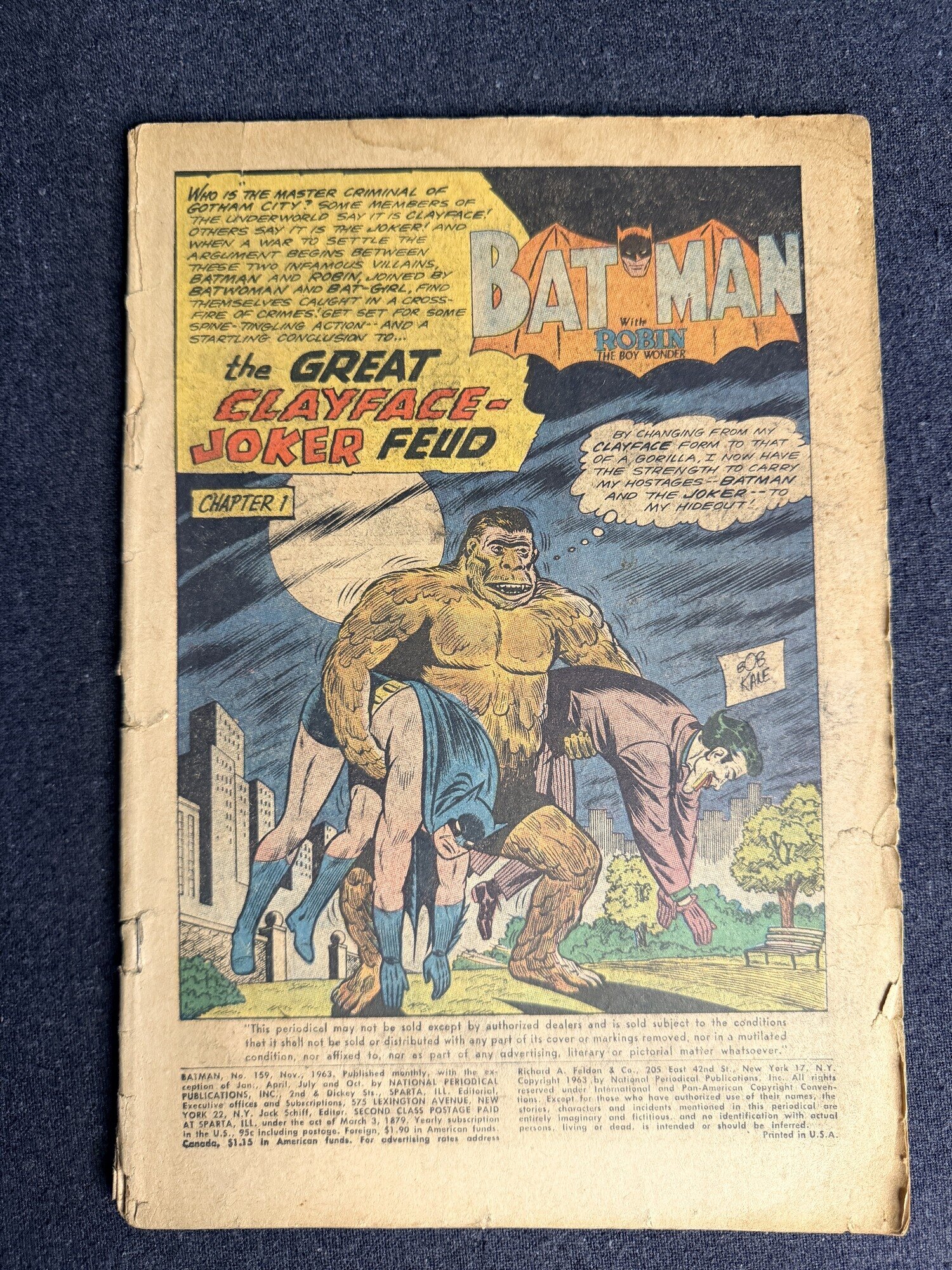
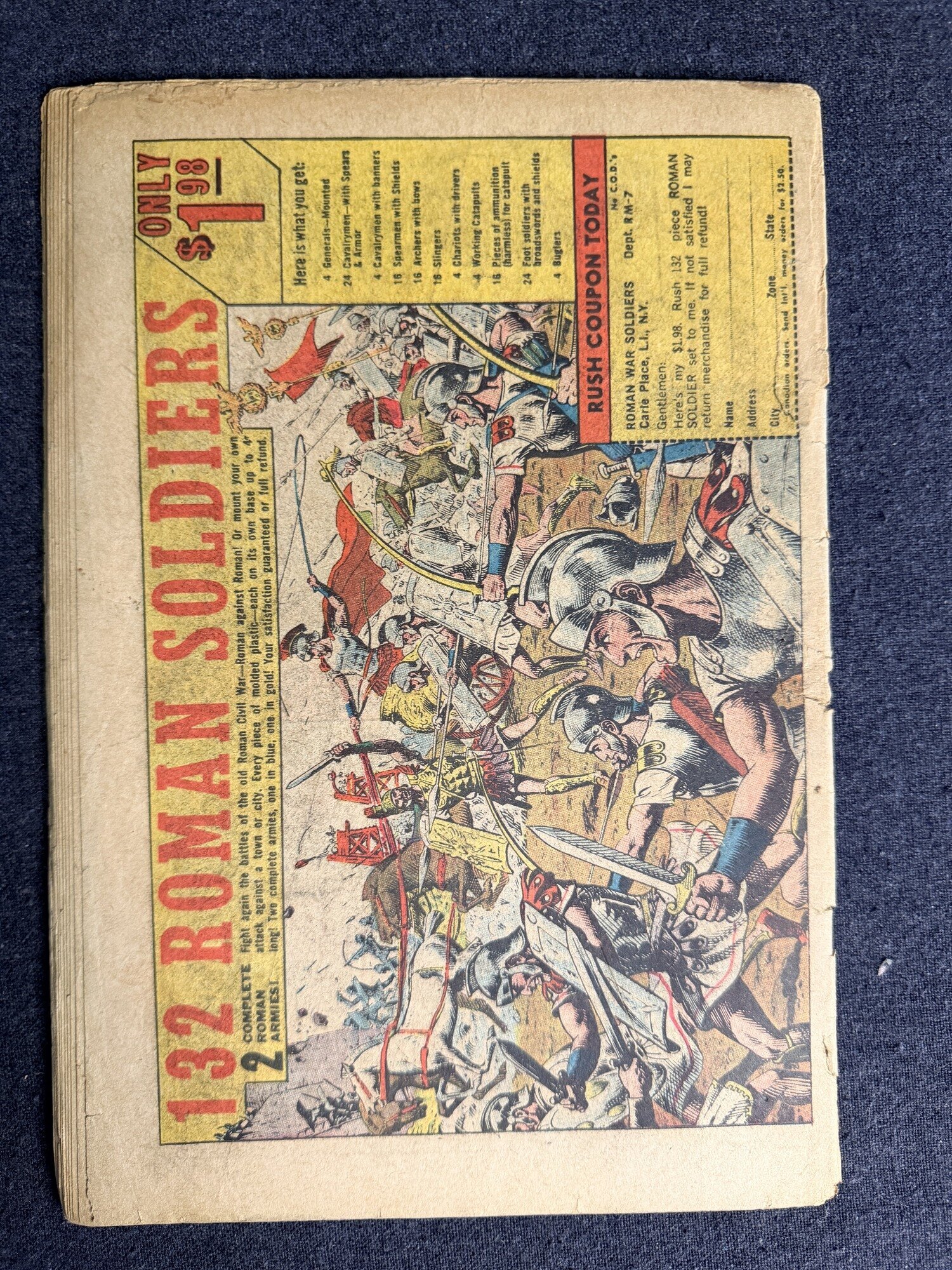
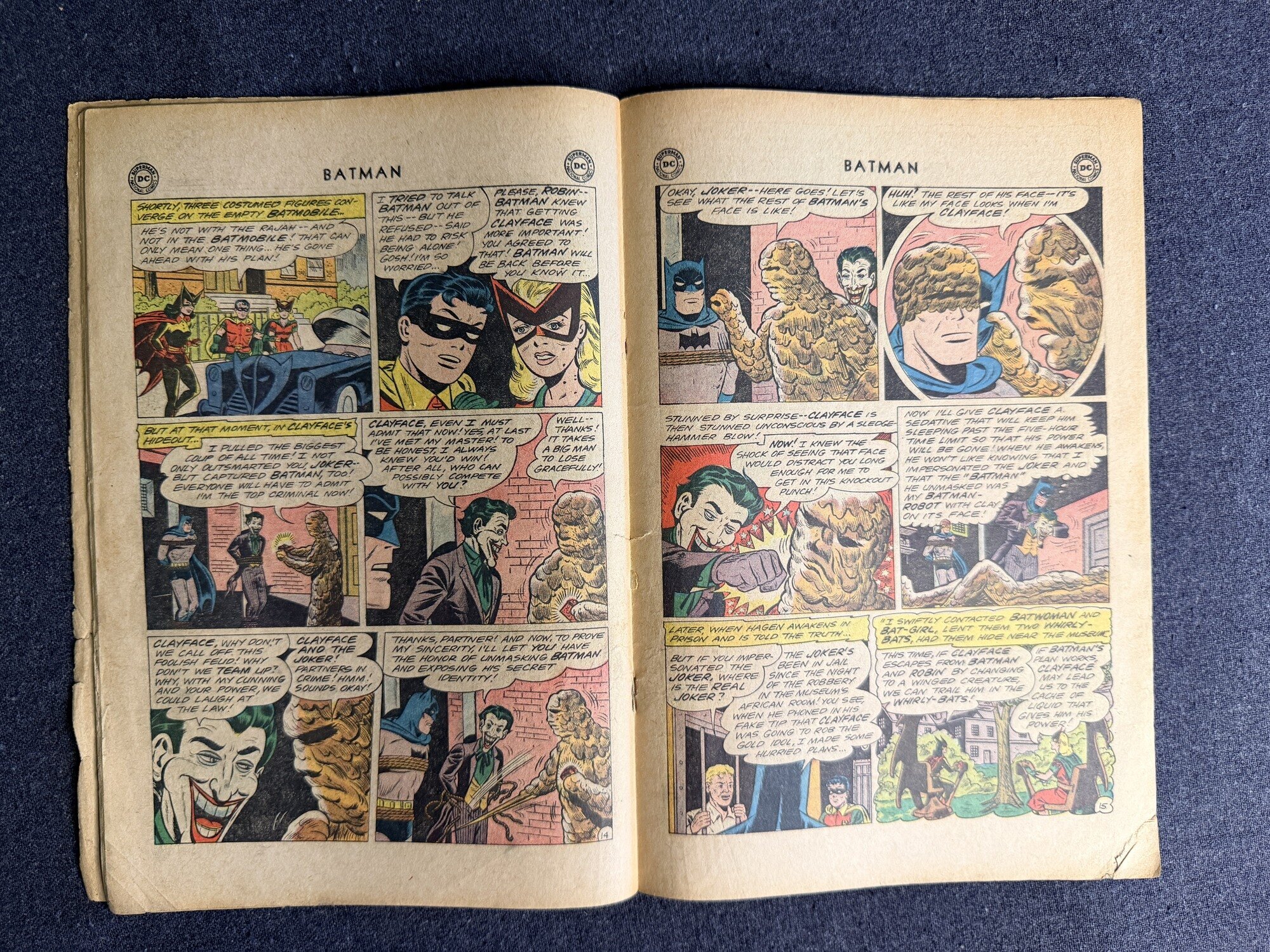
Graded at 0.3 (coverless) on 2026-10-22, from new photos taken out of the sleeve: first page, last page and interior. The front and back covers are missing, so the book was identified from the indicia on its first page, which reads Batman No. 159, November 1963; the first page is the Joker and Clayface story. The pages are tan, with chipped and frayed edges and small splits along the spine fold; the centre spread is present.
// Valuation — market reference
| Bracket | Grade | Est. market value | Marker |
|---|---|---|---|
| LOW_RAW | 0.5 – 1.5 | $55 | |
| MID_RAW | 4.0 – 6.0 | $89 | |
| HIGH_CERT | 9.8 SLAB | $30,000 |
// Archive commentary
Batman #159 arrived in November 1963, squarely within the Julius Schwartz-edited stretch of the Silver Age that steadily modernized the Batman line after the excesses of the late 1950s "alien invader" period. The issue reflects the house style of the time, with Sheldon Moldoff providing pencils under the Bob Kane studio credit and Charles Paris inking, a combination that defined the visual identity of Batman comics through most of the early 1960s. It is a mainline Batman and Robin adventure rather than a book tied to any first appearance, origin, or death, and it does not carry a cover regarded as a genre-defining classic by price guides or collector consensus.
Market data bears out its status as a solid but non-key mid-run Silver Age Batman issue. Pricing across low and mid raw grades is modest and consistent with a widely circulated newsstand book from a heavily collected series, while the certified population of 282 Universal copies indicates ample raw and slabbed supply at every grade below near-mint. The steep value acceleration above 9.0, and especially the gap between the sole certified 9.2s and the single 9.6, shows the familiar Silver Age pattern in which ordinary demand at lower grades gives way to intense competition for the handful of copies that survived in top condition, driven more by census scarcity than by story significance.
This book trades as a builder or run-completion purchase rather than a headline lot. Low and mid-grade raw copies serve Batman and Silver Age DC collectors filling out 1960s runs, and turnover at those levels is steady but unremarkable. The real action is concentrated at the top of the census, where the near-total absence of pristine copies means any well-preserved example, particularly anything approaching or exceeding the current 9.6 census peak, would draw strong competitive bidding from condition-census collectors, even though the issue itself carries no key designation to broaden that audience beyond dedicated Batman specialists.
INQUIRE_ABOUT_THIS_UNIT
Institutional buyers, auction houses, and private collectors — direct line to the archive.