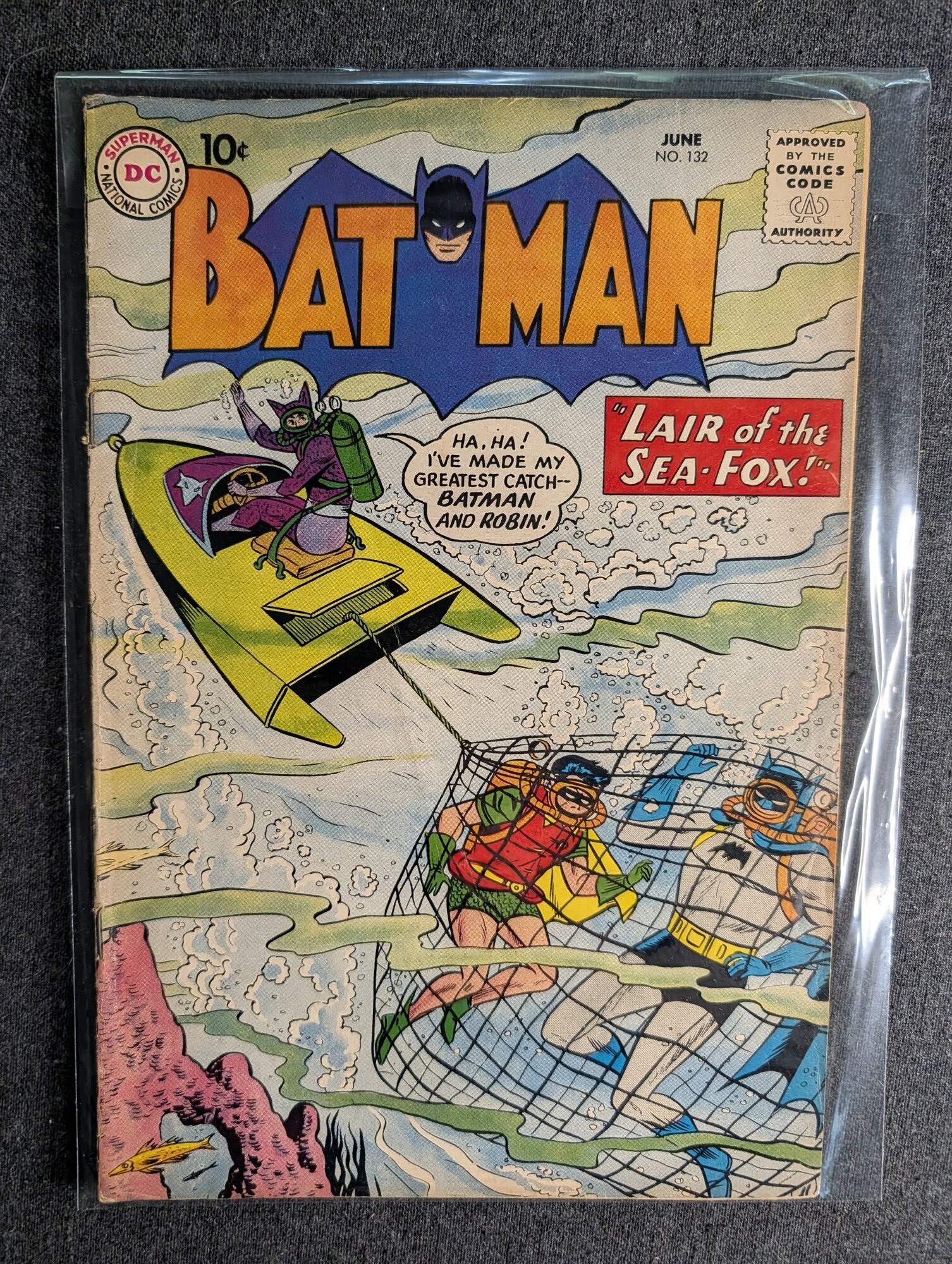
Approximate
Condition Profile
DC COMICS · 6/60
UNIT ECA-038326
BATMAN #132
Silver Age Batman anthology issue from the pre-New Look era, June 1960
// Unit specification
// Copies in archive
| Unit | Grade | Variant | Status |
|---|---|---|---|
| ECA-038326 | ~3.5 | — | AVAILABLE |
// Run position
// Condition analysis
Visible spine roll and stress with a couple of small ticks along the top edge, notable staple area wear with slight rust bleed near the top staple, and light corner blunting at top left and bottom left. There is mild surface wear and a small loss/chip at the top edge, plus some waviness to the cover stock suggesting handling or slight dampness exposure. Colors remain bright with no major color breaks, but the overall wear places this in the lower-mid grade range; interior pages and back cover were not assessed.
// Valuation — market reference
| Bracket | Grade | Est. market value | Marker |
|---|---|---|---|
| LOW_RAW | 0.5 – 1.5 | $40 | |
| MID_RAW | 4.0 – 6.0 | $69 | |
| HIGH_CERT | 9.8 SLAB | $15,000 |
// Archive commentary
Batman #132, cover-dated June 1960, arrived during the transitional stretch of the Silver Age when the Batman titles were still leaning on science-fiction premises and lighter anthology-style storytelling, several years before the 1964 "New Look" overhaul reshaped the character's direction. The issue follows the standard format of the period: a lead Batman and Robin adventure backed by shorter features, produced under the Bob Kane studio banner with Bill Finger's typical scripting sensibility and Sheldon Moldoff's pencils ghosted beneath the Kane signature, a common arrangement for DC's Batman output throughout the late 1950s and early 1960s. The book carries no first appearance, origin, or landmark creative milestone and is best understood as a representative example of Batman's pre-revamp adventures rather than a recognized key.
Market activity reflects that status: demand is steady but modest through the mid grades, with FMVs clustering in the $55-$110 range from 3.0 through 6.5 and a gradual climb through the 7s and 8s before a pronounced jump at 9.0, where thin high-grade population and collector appetite for well-preserved Silver Age Batman drive pricing sharply upward. The census shows over 150 universal copies spread across a wide grade curve, with real scarcity setting in above 9.0 — only a handful of copies exist at 9.2 and above, and none has yet been certified at 9.8. That gap between documented high-grade sales and the ceiling of the census is the main driver of value uncertainty at the top end.
This is a book collected primarily by Silver Age Batman run-builders and completists rather than key-issue speculators, so raw copies in low and mid grades trade in line with general Silver Age filler pricing and move steadily rather than spiking. High-grade certified copies, by contrast, are chased disproportionately given the small population at 9.0 and above, and a 9.8 — should one ever be certified — would likely draw outsized interest from census-completion collectors and command a substantial premium over the current top documented sales.
INQUIRE_ABOUT_THIS_UNIT
Institutional buyers, auction houses, and private collectors — direct line to the archive.