Approximate
Condition Profile
MARVEL COMICS · 2/73
UNIT ECA-009331
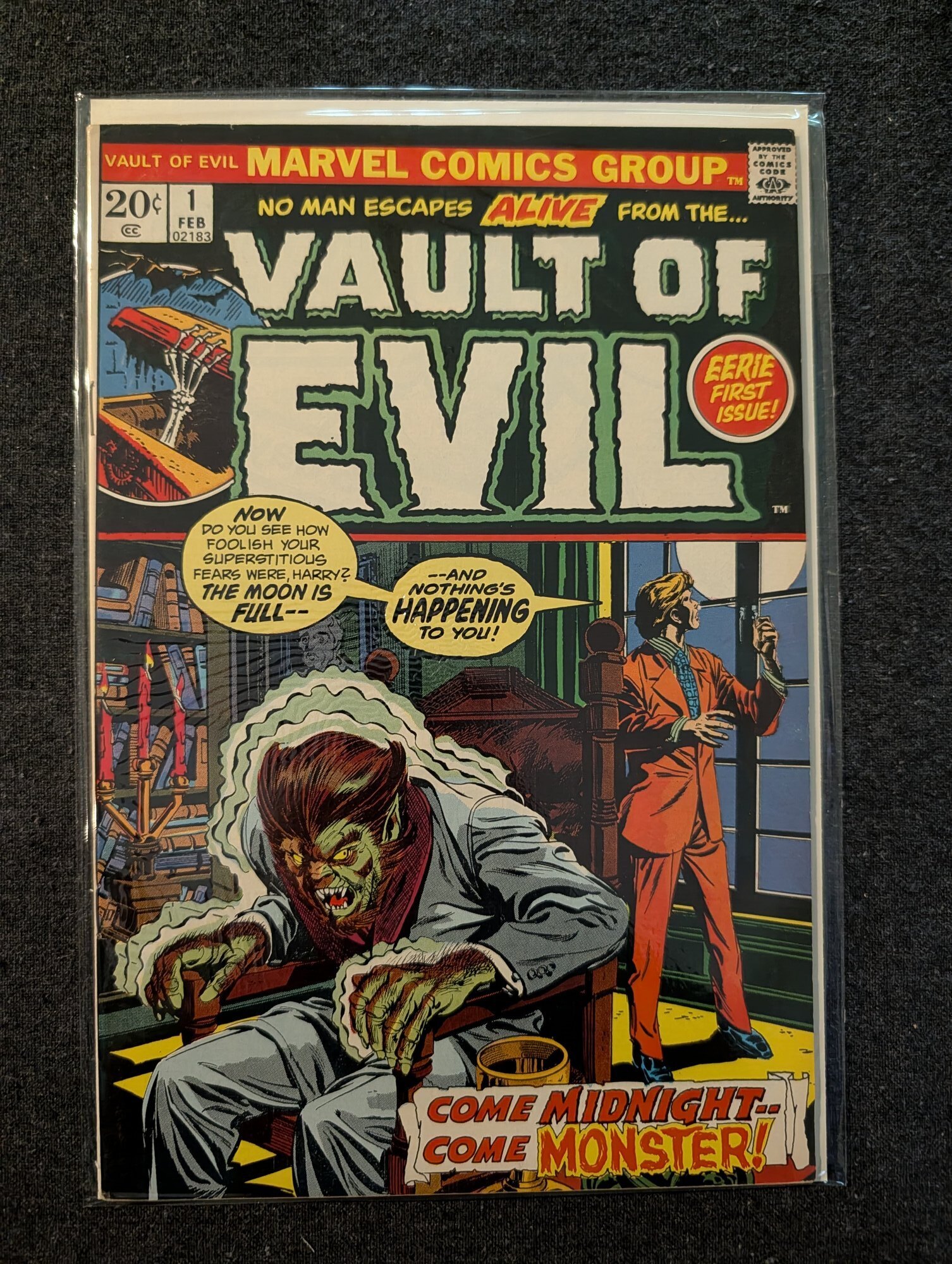
VAULT OF EVIL #1
Marvel horror anthology debut, reprinting Atlas-era pre-Code horror tales, February 1973
// Unit specification
| Publisher | Cover date | Era | Variant | Key attribute | Status |
|---|---|---|---|---|---|
| Marvel Comics | February 1973 | Bronze | — | — | AVAILABLE |
// Copies in archive
| Unit | Grade | Variant | Status |
|---|---|---|---|
| ECA-009331 | ~8.5 | — | AVAILABLE |
// Run position
// Condition analysis
Cover shows strong gloss and vivid color with sharp corners and clean edges; no visible chips or tears. Slight softness at the top left corner and a faint spine tick are visible near the top of the spine. The book is in a protective sleeve which slightly obscures fine surface texture, and the back cover/interior were not assessed, limiting confidence in a higher grade.
// Valuation — market reference
| Bracket | Grade | Est. market value | Marker |
|---|---|---|---|
| LOW_RAW | 0.5 – 1.5 | $7 | |
| MID_RAW | 4.0 – 6.0 | $14 | |
| HIGH_CERT | 9.8 SLAB | $1,300 |
// Archive commentary
Vault of Evil #1 launched one of Marvel's early-1970s horror reprint anthologies, part of a wave of black-and-white-adjacent and color reprint titles the company used to recirculate its 1950s Atlas horror and suspense material for a new generation of readers navigating the loosened Comics Code. The book collects shorter macabre stories originally produced during the pre-Code horror boom, repackaged with a new cover and editorial framing typical of Marvel's Bronze Age anthology line, alongside titles like Chamber of Chills and Journey into Mystery's own revival. It carries no first appearance, origin, or landmark creative milestone, and its significance rests chiefly in its place within the broader Bronze Age horror-reprint category rather than in any single story or character debut.
Market data shows a typical long-tail anthology curve: modest, thinly-traded values through the mid grades that only accelerate meaningfully at the top of the census. With 214 universal copies graded and clusters concentrated in the 8.0-9.4 range, supply is healthy across most grades, keeping raw and low-grade certified copies inexpensive. Demand firms sharply only at 9.6 and 9.8, where population thins to single digits and buyers pay a real premium for eye-appeal and scarcity rather than any content-driven key status.
This is a book bought primarily by Bronze Age horror-anthology completists and CGC registry builders chasing top-census slots rather than by character or creator collectors. Mid- and low-grade raw copies trade as inexpensive reading or filler pieces with little upside, while 9.6 and especially 9.8 slabs command outsized prices purely on condition rarity. Long-term interest tracks the broader Bronze Age horror-reprint niche rather than any independent demand driver tied to this specific issue.
INQUIRE_ABOUT_THIS_UNIT
Institutional buyers, auction houses, and private collectors — direct line to the archive.