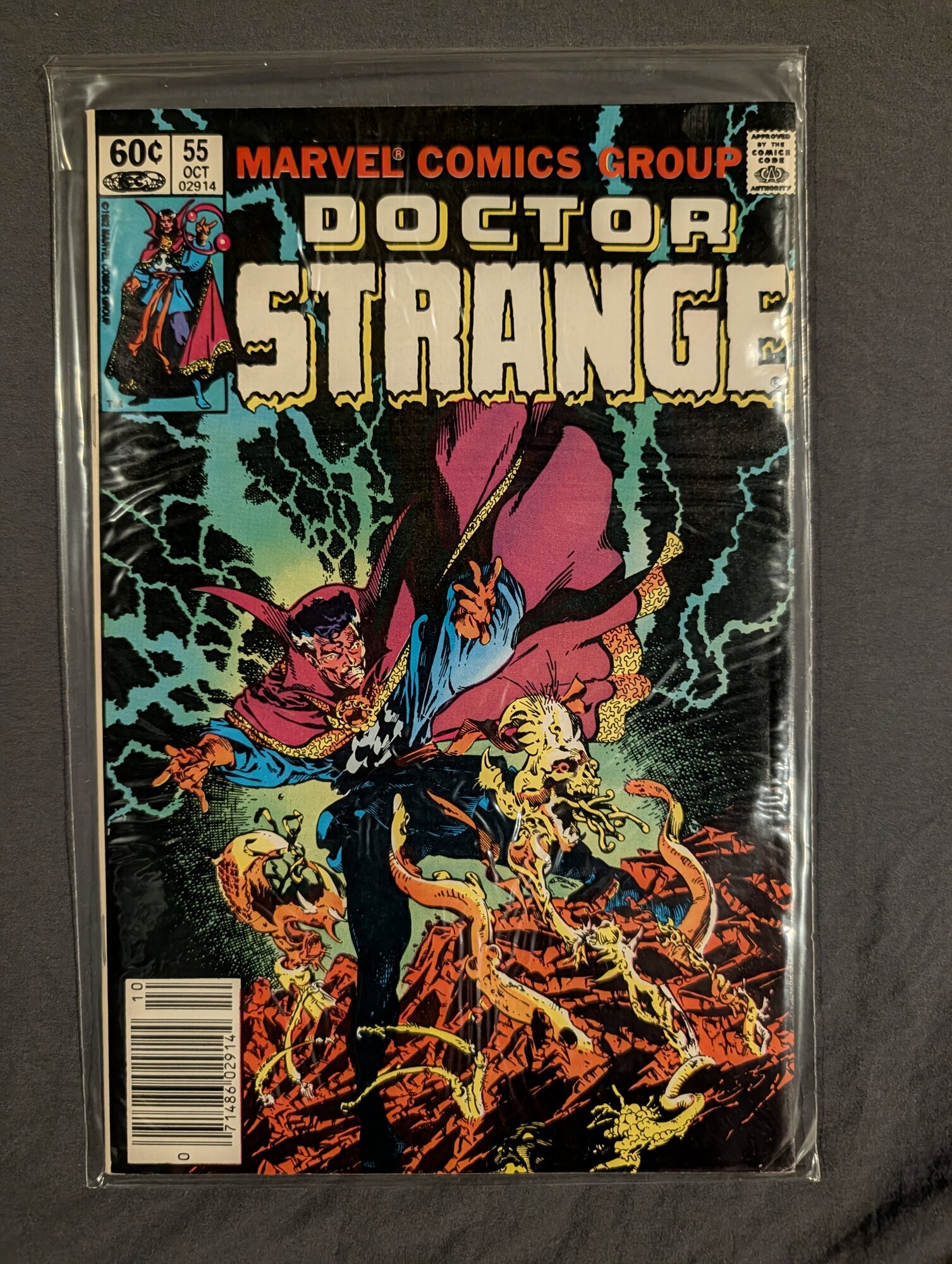
Approximate
Condition Profile
MARVEL COMICS · 10/82 · NEWSSTAND
UNIT ECA-008651
DOCTOR STRANGE #55
Michael Golden cover and full interior art over Roger Stern's D'Spayre story, with Lee and Ditko analogs in a metafictional sequence
// Unit specification
| Publisher | Cover date | Era | Variant | Key attribute | Status |
|---|---|---|---|---|---|
| Marvel Comics | October 1982 | Bronze | Newsstand | — | AVAILABLE |
// Run position
// Condition analysis
Cover shows strong gloss and vibrant color with sharp corners and clean edges in this photo; the UPC barcode box confirms newsstand edition. No visible creases, spine stress, or color breaking along the spine edge, though the book is in a protective sleeve which slightly obscures fine surface detail. A faint horizontal reflection/glare line is present but does not appear to be a physical defect. Interior pages and back cover were not assessed.
// Valuation — market reference
| Bracket | Grade | Est. market value | Marker |
|---|---|---|---|
| LOW_RAW | 0.5 – 1.5 | $4 | |
| MID_RAW | 4.0 – 6.0 | $8 | |
| HIGH_CERT | 9.8 SLAB | $130 |
// Archive commentary
Doctor Strange #55, cover dated October 1982, closes out one of the better-remembered stretches of the second volume. Roger Stern's script, "To Have Loved… and Lost!," strands Stephen Strange in grief over Clea's departure and hands that grief to D'Spayre, the empathic demon who feeds on it through a chain of staged illusions. The sequence in which Strange is introduced to his own "creators" — Les Tane and Ted Tevoski, transparent stand-ins for Stan Lee and Steve Ditko — is the issue's most cited moment, an early example of Marvel turning its own origin mythology into story material. The draw for most collectors, though, is art: Michael Golden supplies both the cover and the interior pencils, inked by Terry Austin and colored by Glynis Wein, and Golden's published comics work from this period is limited enough that any full issue attracts attention beyond the character's own following.
Market behavior follows that creator-driven pattern rather than a first-appearance pattern. Raw copies circulate freely and cheaply; this was a mainstream newsstand release in an era of large print runs, and the supply of readable mid-grade copies far exceeds demand at any price that would matter. Certified activity tells a different story: the census and sales record show steady, if modest, turnover at the top of the grade scale, with the 9.8 tier trading regularly enough to establish a dependable range. The gap between raw and top-certified pricing here is almost entirely a grading-scarcity effect — thin 1982 Marvel cover stock, direct-market and newsstand handling wear, and the usual spine and edge problems mean the 9.8 population stays smaller than the print run suggests.
Buyers divide into two groups. Golden completists and Stern-run readers take mid-grade raw copies as inexpensive fills, often alongside issues #46-53 and the Marvel Fanfare work from the same window. High-grade certified buyers are chasing the Golden cover as a display piece and treat the 9.8 as the only meaningful tier, with 9.6 copies typically trading at a substantial discount and anything below 9.4 collapsing toward raw money. Expect the low and mid brackets to move slowly and in bulk, and the certified bracket to respond mainly to Doctor Strange media cycles and to renewed interest in Golden's brief mainstream output. The separate Mark Jewelers insert variant of this issue trades independently and materially higher; the standard newsstand copy should not be priced against it.
// Copies in archive
| Unit | Grade | Variant | Status |
|---|---|---|---|
| ECA-008651 | ~9.0 | Newsstand | AVAILABLE |
INQUIRE_ABOUT_THIS_UNIT
Institutional buyers, auction houses, and private collectors — direct line to the archive.