Approximate
Condition Profile
DC COMICS · 6/63
UNIT ECA-007855
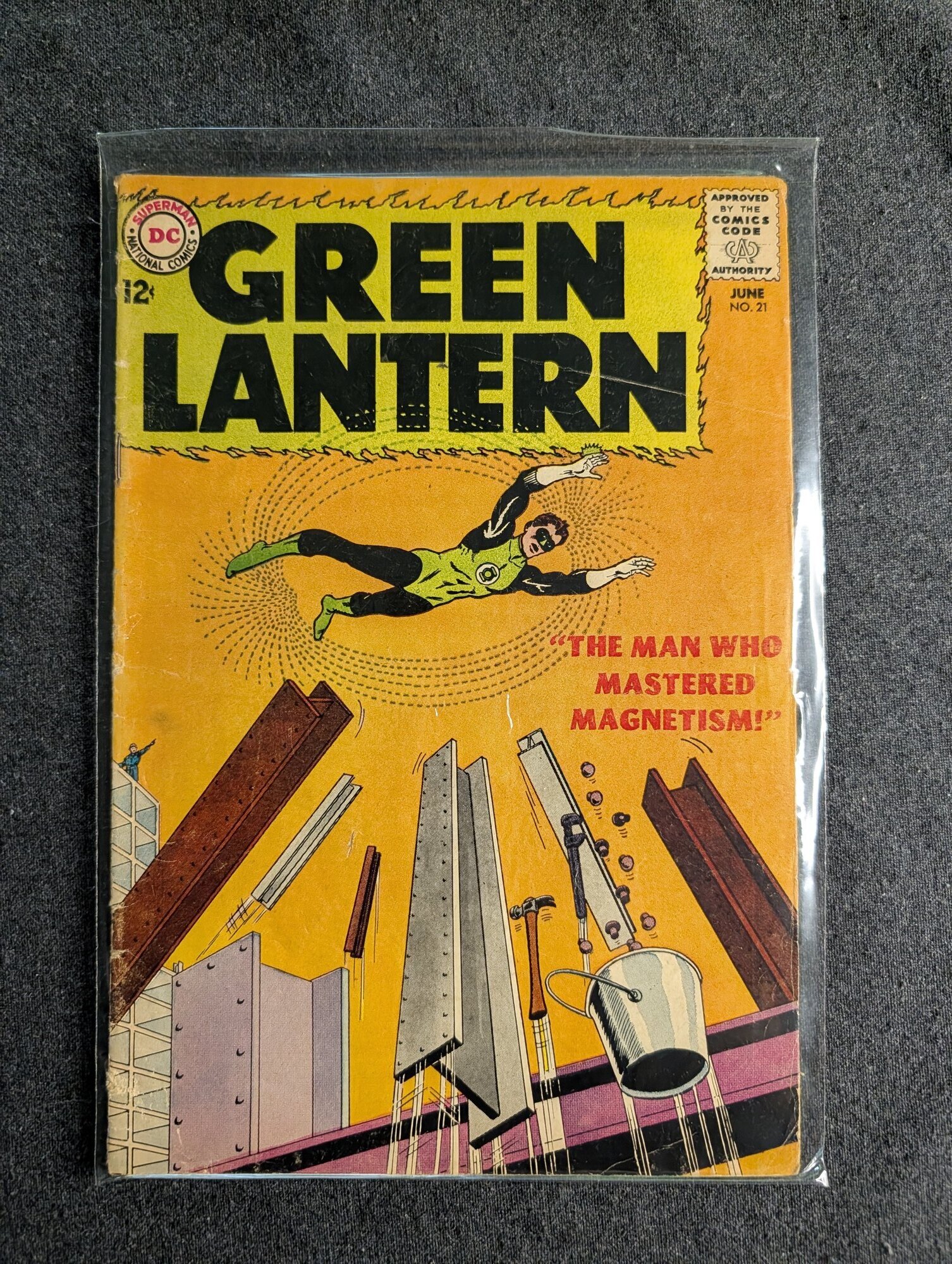
GREEN LANTERN #21
Origin and first appearance of Doctor Polaris, Gil Kane and Murphy Anderson cover
// Unit specification
| Publisher | Cover date | Era | Variant | Key attribute | Status |
|---|---|---|---|---|---|
| DC Comics | June 1963 | Silver | — | Origin and 1st appearance of Doctor Polaris (Neal Emerson); Gil Kane and Murphy Anderson cover | AVAILABLE |
// Run position
// Condition analysis
Cover shows notable spine wear with visible creasing and a diagonal crease running through the upper logo area causing slight color break. There is a small chip/tear at the left edge mid-height, and general softness at the corners with light rounding. Surface shows minor soiling and handling wear consistent with age; the front cover is intact overall with no major loss. Interior and back cover were not visible for assessment, so grade is based solely on the front cover's visible defects.
// Valuation — market reference
| Bracket | Grade | Est. market value | Marker |
|---|---|---|---|
| LOW_RAW | 0.5 – 1.5 | $28 | |
| MID_RAW | 4.0 – 6.0 | $49 | |
| HIGH_CERT | 9.8 SLAB | $3,200 |
// Archive commentary
Green Lantern #21 (DC, June 1963) introduces Doctor Polaris, the magnetically-powered adversary of Hal Jordan, in a story scripted by John Broome with Gardner Fox credited as co-writer under Julius Schwartz's editorship. The issue's origin sequence establishes Neal Emerson's transformation into one of the Green Lantern rogues' gallery's more enduring villains, a character who would recur across the Silver and Bronze Age runs and later media adaptations. The Gil Kane and Murphy Anderson cover, with Joe Giella inking interiors, exemplifies the clean, dynamic house style Schwartz cultivated across DC's early-1960s superhero line.
Market data shows a broad certified population (241 Universal copies across a total graded count of 251) with steady transaction volume through the mid grades, indicating the book circulates actively rather than sitting dormant in collections. Pricing climbs gradually through 4.0-7.5 before accelerating past 8.5, a pattern typical of Silver Age key issues where mid-grade supply is abundant but true high-grade material becomes scarce. The absence of any recorded 9.8 sale, despite two copies on census, points to holders sitting on top-census copies rather than an active high-end market presently testing that grade.
The book appeals primarily to Green Lantern specialists and villain-origin completists, with steady but unspectacular demand in the low-to-mid grade bands where most surviving copies reside. High-grade examples will draw stronger interest from Silver Age DC collectors assembling Schwartz-era runs, particularly given the Kane/Anderson cover pairing, but the thin population at 9.6 and above means pricing above 9.4 remains speculative until more certified sales establish a track record.
// Copies in archive
| Unit | Grade | Variant | Status |
|---|---|---|---|
| ECA-007855 | ~4.0 | — | AVAILABLE |
INQUIRE_ABOUT_THIS_UNIT
Institutional buyers, auction houses, and private collectors — direct line to the archive.