Approximate
Condition Profile
DC COMICS · 7/71
UNIT ECA-007538
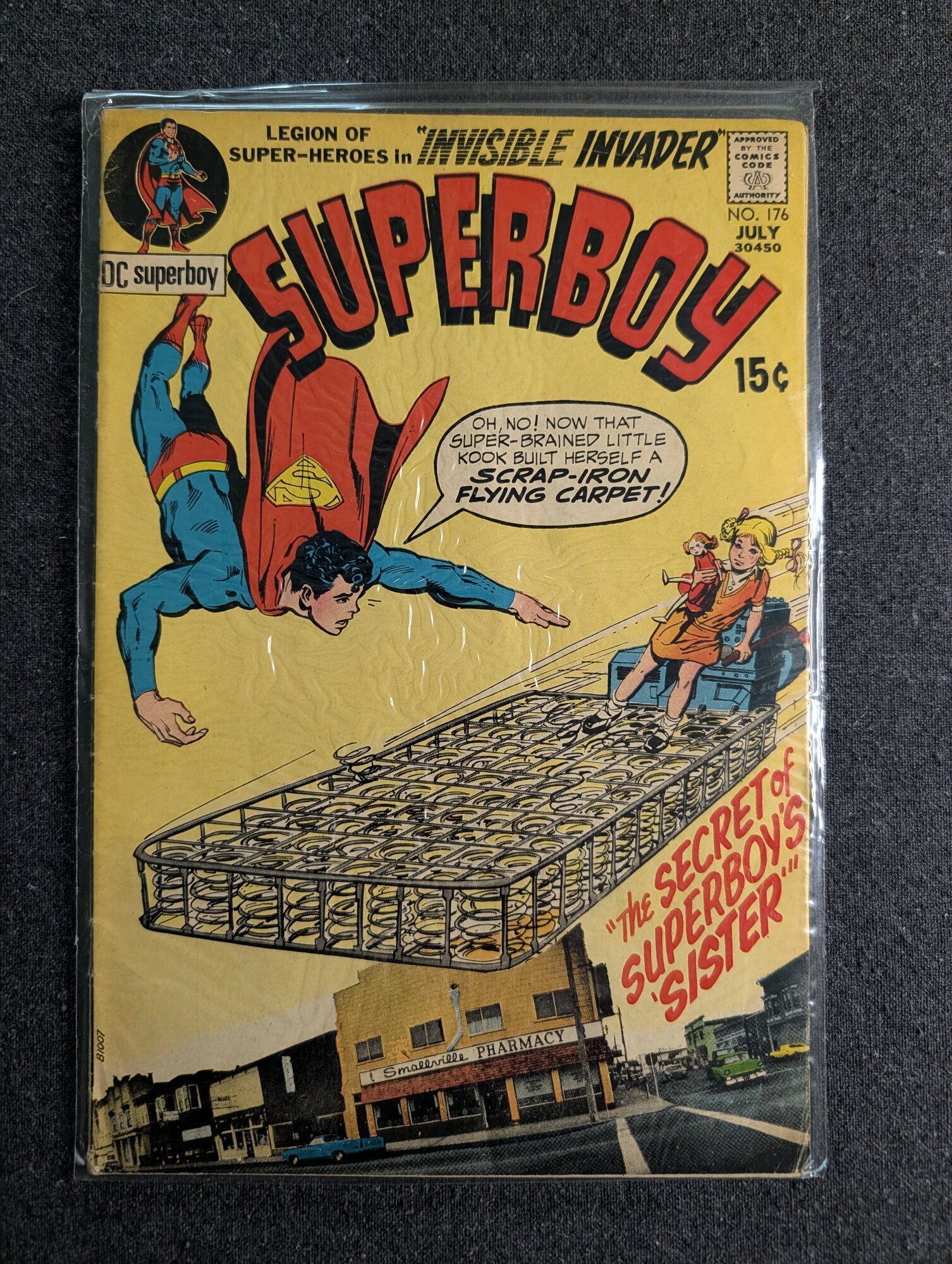
SUPERBOY #176
Bronze Age Superboy adventure from the DC line's early-1970s output
// Unit specification
// Run position
// Condition analysis
Pre-1977 book so no direct/newsstand distinction applies. Cover shows moderate wear: soft rounded corners, light surface creasing near the top and right edge, faint spine stress lines visible along the left edge, and slight discoloration/toning to the yellow background. There is a small crease near the top left near the Superboy logo box and minor edge wear along the right border. The comic is in a protective sleeve which adds some glare but no tears or missing pieces are visible. Interior and back cover were not assessed.
// Valuation — market reference
| Bracket | Grade | Est. market value | Marker |
|---|---|---|---|
| LOW_RAW | 0.5 – 1.5 | $8 | |
| MID_RAW | 4.0 – 6.0 | $28 | |
| HIGH_CERT | 9.8 SLAB | $180 |
// Archive commentary
Superboy #176, cover-dated July 1971, arrived during DC's Bronze Age transition, when the Superboy title continued its long-running formula of teenage-Superman adventures often paired with Legion of Super-Heroes back-up material. The issue reflects the era's house-style storytelling and art, produced by DC's regular Superman-family creative bullpen, without introducing a new character or storyline that would elevate it beyond its place as a representative entry in a long-running series.
The certified market for this issue is thin, with only 35 Universal copies recorded across a total census of 40, and sales activity concentrated at the top of the grading scale. Demand tracks the broader pattern for secondary Superboy issues of this period: modest at low and mid grades, where the book trades as a common back-issue, with value climbing sharply only at gem-mint certification where supply on the census is scarcest. There is no evidence of a first appearance, landmark creative run, or classic cover driving speculative interest.
This title collects as a run-filler for Superboy and Superman-family completists rather than as a standalone target. Low- and mid-grade raw copies move steadily but inexpensively through dealer inventory and online marketplaces, while high-grade CGC 9.8 copies command a real premium reflecting genuine scarcity at that tier rather than any character or story significance. Buyers are typically series collectors building a complete run rather than key-issue investors.
// Copies in archive
| Unit | Grade | Variant | Status |
|---|---|---|---|
| ECA-007538 | ~6.0 | — | AVAILABLE |
INQUIRE_ABOUT_THIS_UNIT
Institutional buyers, auction houses, and private collectors — direct line to the archive.