Approximate
Condition Profile
MARVEL COMICS · 7/95 · DIRECT EDITION
UNIT ECA-002781
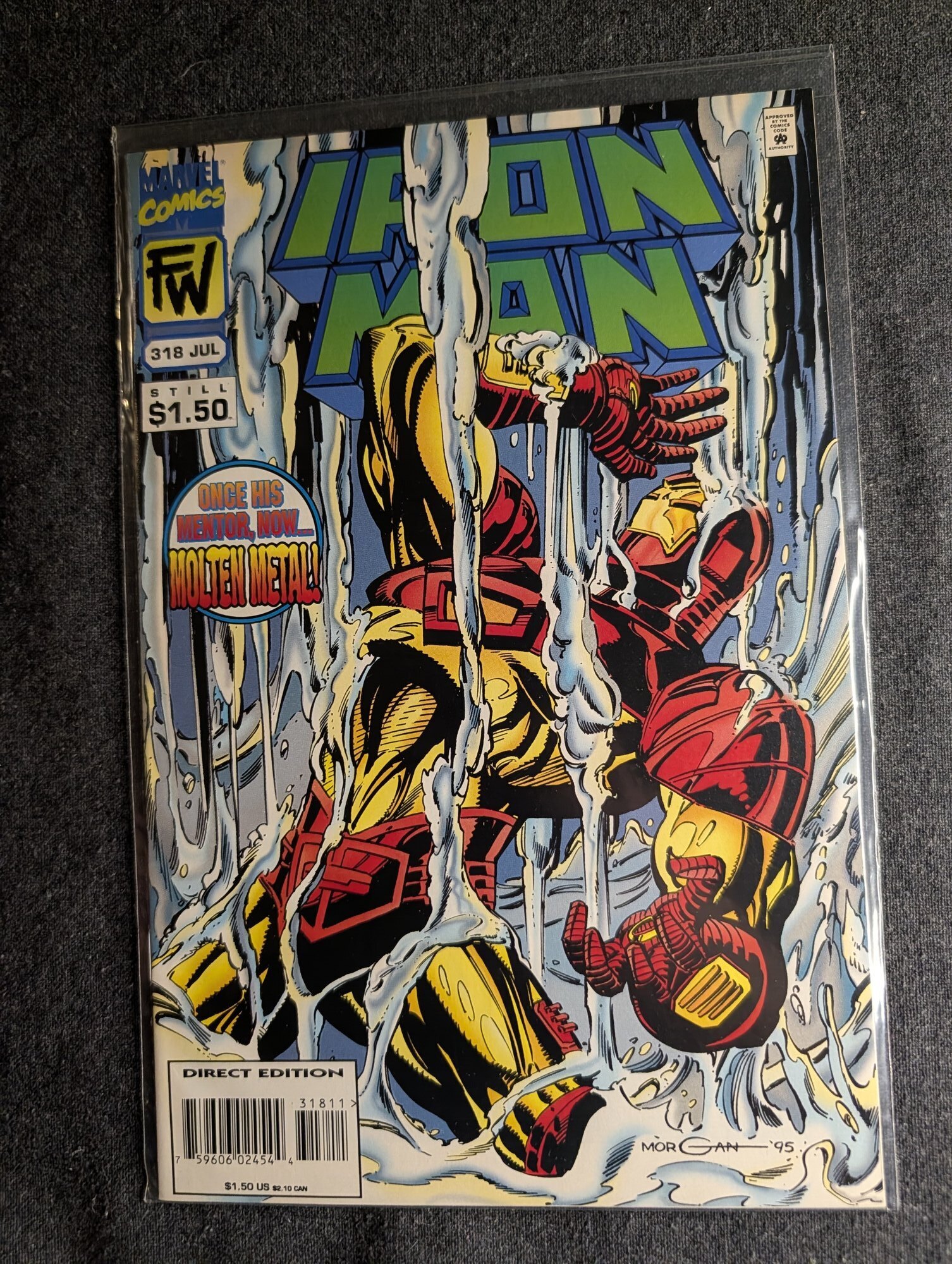
IRON MAN #318
Len Kaminski's final issue as Iron Man writer, with the death of Slag and a Don Heck memorial letters page
// Unit specification
| Publisher | Cover date | Era | Variant | Key attribute | Status |
|---|---|---|---|---|---|
| Marvel Comics | July 1995 | Modern | Direct Edition | — | AVAILABLE |
// Run position
// Condition analysis
Cover shows sharp corners and clean, glossy surface with strong color and no visible creases or spine stress in this photo. Slight edge wear may be present near the bottom edge but is hard to assess through the protective sleeve. Book is in a plastic sleeve, which limits full visibility of edges; interior and back cover were not assessed.
// Valuation — market reference
| Bracket | Grade | Est. market value | Marker |
|---|---|---|---|
| LOW_RAW | 0.5 – 1.5 | $1 | |
| MID_RAW | 4.0 – 6.0 | $3 | |
| HIGH_CERT | 9.8 SLAB | $60 |
// Archive commentary
Iron Man #318 (cover-dated July 1995) closes out Len Kaminski's tenure on the title, a run that had carried Tony Stark through the modular armor era, the Venom encounter, and the Vicious Circle storyline. Scripted by Kaminski with pencils, inks, and cover art by Tom Morgan, colors by Ariane Lenshoek, and lettering by Phil Felix, the issue resolves the Slag arc: Stark's former mentor Theodore Slaght, transformed by a laboratory accident, dies here after pursuing revenge, with Bethany Cabe, Happy Hogan, Abe Zimmer, and Erica Sondheim in support. Stark's Arctic sanctum is introduced, and the Arctic armor sees use. The letters page carries a memorial to Don Heck, co-creator of Iron Man's visual identity in Tales of Suspense, who had died in February 1995. Terry Kavanagh takes over with the next issue, steering the book directly into The Crossing.
Market behavior here is that of a late-run Modern Age Marvel direct-edition book from a period of very heavy print runs and heavy speculator retention. Supply is deep at every raw grade, and copies move mainly as fill-in material for run collectors or in bulk lots rather than as individual transactions. Certified copies barely exist; the issue is not a submission candidate, and the handful of slabs that appear trade on the cost of grading rather than on collector demand. Demand drivers are narrow but real: completists assembling the 1968 volume, readers following Kaminski's authorship to its endpoint, and Crossing-era collectors who treat this as the last issue before the crossover reshapes the book.
Buyers are almost entirely run builders and Iron Man specialists, plus dealers assembling graded-run inventory for the 300s. Across grades the spread is compressed — the difference between a well-read copy and a sharp unread one is a matter of a few dollars, so the practical decision for a buyer is simply whether to pay a small premium for a high-grade raw copy from a stored collection. Certification makes economic sense only when the book is part of a complete slabbed run, and resale liquidity at that level is thin. The realistic upside lies in the issue's position as a bookend to a well-regarded writer's run and in the Don Heck memorial, both of which give it more narrative interest than the surrounding mid-run issues without changing its price tier.
// Copies in archive
| Unit | Grade | Variant | Status |
|---|---|---|---|
| ECA-002781 | ~9.2 | Direct Edition | AVAILABLE |
INQUIRE_ABOUT_THIS_UNIT
Institutional buyers, auction houses, and private collectors — direct line to the archive.