Approximate
Condition Profile
DC COMICS · 6/68
UNIT ECA-036273
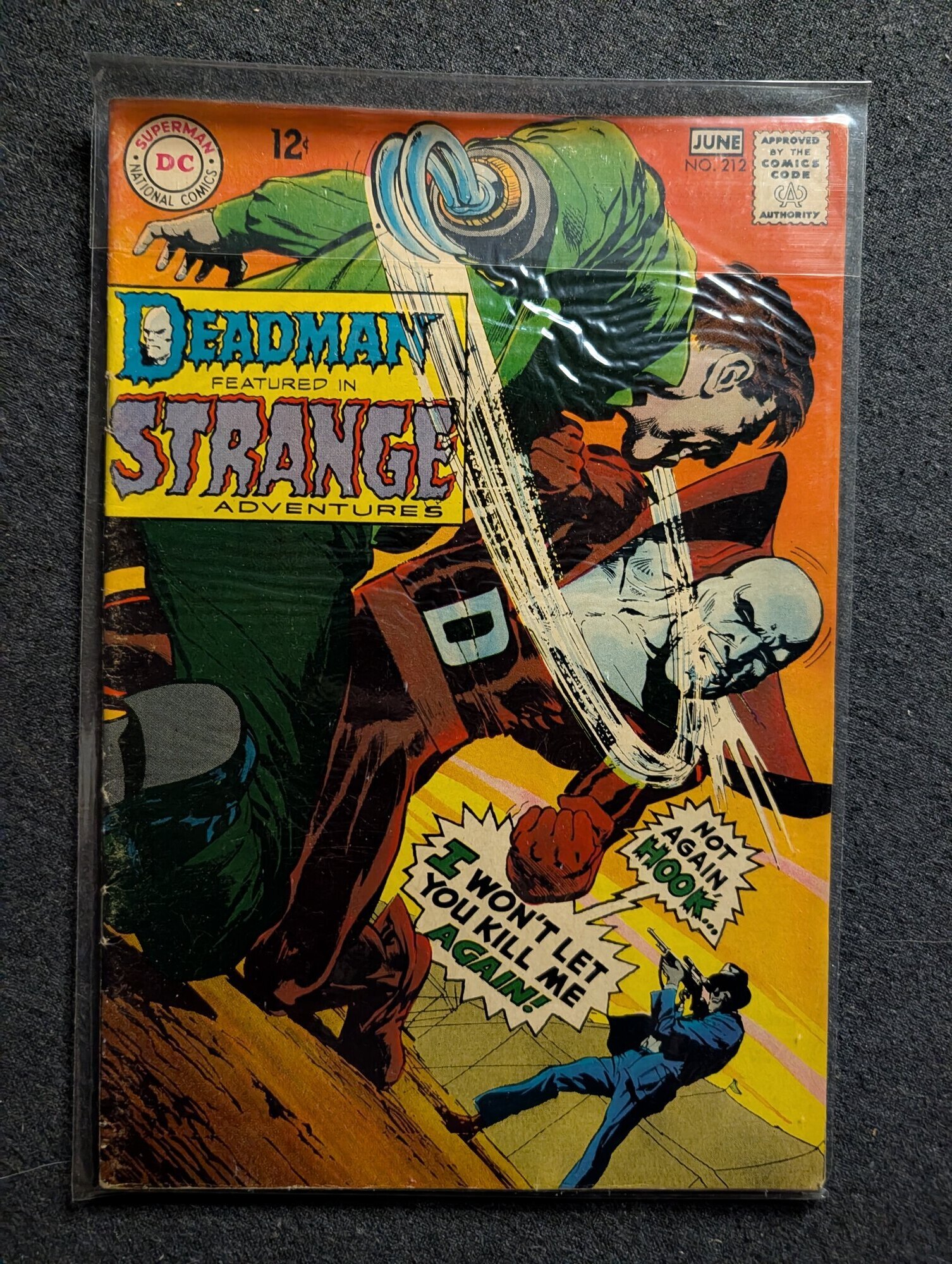
STRANGE ADVENTURES #212
Neal Adams draws Deadman in a late-1960s Strange Adventures issue prized for its artwork
// Unit specification
// Copies in archive
| Unit | Grade | Variant | Status |
|---|---|---|---|
| ECA-036273 | ~6.0 | — | AVAILABLE |
| ECA-024142 | ~5.5 | — | AVAILABLE |
// Run position
// Condition analysis
Cover shows moderate wear consistent with age: a noticeable spine roll/stress area with some color break near the mid-left edge, light corner blunting at bottom right, and minor surface scuffing across the green figure's arm. There is a faint vertical crease/handling line along the left edge and slight discoloration at the bottom edge suggesting light staining or wear. The book is housed in a protective sleeve which causes some glare; interior pages and back cover were not assessed.
// Valuation — market reference
| Bracket | Grade | Est. market value | Marker |
|---|---|---|---|
| LOW_RAW | 0.5 – 1.5 | $22 | |
| MID_RAW | 4.0 – 6.0 | $60 | |
| HIGH_CERT | 9.8 SLAB | $1,000 |
// Archive commentary
Strange Adventures #212 arrived in mid-1968 as part of the celebrated run in which Neal Adams redefined the visual language of the Deadman feature that Arnold Drake and Carmine Infantino had introduced a few years earlier. By this point in the series, the anthology title had effectively become a solo showcase for Boston Brand's ghostly circus-performer alter ego, with Adams supplying moody, cinematic layouts and covers that pushed superhero art toward a more naturalistic, shadow-heavy style. The issue is not a first appearance or origin story, but it sits squarely within the stretch of Adams-illustrated Deadman issues that collectors and historians single out as some of the finest sequential art of the Silver Age.
Market data reflects a book valued primarily for craftsmanship rather than a landmark event. Lower and mid-grade copies trade modestly, in line with a well-populated but not scarce back-issue with over 150 CGC Universal copies on census, while the price curve accelerates sharply at the top end: values roughly double between 9.2 and 9.4, then climb further through 9.6 into a comparatively thin pool of 9.8 copies. That kind of steep high-grade premium is typical of art-driven Silver Age books where census population is ample in the middle grades but genuinely scarce near perfect, concentrating demand among condition-focused buyers competing for a handful of top copies.
The book is best understood as a connoisseur's pickup rather than a speculative key. Deadman completists, Neal Adams collectors, and Silver Age DC art enthusiasts drive most of the activity, and mid-grade raw copies remain an affordable entry point for readers assembling the run. High-grade certified examples, by contrast, see outsized competition reflecting the small number of surviving pristine copies rather than any narrative significance, and pricing at the top of the grade scale should be expected to remain volatile as new census submissions surface.
INQUIRE_ABOUT_THIS_UNIT
Institutional buyers, auction houses, and private collectors — direct line to the archive.