Approximate
Condition Profile
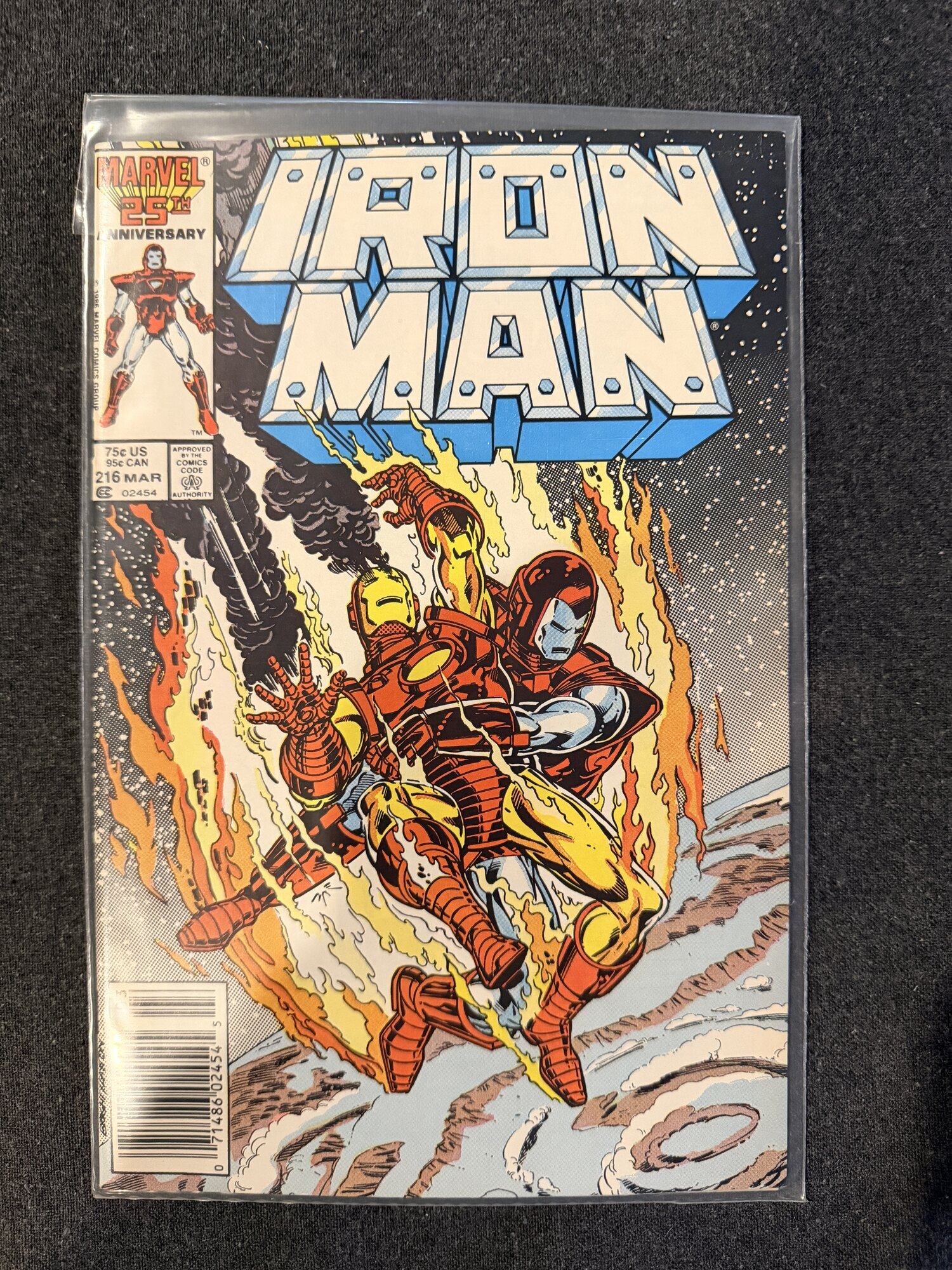
MARVEL COMICS · 3/86 · NEWSSTAND
UNIT ECA-002256
IRON MAN #216
Michelinie/Layton A.I.M. two-parter conclusion with Tony Stark and Jim Rhodes both in armor, and the death of Clytemnestra Erwin
// Unit specification
| Publisher | Cover date | Era | Variant | Key attribute | Status |
|---|---|---|---|---|---|
| Marvel Comics | March 1986 | Copper | Newsstand | — | AVAILABLE |
// Copies in archive
| Unit | Grade | Variant | Status |
|---|---|---|---|
| ECA-002256 | ~9.0 | Newsstand | AVAILABLE |
// Run position
// Condition analysis
Cover shows strong gloss and sharp corners with no visible creases or color breaks; spine appears tight with no stress marks visible through the protective sleeve. Minor handling wear may be present but is largely obscured by the plastic bag and slight glare. Interior and back cover were not assessed, so grade is based solely on the visible front cover.
// Valuation — market reference
| Bracket | Grade | Est. market value | Marker |
|---|---|---|---|
| LOW_RAW | 0.5 – 1.5 | $2 | |
| MID_RAW | 4.0 – 6.0 | $3 | |
| HIGH_CERT | 9.8 SLAB | $70 |
// Archive commentary
Cover-dated March 1987, Iron Man #216 closes the two-part story begun in #215, with David Michelinie and Bob Layton plotting, Michelinie scripting, Mark Bright penciling and Layton inking over a Bright/Layton cover. The issue puts Tony Stark and James Rhodes into armor simultaneously for a final push against A.I.M. and the Tykkio brothers, and ends with the death of Circuits Maximus partner Dr. Clytemnestra Erwin. It falls in the stretch of the Michelinie/Layton second run that rebuilt Stark's business and supporting cast after the alcoholism arc and set the table for the Armor Wars sequence that began at #225, so its interest is largely as connective tissue in one of the better-regarded creative tenures on the title.
Market behavior is that of a plentiful late-1980s Marvel monthly. Print runs were large, survival rates high, and copies circulate constantly in dealer boxes, run lots, and bulk online listings rather than as individually sought items. Demand is driven by run collectors filling the #200-232 stretch and by readers assembling the pre-Armor Wars material, not by speculation; the Erwin death is remembered by longtime Iron Man readers but has never translated into price guide key status or a certification wave. Because so few copies are submitted for grading, the certified population is small, and what value exists at the top of the scale reflects the cost and scarcity of the slab itself more than the issue's underlying demand.
Buyers are primarily completists, Michelinie/Layton partisans, and dealers restocking Copper Age Iron Man runs. Across grades the book trades in a narrow band: worn copies function as reading stock, mid-grade copies move most efficiently within run lots, and only high-end certified examples separate meaningfully from the pack. Newsstand distribution was still the norm for Marvel in this period, so the newsstand designation is standard rather than scarce here, unlike the 1990s issues where the direct/newsstand split matters. Realistic expectations favor patience and volume selling rather than single-copy placement.
INQUIRE_ABOUT_THIS_UNIT
Institutional buyers, auction houses, and private collectors — direct line to the archive.