Approximate
Condition Profile
DC COMICS · 7/87
UNIT ECA-001998
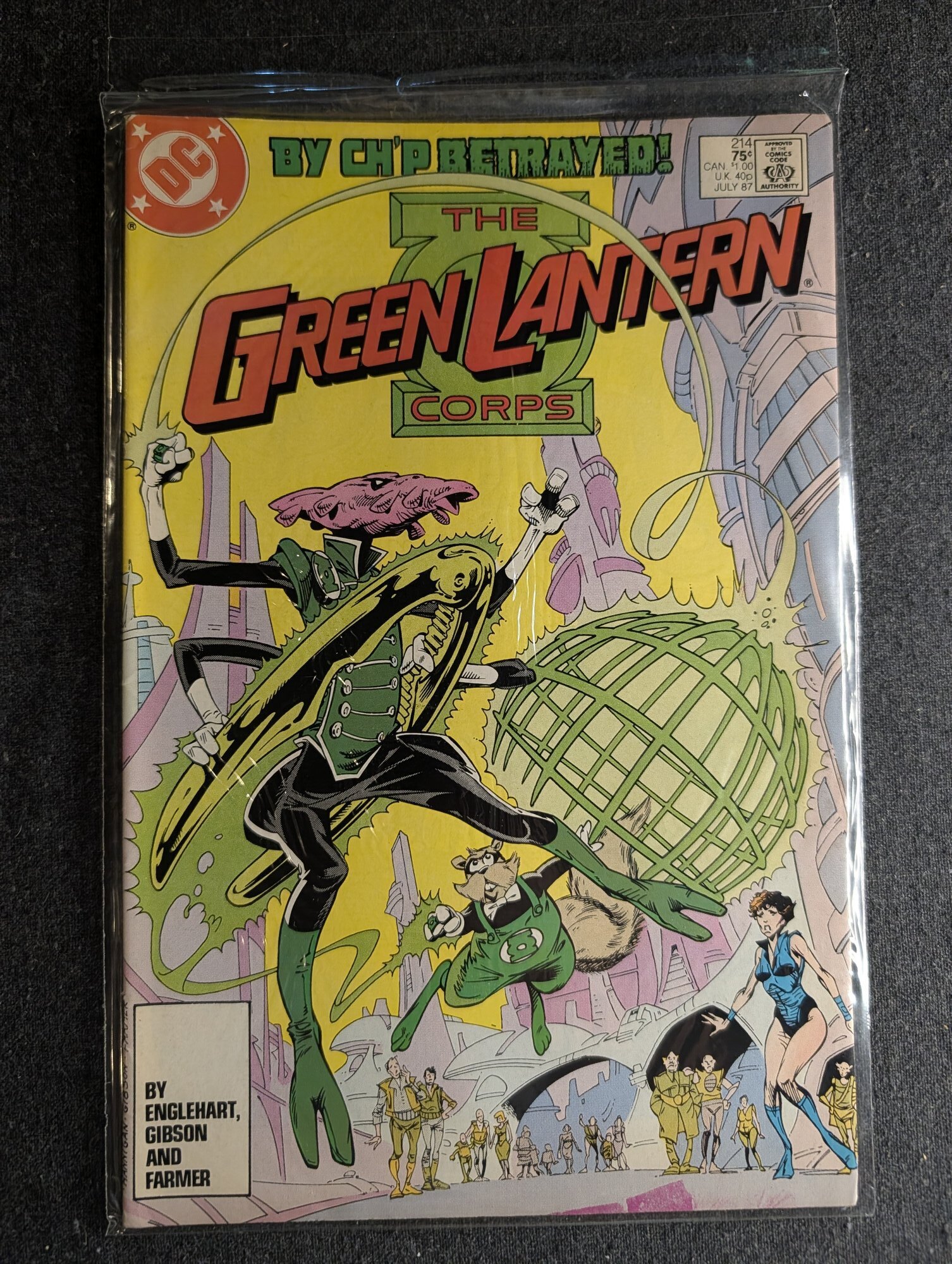
GREEN LANTERN CORPS #214
Steve Englehart-scripted Green Lantern Corps mid-run issue with Ian Gibson art, sending Salakk to the 58th century as Pol Manning
// Unit specification
// Run position
// Condition analysis
Cover shows strong gloss and vibrant color with sharp, well-defined corners and no visible creasing or spine stress. The comic is protected in a plastic sleeve, which limits full assessment of edge wear, but no chips, tears, or discoloration are apparent from this angle. No barcode is visible in this crop to confirm direct vs newsstand status. Interior pages and back cover were not assessed.
// Valuation — market reference
| Bracket | Grade | Est. market value | Marker |
|---|---|---|---|
| LOW_RAW | 0.5 – 1.5 | $2 | |
| MID_RAW | 4.0 – 6.0 | $4 | |
| HIGH_CERT | 9.8 SLAB | $70 |
// Archive commentary
Cover-dated July 1987, this installment of Green Lantern Corps comes from the stretch when the retitled Green Lantern series functioned as a true ensemble book, with Steve Englehart scripting and Ian Gibson supplying interior and cover art inked by Mark Farmer under editor Andy Helfer. The story revives one of the odder corners of Silver Age Green Lantern continuity: the 58th-century Solarites, facing the Breakers, attempt to summon the Green Lantern of the 20th century and take Salakk by mistake, implanting the Pol Manning identity that once belonged to Hal Jordan. Iona Vane, stripped of her memories of Jordan, is drawn into the same masquerade. It is a characteristic Englehart move, folding a discarded 1960s premise back into the post-Crisis Corps, and it sets up the resolution that follows in the next issue.
Market behavior here is that of a well-known but heavily printed Copper Age run book. Print runs from 1987 were large, survival rates high, and demand is driven by run collectors completing the 201-224 sequence rather than by speculators chasing a first appearance. Public sales data is thin because the book rarely trades at prices that generate recorded comps; graded submissions are correspondingly rare, since certification costs exceed any plausible resale on all but the top of the census. The one genuine pricing wrinkle in this issue number is the Canadian $1.00 cover-price variant, which trades at a multiple of the standard edition among the specialist price-variant audience and should never be conflated with a regular direct or newsstand copy.
Buyers are Corps completists, Englehart readers, and dealers filling out cheap-box inventory or full-run lots, where the issue moves more efficiently as part of a bundle than on its own. Across grades the curve is almost flat: low-grade and mid-grade copies occupy nearly the same narrow band, and only a high-grade certified example commands anything beyond nominal money, largely because so few have been submitted. Sellers of standard copies are generally better served by run assembly than by grading, while collectors seeking the top of the census should expect long waits between offerings and price discovery driven by scarcity of submissions rather than by underlying demand.
// Copies in archive
| Unit | Grade | Variant | Status |
|---|---|---|---|
| ECA-001998 | ~9.0 | — | AVAILABLE |
INQUIRE_ABOUT_THIS_UNIT
Institutional buyers, auction houses, and private collectors — direct line to the archive.