Approximate
Condition Profile
DC COMICS · 4/87
UNIT ECA-001738
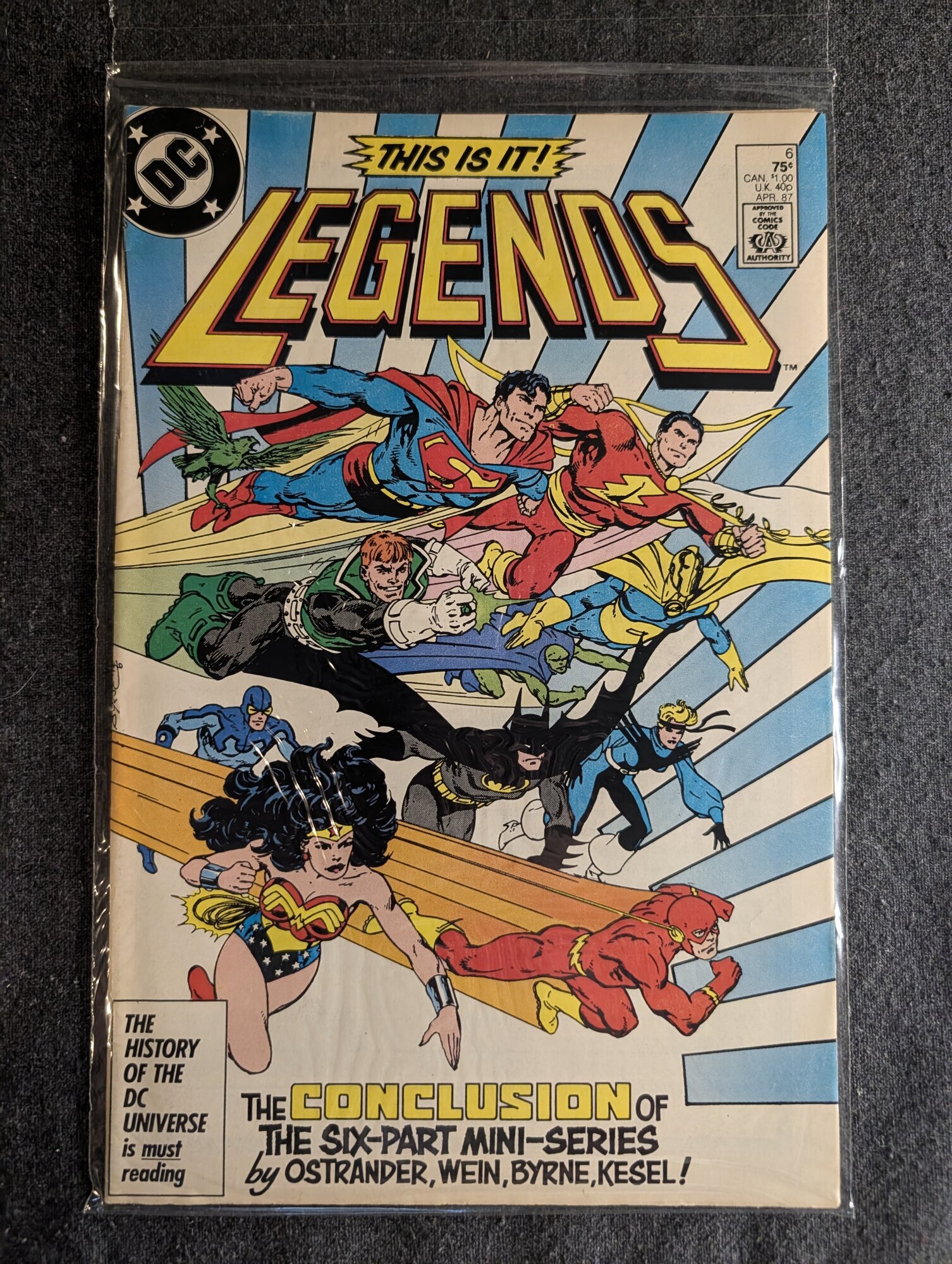
LEGENDS #6
Legends #6, final chapter of the 1987 DC crossover, sets the stage for Justice League and Suicide Squad
// Unit specification
| Publisher | Cover date | Era | Variant | Key attribute | Status |
|---|---|---|---|---|---|
| DC Comics | April 1987 | Copper | — | Final chapter of the Legends crossover; leads directly into the 1987 Justice League and Suicide Squad relaunches | AVAILABLE |
// Condition analysis
Cover shows strong gloss and bright colors with sharp corners; a small crease or surface line is visible near the left edge/spine area but no major spine stress ticks are apparent. There is minor whitening at the bottom left corner tip and slight waviness near the spine possibly from the protective sleeve. No creases, tears, or color breaks are visible elsewhere on the cover. Interior and back cover were not assessed.
// Valuation — market reference
| Bracket | Grade | Est. market value | Marker |
|---|---|---|---|
| LOW_RAW | 0.5 – 1.5 | $2 | |
| MID_RAW | 4.0 – 6.0 | $5 | |
| HIGH_CERT | 9.8 SLAB | $65 |
// Archive commentary
Legends #6 closes out DC's six-issue 1986-87 crossover event written by John Ostrander and Len Wein, with art by John Byrne and Karl Kesel. The miniseries reintroduced Darkseid as a driving threat to the DC Universe and served as the narrative hinge connecting the post-Crisis DCU to two major ongoing titles: this finale sets up the formation of the Giffen/DeMatteis Justice League and follows directly from the debut of the reorganized Suicide Squad introduced earlier in the series. While the first appearance of the new Suicide Squad lineup occurs in Legends #3, issue #6 is the payoff chapter most closely tied to the JLA relaunch, giving it a recognized place in the crossover's collecting narrative even without a discrete character first.
Market data reflects a book printed in high volume during the direct-market boom of the mid-1980s, with a large certified population (199 CGC Universal copies of 235 total graded) and steady but modest demand. Values are compressed across the raw and low-mid certified grades, with almost no price separation until copies reach gem-mint territory; the jump to CGC 9.8, where sales activity is comparatively robust (57 recorded sales), commands a real premium over 9.6 and below. This pattern is typical of Copper Age crossover back-up issues: broad availability suppresses raw and mid-grade prices, while pristine, well-centered slabs draw a disproportionate share of collector interest.
The book trades primarily as a supporting piece for Justice League International and Suicide Squad (1987) run-builders and Legends crossover completists rather than as a standalone investment target. Raw copies in low and mid grade are inexpensive and plentiful, suited to readers assembling full runs affordably, while CGC 9.8 examples attract a narrower but active pool of grade-chasers and crossover-event specialists. Long-term demand is likely to track the continued popularity of the Giffen/DeMatteis Justice League and Suicide Squad properties rather than any inherent scarcity of this issue itself.
// Copies in archive
| Unit | Grade | Variant | Status |
|---|---|---|---|
| ECA-001738 | ~8.5 | — | AVAILABLE |
INQUIRE_ABOUT_THIS_UNIT
Institutional buyers, auction houses, and private collectors — direct line to the archive.