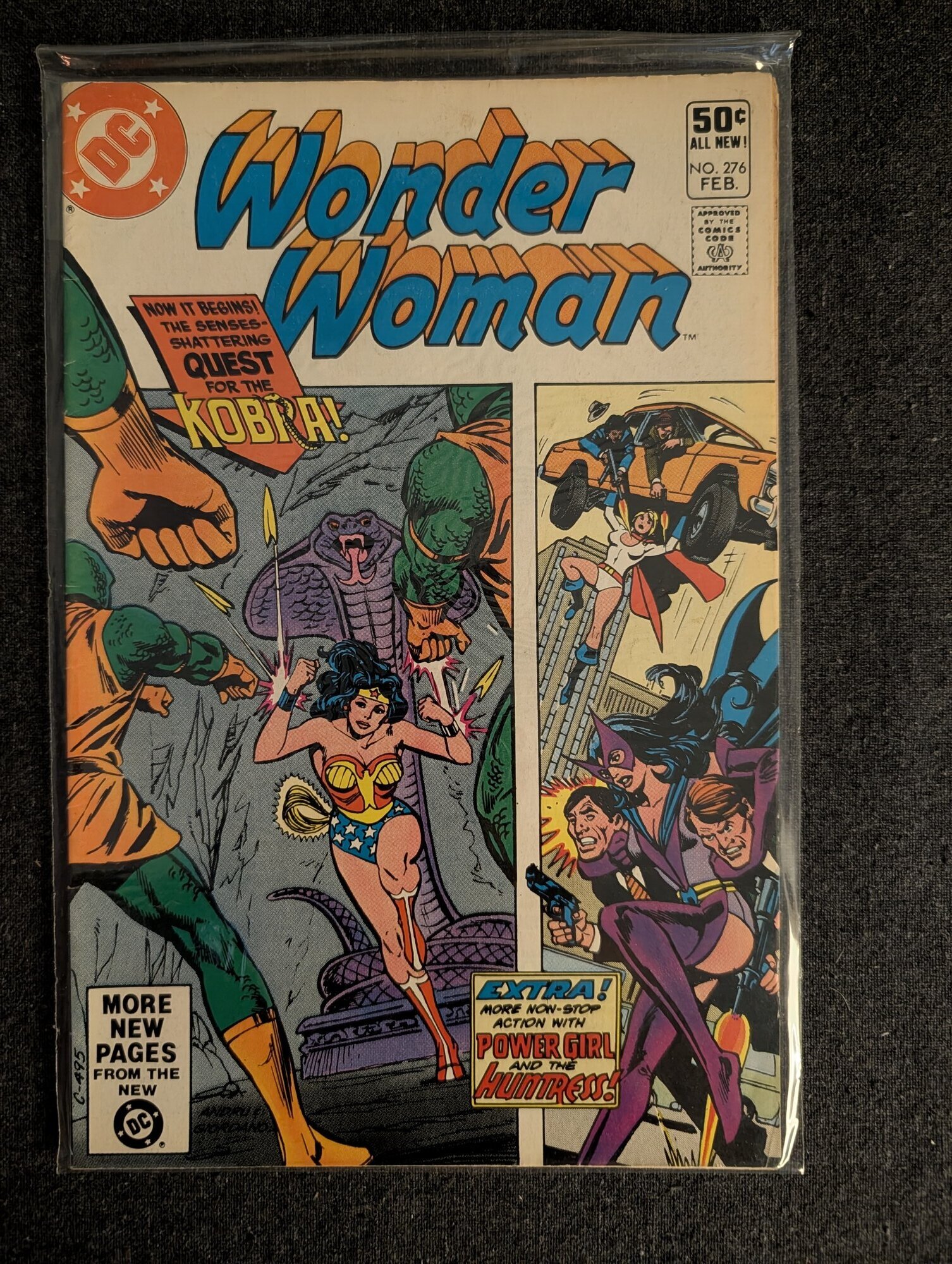
Approximate
Condition Profile
DC COMICS · 2/81
UNIT ECA-012730
WONDER WOMAN #276
Standard 1981 DC Comics newsstand issue in the ongoing Wonder Woman series
// Unit specification
// Copies in archive
| Unit | Grade | Variant | Status |
|---|---|---|---|
| ECA-012730 | ~7.5 | — | AVAILABLE |
// Run position
// Condition analysis
Cover shows overall light surface wear with a small vertical crease/ink smudge along the lower left edge near the price box, mild toning to the white background especially at the bottom edge, and slight softening at the corners. No major creases, tears, or color breaks are visible on the spine, though the book is in a protective sleeve which limits close inspection of the spine stress lines. Interior pages and back cover were not assessed.
// Valuation — market reference
| Bracket | Grade | Est. market value | Marker |
|---|---|---|---|
| LOW_RAW | 0.5 – 1.5 | $1 | |
| MID_RAW | 4.0 – 6.0 | $4 | |
| HIGH_CERT | 9.8 SLAB | $140 |
// Archive commentary
Wonder Woman #276 is a routine entry in DC's long-running Bronze Age Wonder Woman title, published under the Roy Thomas/Gerry Conway-era editorial direction of the early 1980s and reflecting the standard costumed-adventure storytelling of the line at that time. The issue does not carry a first appearance, origin, or landmark creative milestone that collectors specifically chase, and it is best understood as a representative mid-run chapter rather than a spotlight issue.
Market data reflects this status: sales activity is thin across the certified population, with only twenty-two copies graded and a total of roughly fifteen recorded sales spread across the grade spectrum. Values climb steeply only at the top of the census, where a handful of 9.6 and 9.8 copies command meaningfully higher prices than the mid-grade cluster sitting near single digits. This pattern is typical of common Bronze Age DC output — modest demand outside of series completists, with pricing driven almost entirely by condition scarcity rather than character or story significance.
The book's natural buyers are Wonder Woman series collectors filling run gaps, CGC registry participants chasing high-census slots, and general Bronze Age bargain hunters. Raw copies in low and mid grades trade for a few dollars at most, consistent with bulk-bin and online marketplace pricing for non-key issues of the era. High-grade certified copies, particularly 9.6 and 9.8, see a disproportionate value jump due to the small number of copies that have survived or been submitted in top condition, making this a book where condition — not content — drives nearly all of the price difference between grades.
INQUIRE_ABOUT_THIS_UNIT
Institutional buyers, auction houses, and private collectors — direct line to the archive.