Approximate
Condition Profile
MARVEL COMICS · 10/79 · NEWSSTAND
UNIT ECA-011562
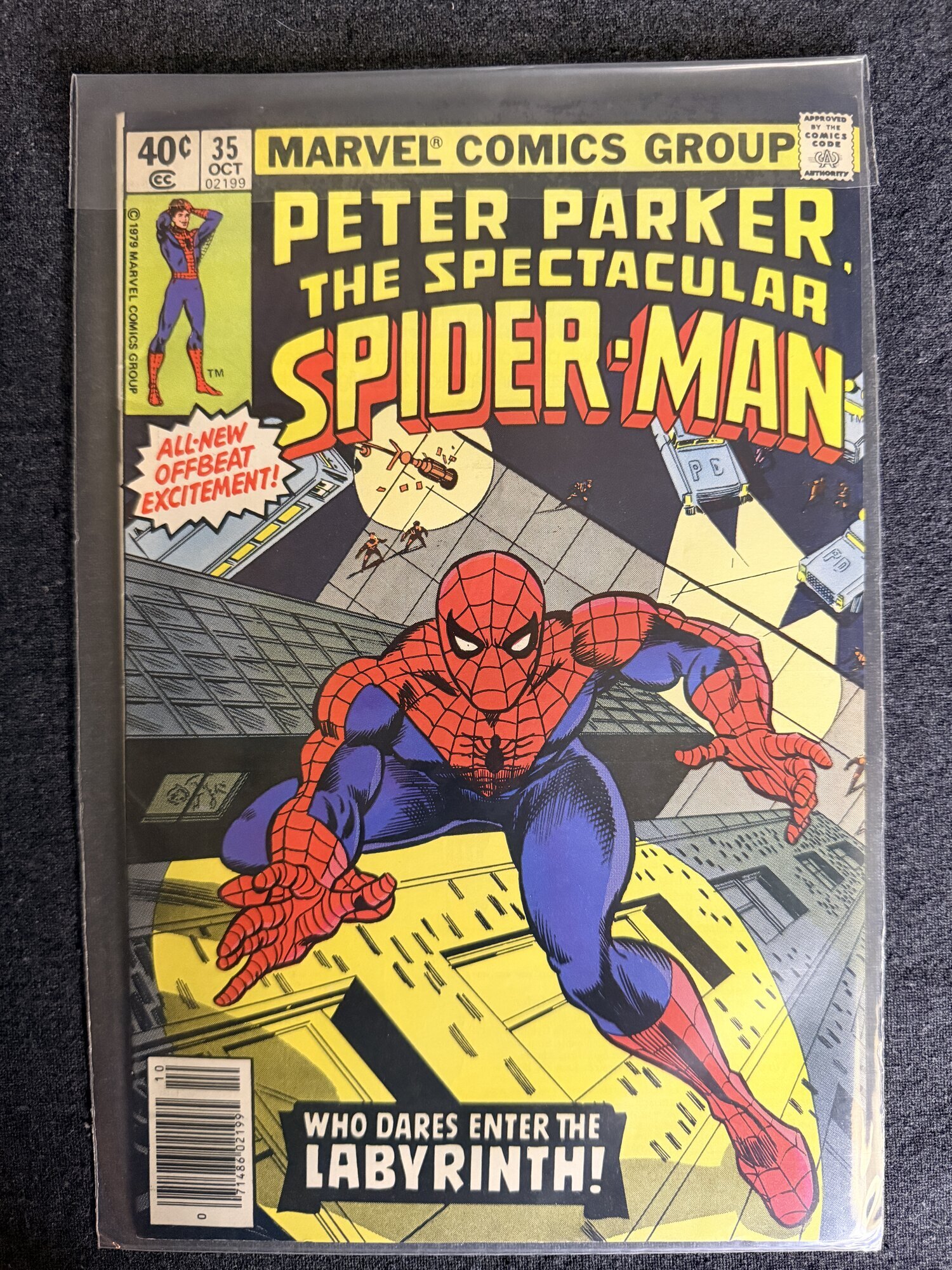
THE SPECTACULAR SPIDER-MAN #35
Spider-Man battles the psychic villain Mindworm in a routine late-1970s issue of his second ongoing title
// Unit specification
| Publisher | Cover date | Era | Variant | Key attribute | Status |
|---|---|---|---|---|---|
| Marvel Comics | October 1979 | Bronze | Newsstand | — | AVAILABLE |
// Copies in archive
| Unit | Grade | Variant | Status |
|---|---|---|---|
| ECA-011562 | ~8.5 | Newsstand | AVAILABLE |
// Run position
// Condition analysis
Cover shows strong gloss and vibrant color with sharp corners and clean edges; a faint vertical crease/handling line is visible near the left edge and spine area but does not appear to break color. No significant creases, tears, or stains are visible on the front cover. The book is in a protective sleeve, which limits full assessment, and the interior/back cover were not evaluated.
// Valuation — market reference
| Bracket | Grade | Est. market value | Marker |
|---|---|---|---|
| LOW_RAW | 0.5 – 1.5 | $2 | |
| MID_RAW | 4.0 – 6.0 | $8 | |
| HIGH_CERT | 9.8 SLAB | $85 |
// Archive commentary
The Spectacular Spider-Man #35 (Marvel, October 1979) is a standard entry in Spider-Man's second ongoing series during its early Bronze Age run. Tony Isabella scripts a self-contained story pitting Spider-Man against Mindworm, a minor psychic antagonist, with art by veteran pencilers Lee Elias and Mike Esposito. The issue carries no first appearances, deaths, or landmark creative milestones, and its cover is not among the widely cited classics of the era.
Market data reflects a common, low-demand back issue: certified sales cluster in the $16-$85 range across the entire grade spectrum, with the top-graded 9.8 copies fetching only modest sums despite scarcity in that specific grade. Demand is driven almost entirely by Spider-Man completists filling out long-run collections of Spectacular Spider-Man rather than by any character or creator milestone, and raw copies in low-to-mid grades trade for only a few dollars given the volume of surviving newsstand copies from this period.
This issue is best understood as a filler book for series runs rather than a standalone investment piece. Casual buyers and long-box collectors account for most transactions, while high-grade CGC 9.8 examples appeal to a small pool of registry-set builders chasing census rarity rather than character significance. Across grades, value scales modestly and predictably with condition, without the sharp premium spikes seen in books with recognized keys.
INQUIRE_ABOUT_THIS_UNIT
Institutional buyers, auction houses, and private collectors — direct line to the archive.